






IP65 / IP67 Ingress Protection
The IEC 60529 rating system that defines how resistant a device is to dust, dirt and water — and what each digit really guarantees.
IP65 / IP67 Ingress Protection for Rugged Computers
IP65 and IP67 are ingress-protection ratings defined under IEC 60529 that describe how effectively an enclosure protects internal components against solid particles and water.
Both IP65 and IP67 use a first digit of 6, indicating a dust-tight enclosure.
Their water protection is different:
IP65 addresses protection against water jets.
IP67 addresses protection against temporary immersion.
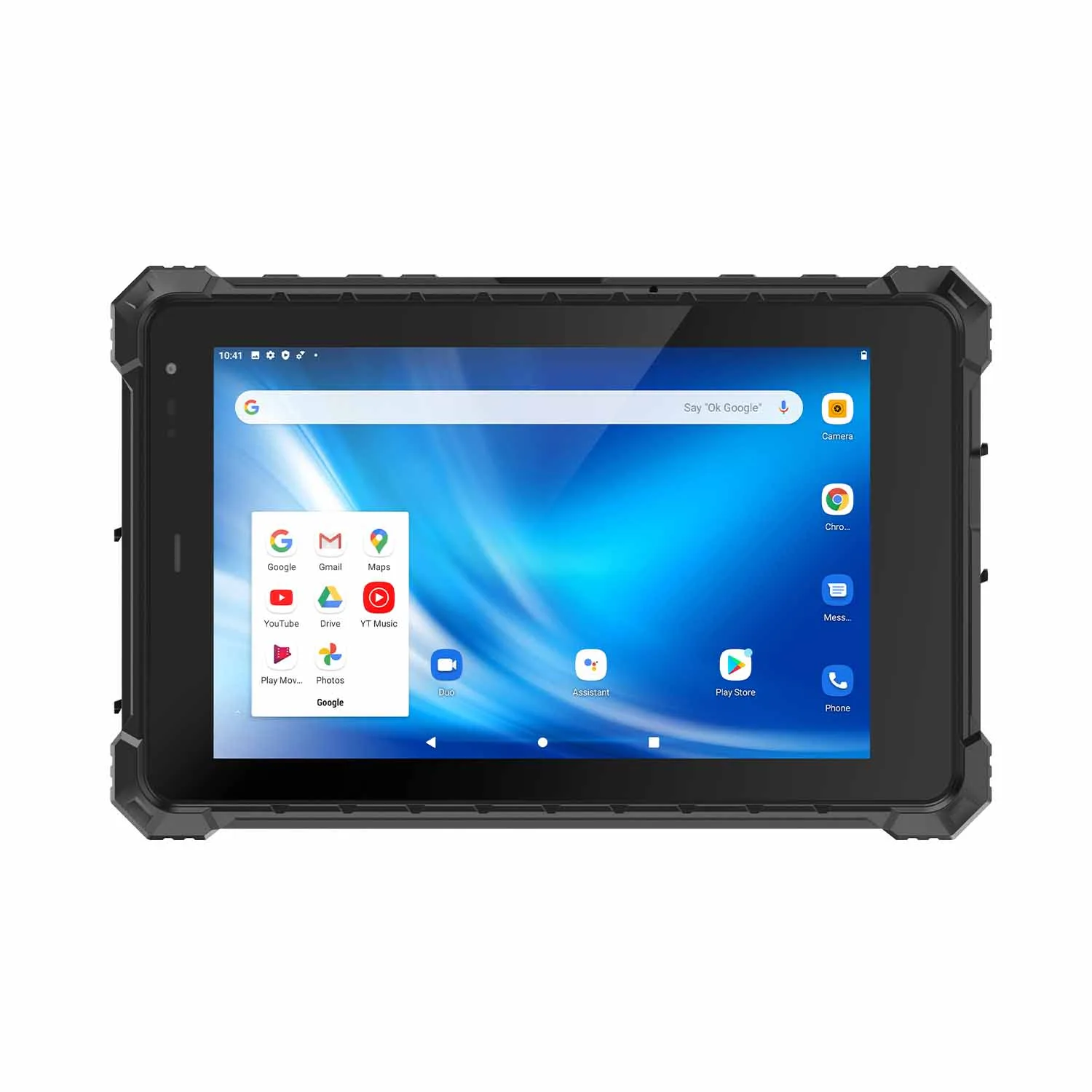
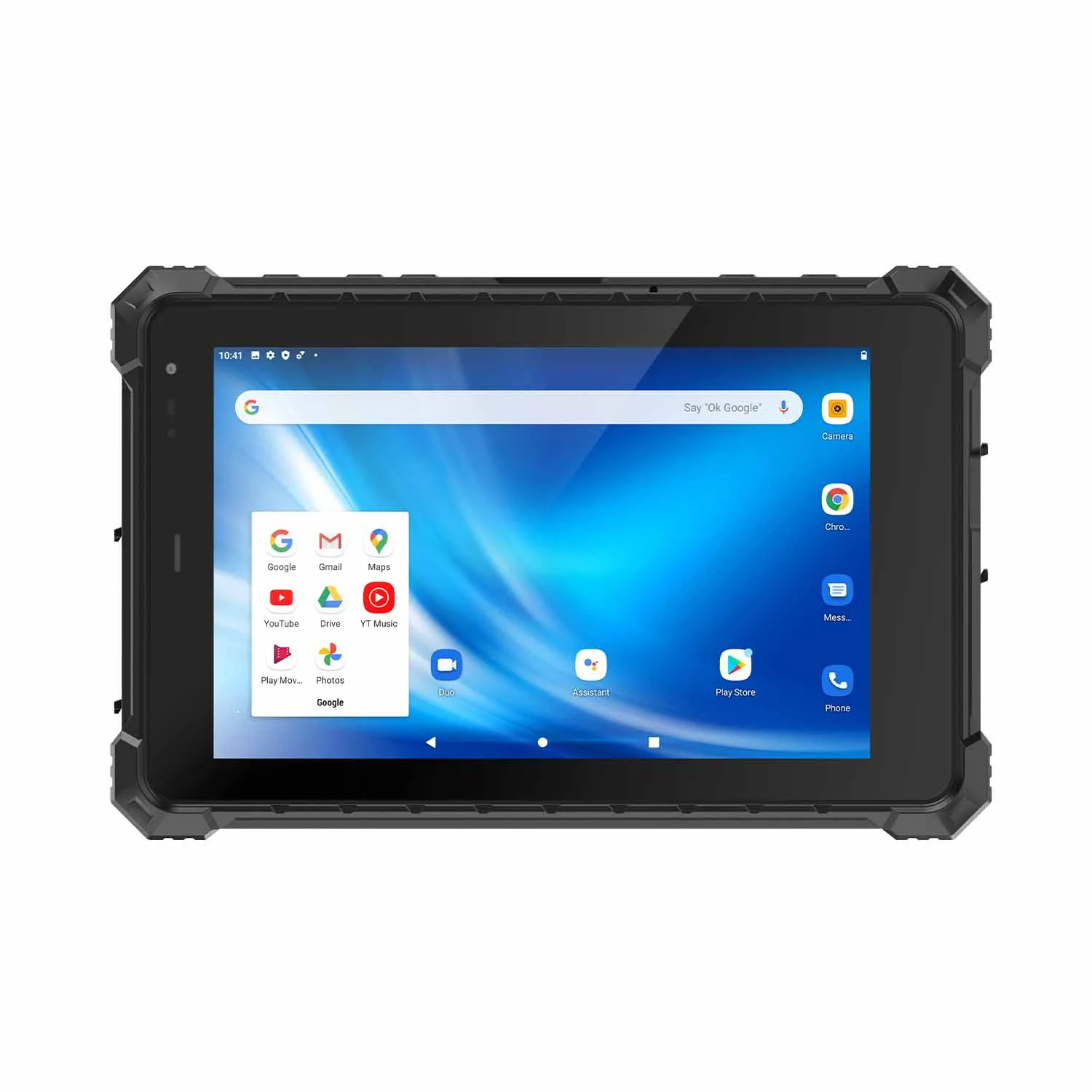
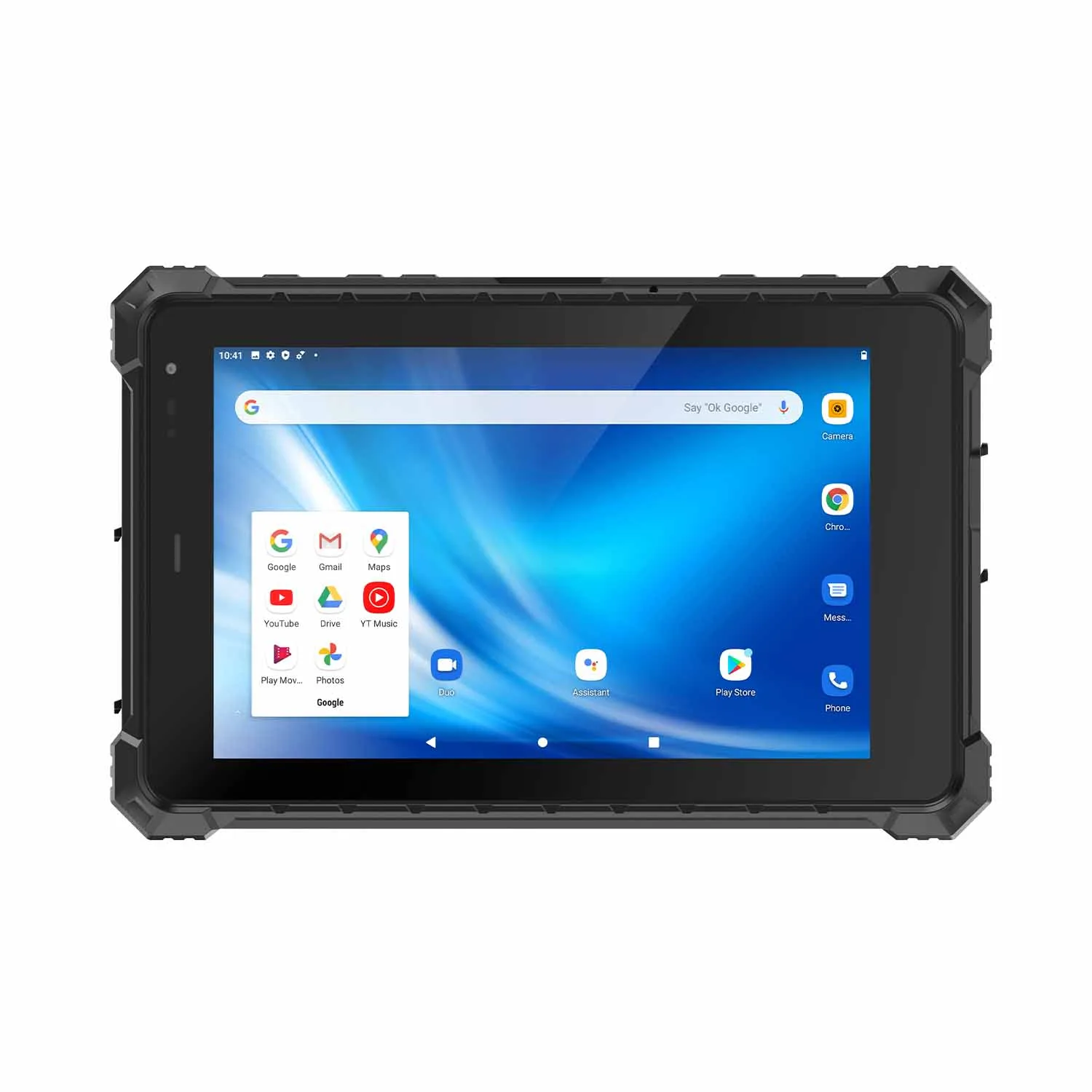
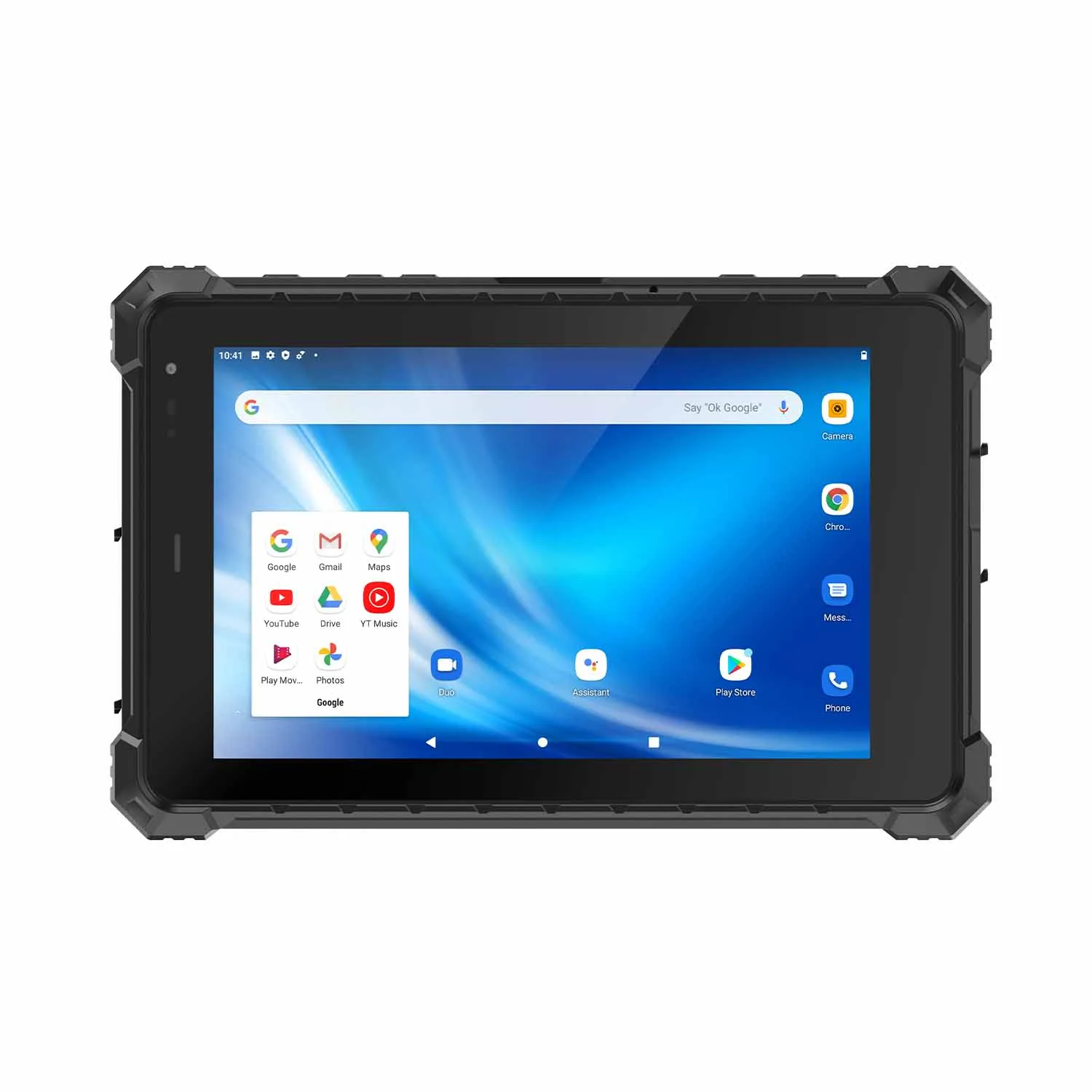
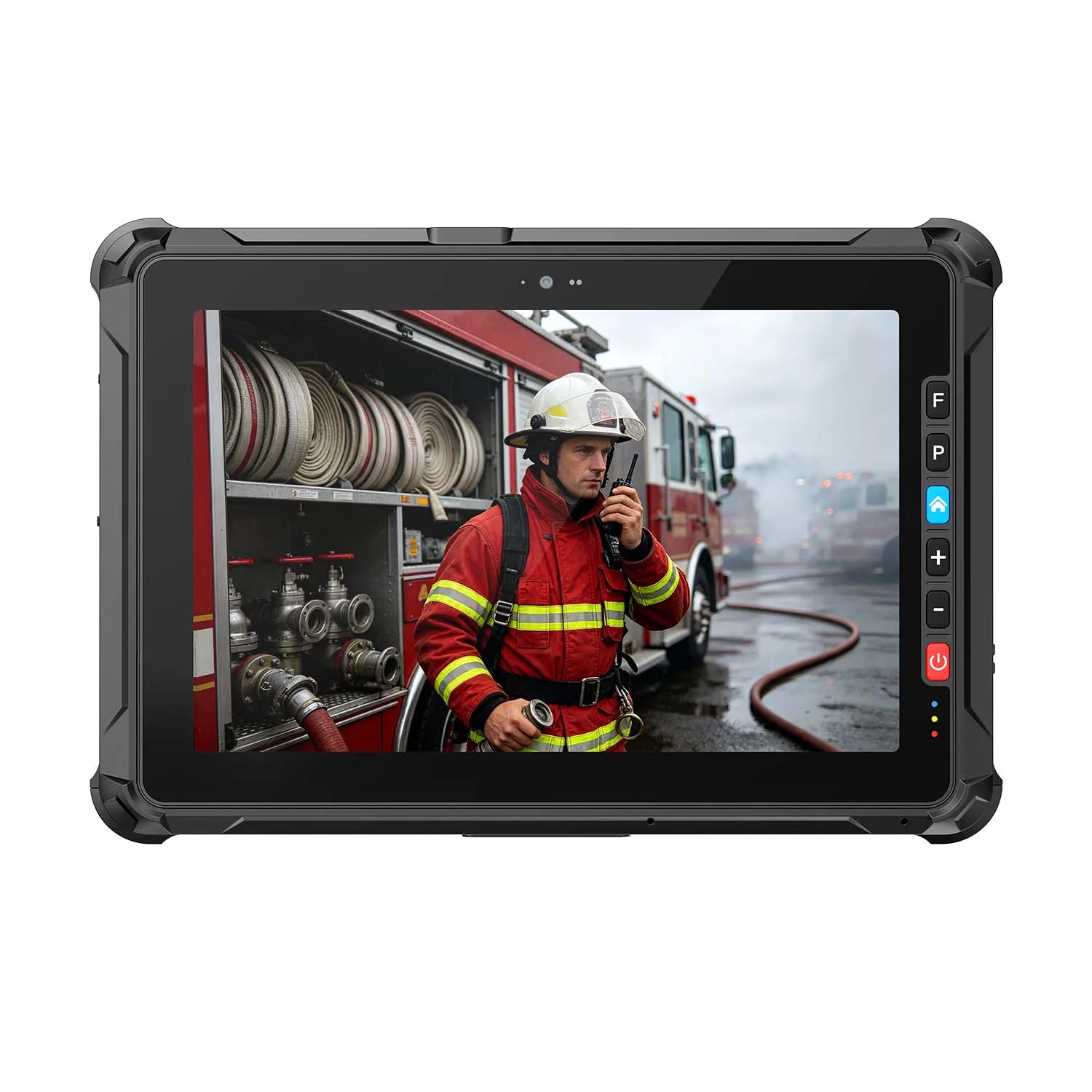
For rugged tablets, laptops and industrial computers, the correct rating should therefore be selected according to the actual exposure—dust, rain, hose spray, accidental immersion or a combination of these conditions.
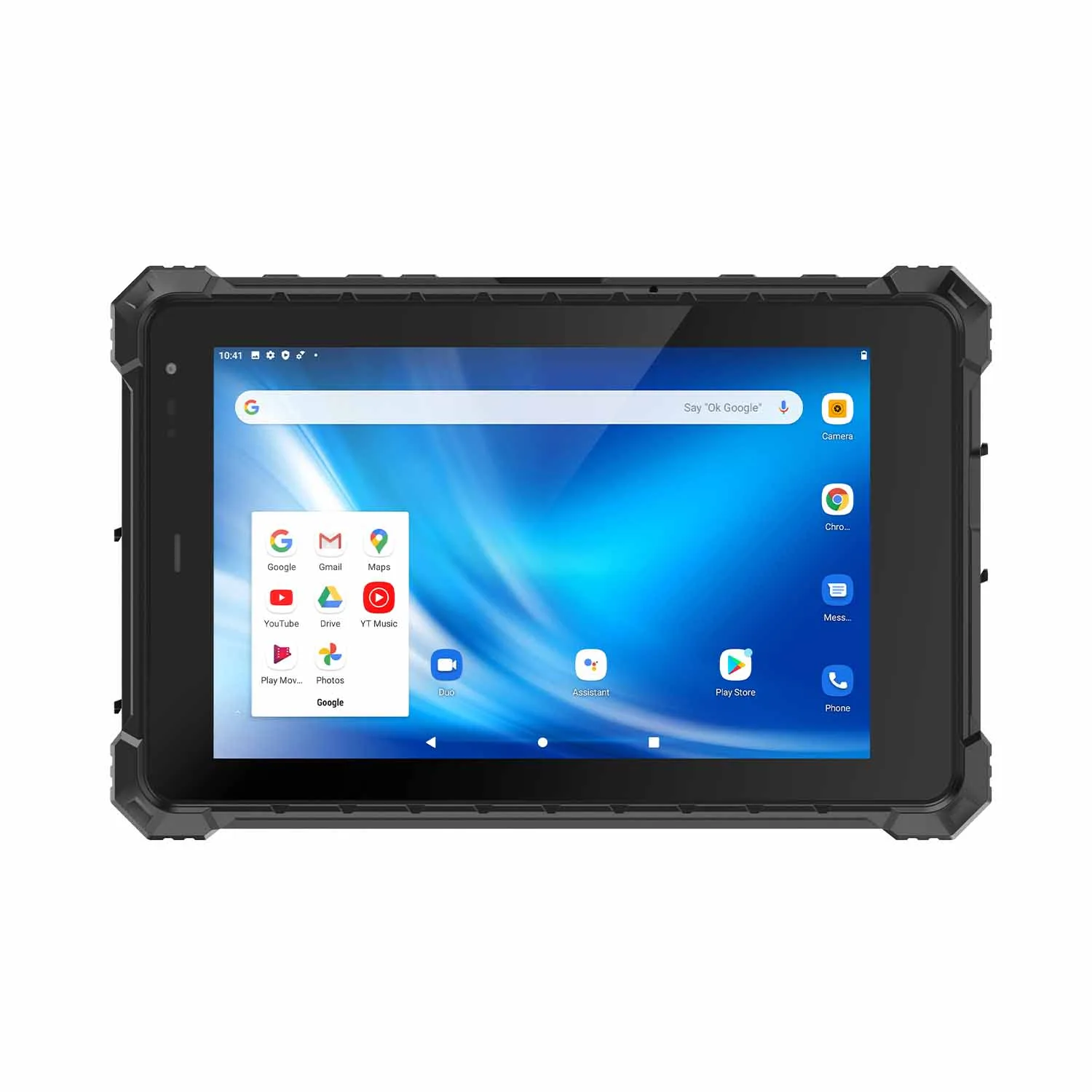
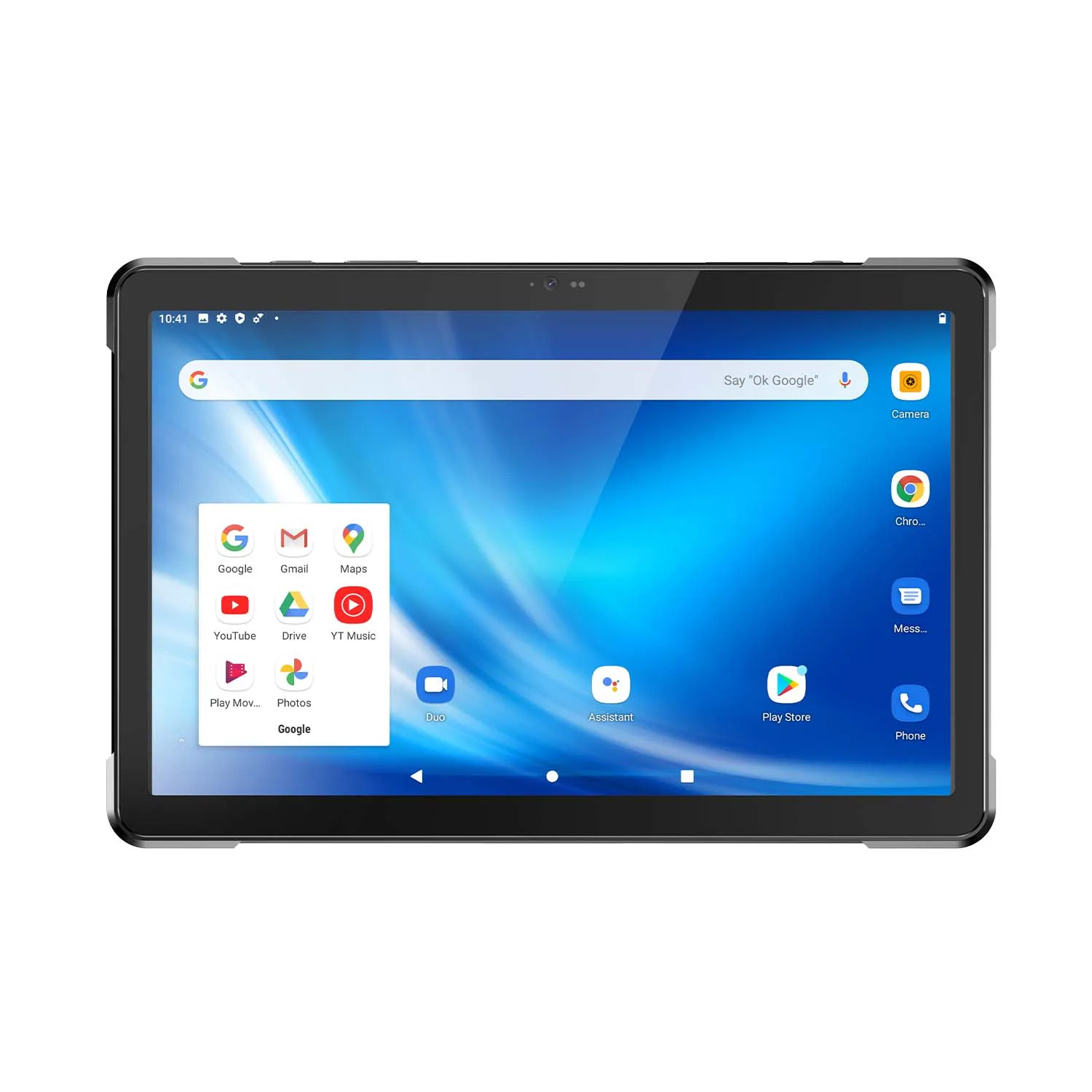
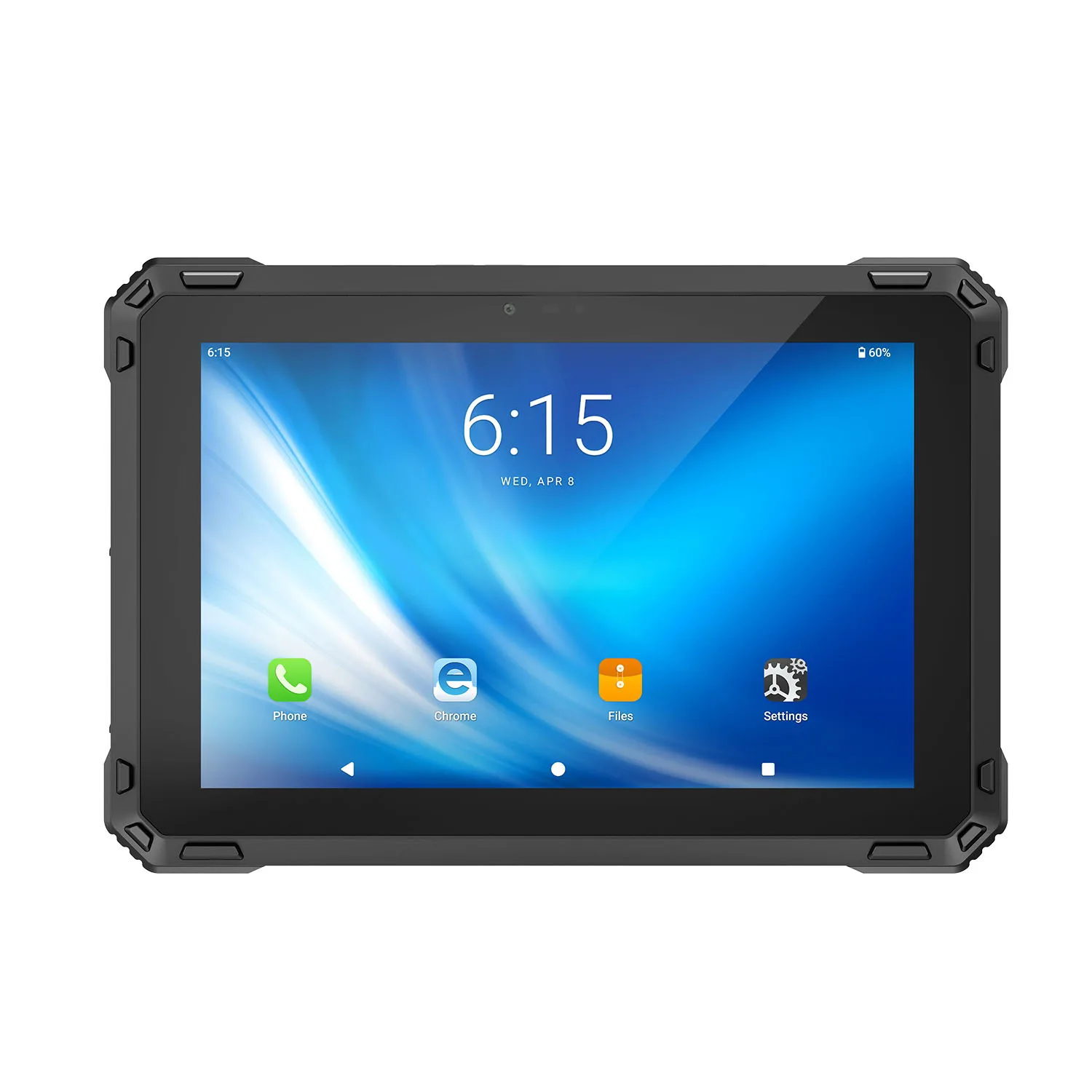
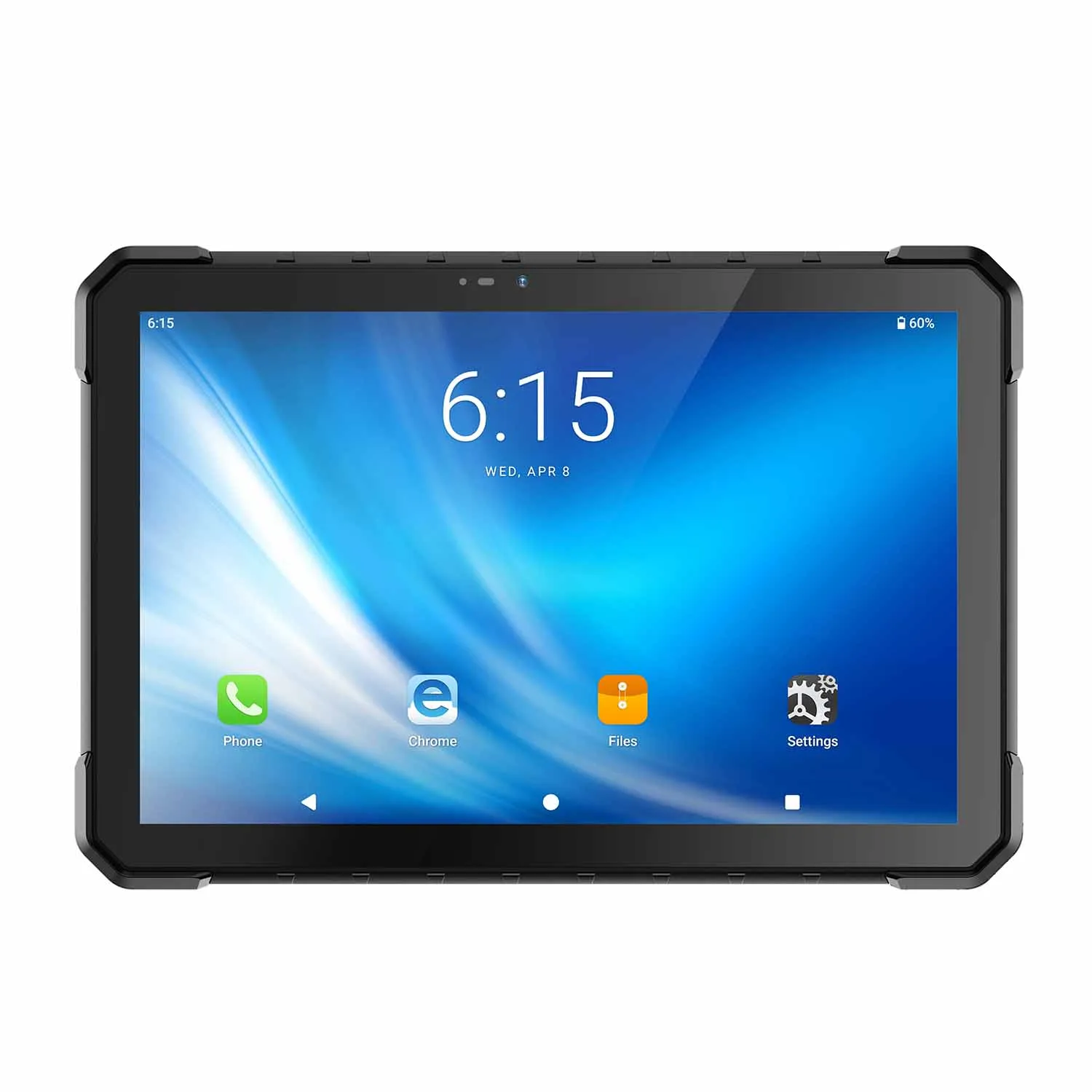
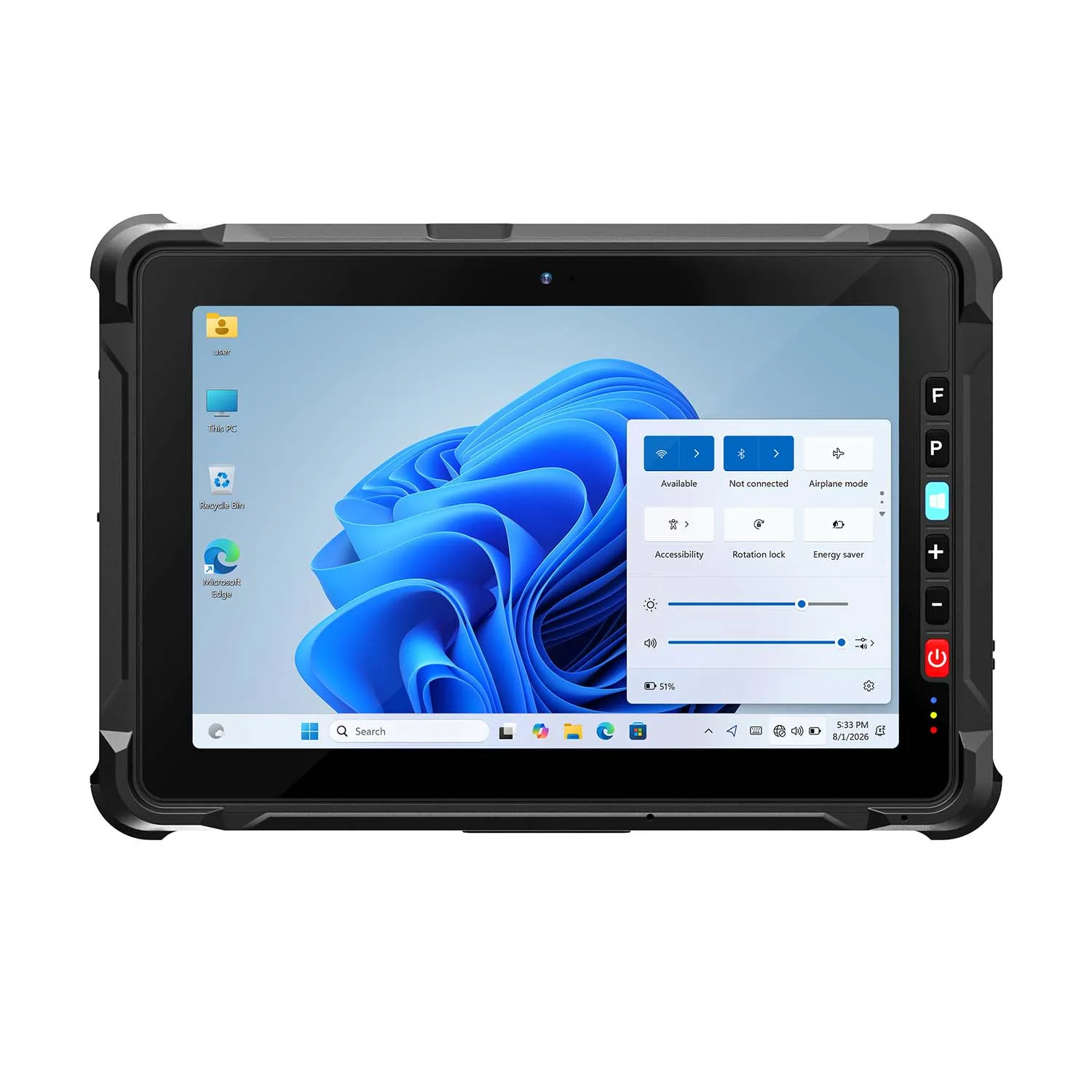
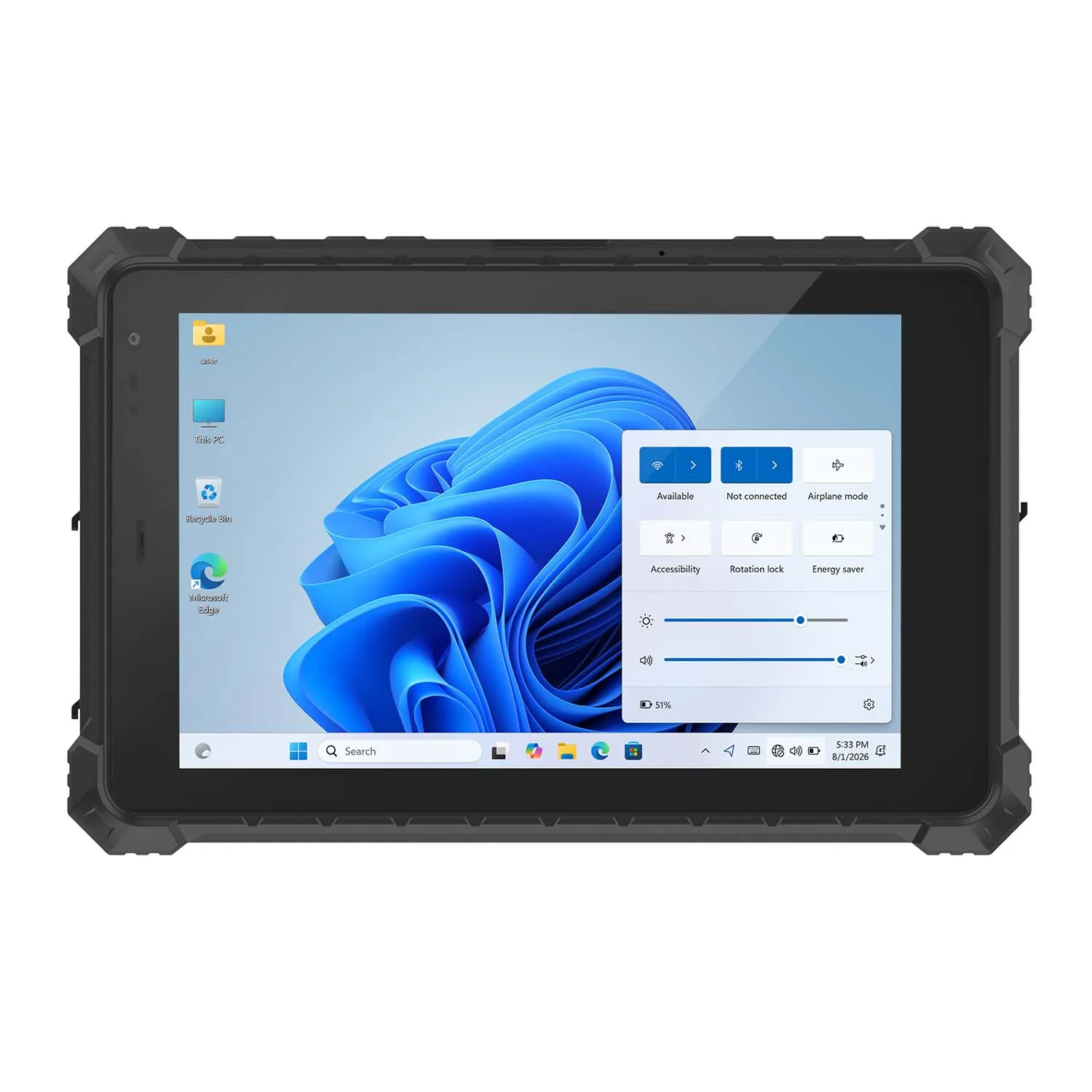
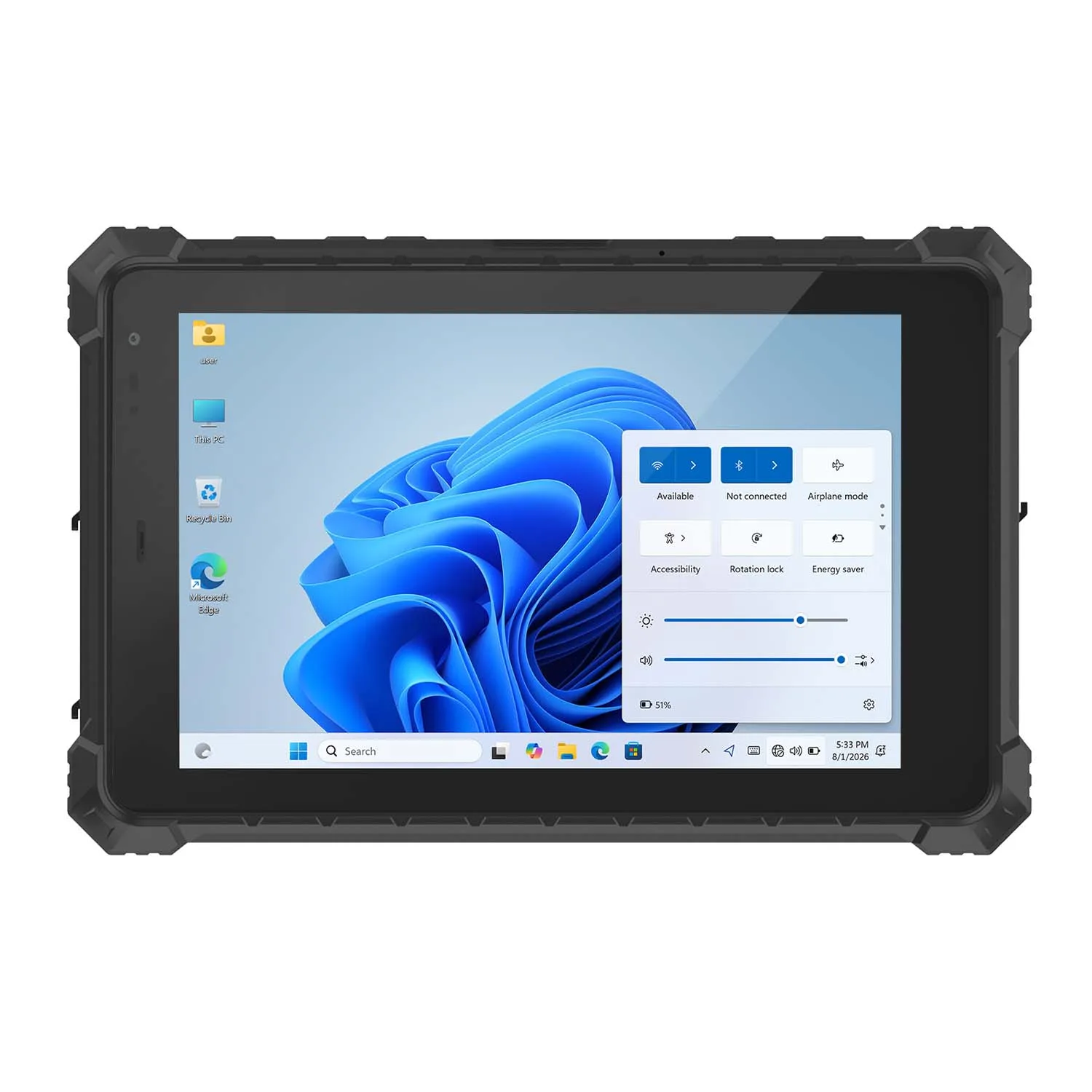
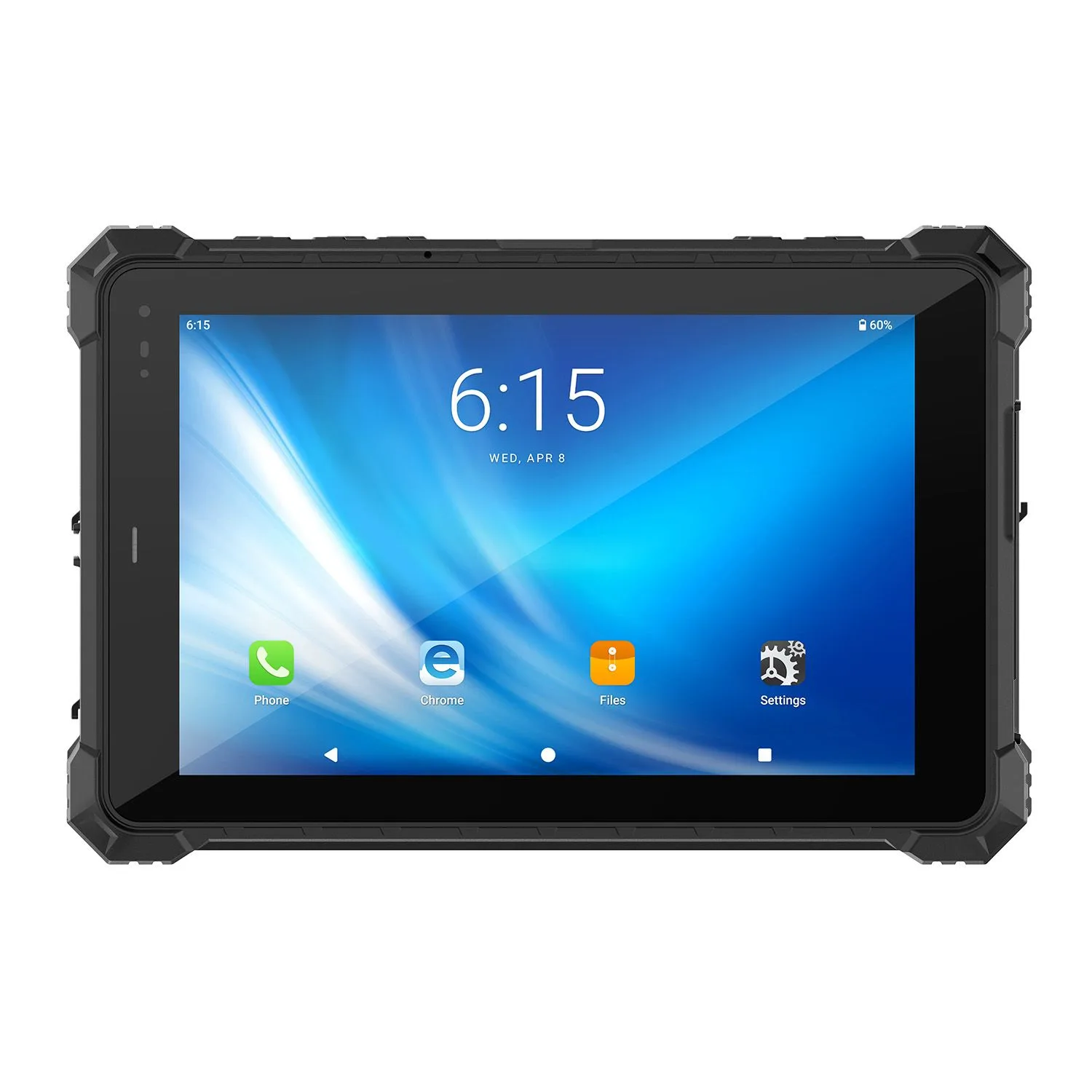
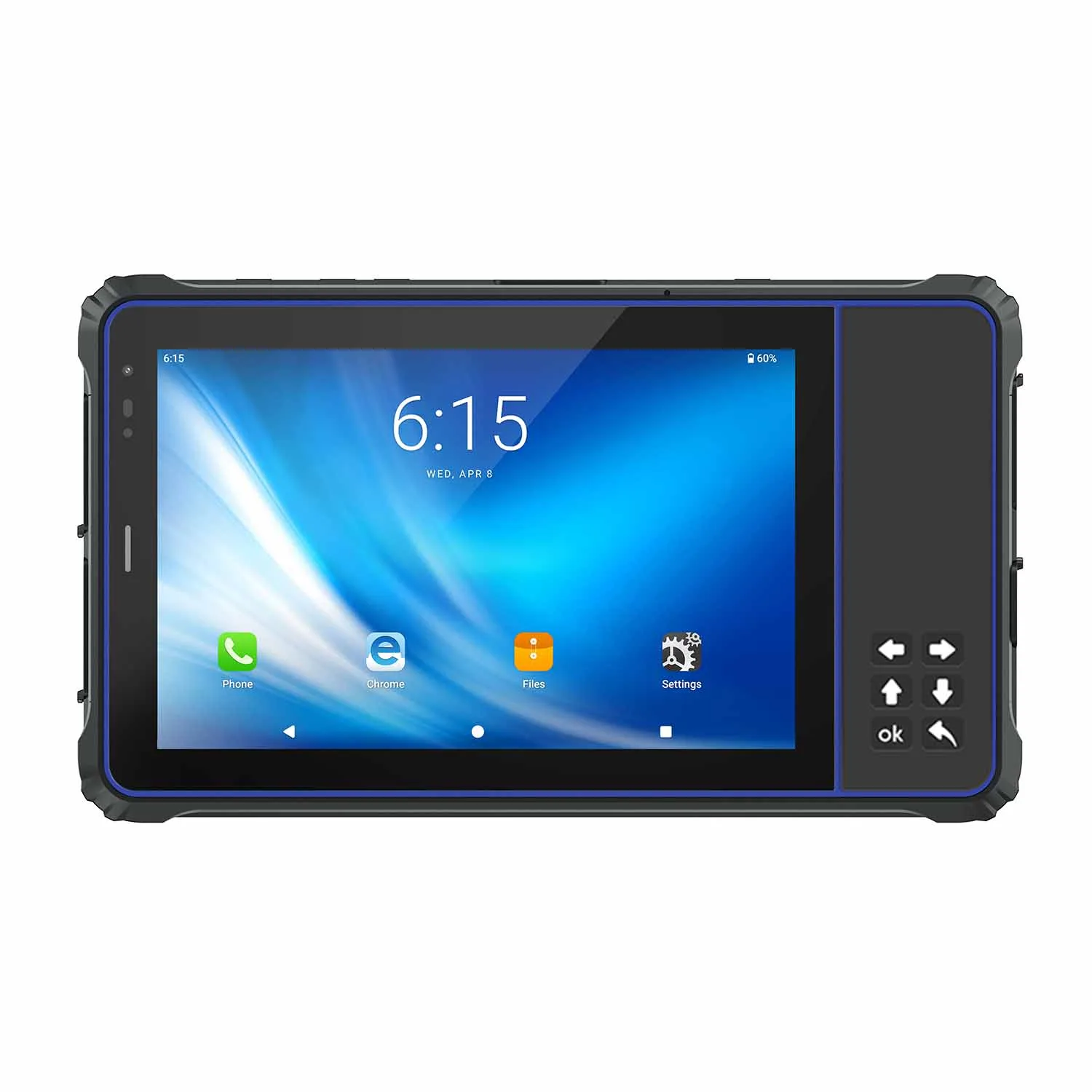
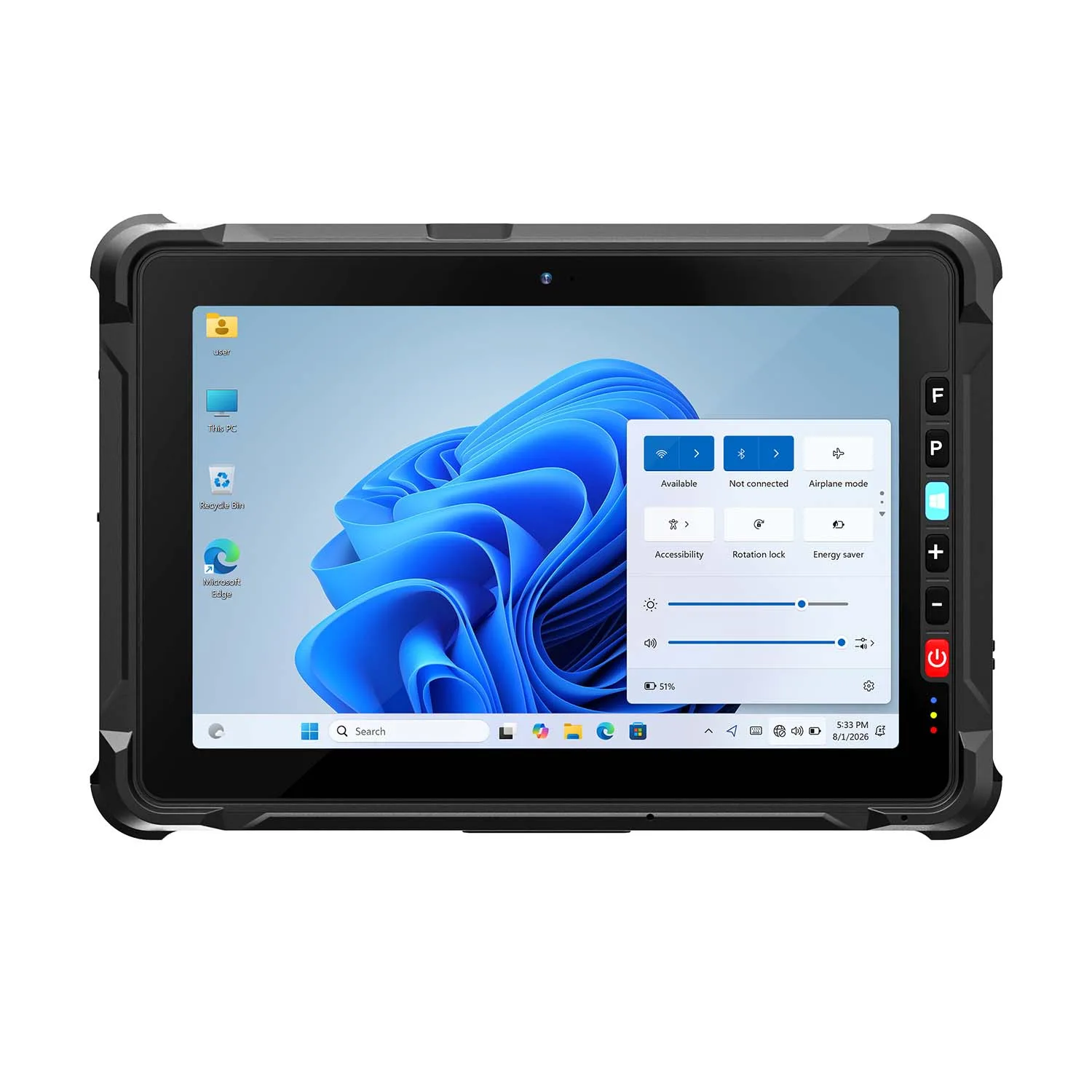
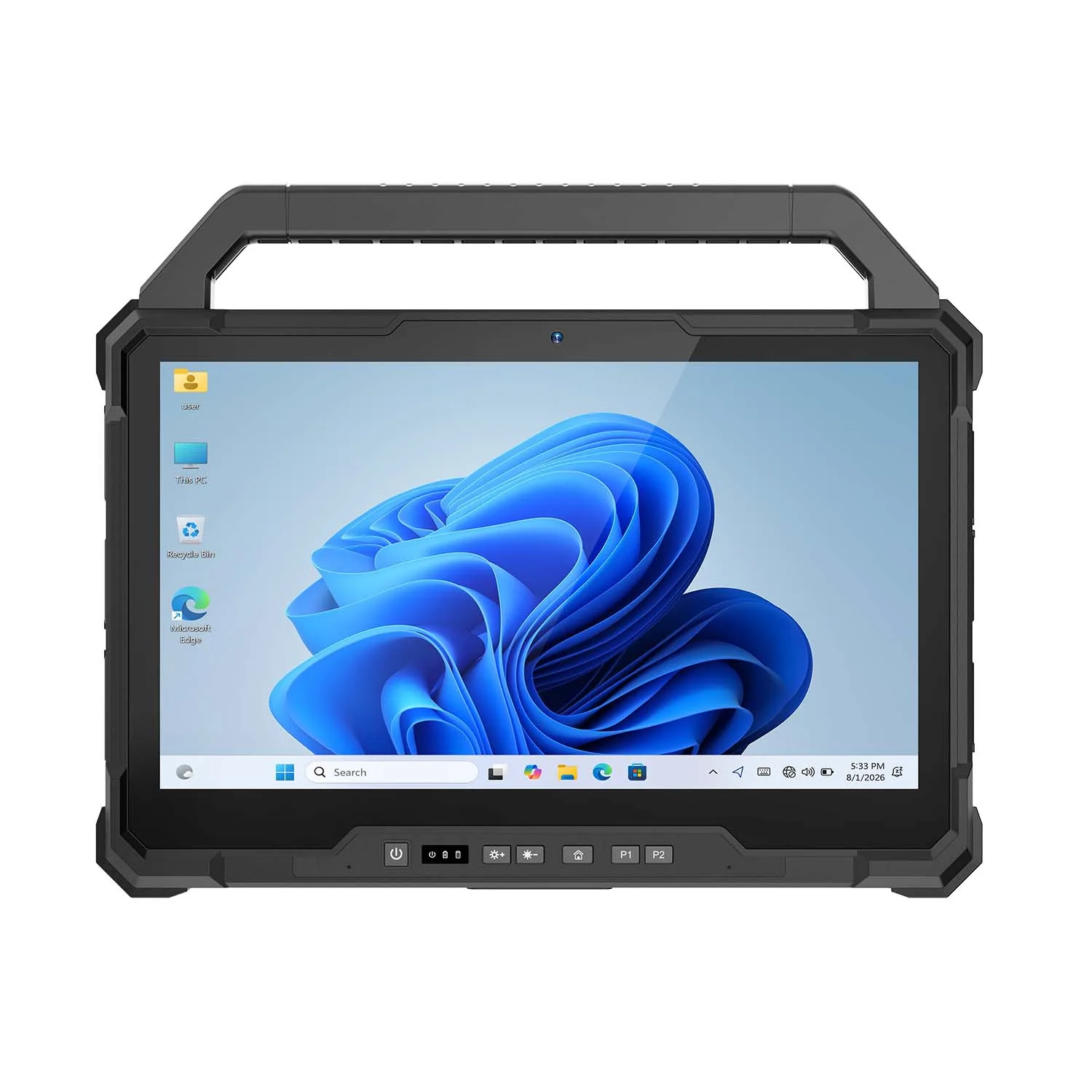
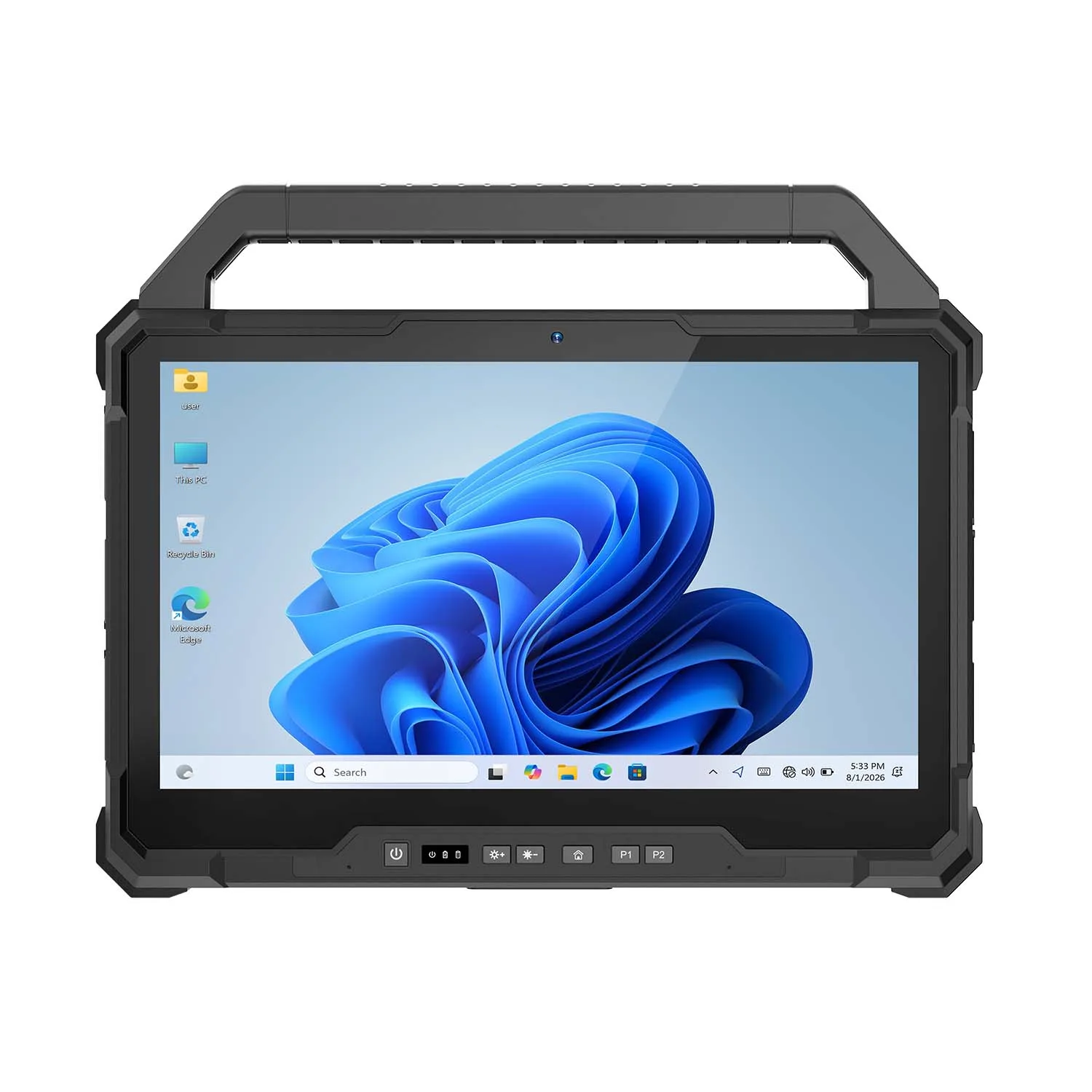
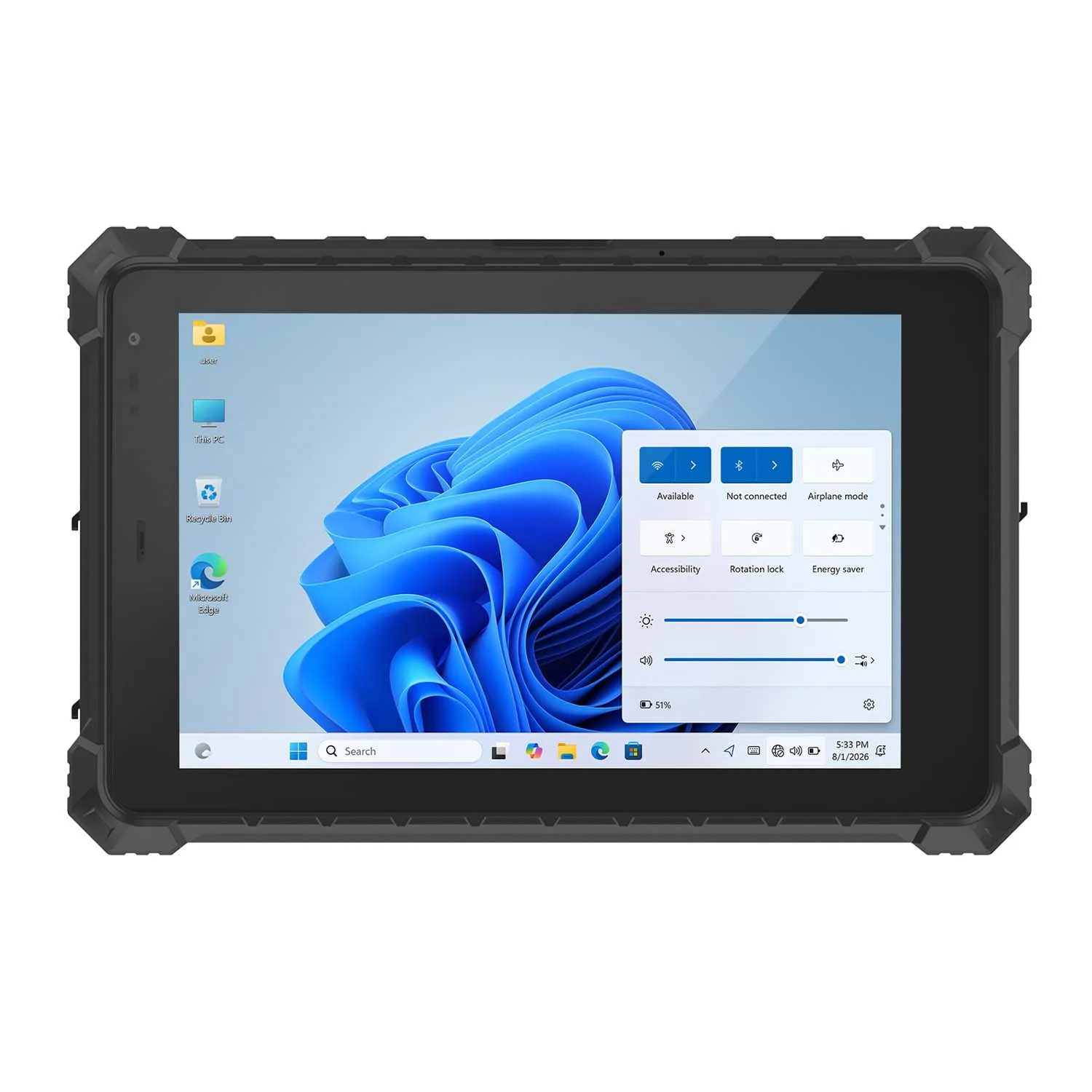
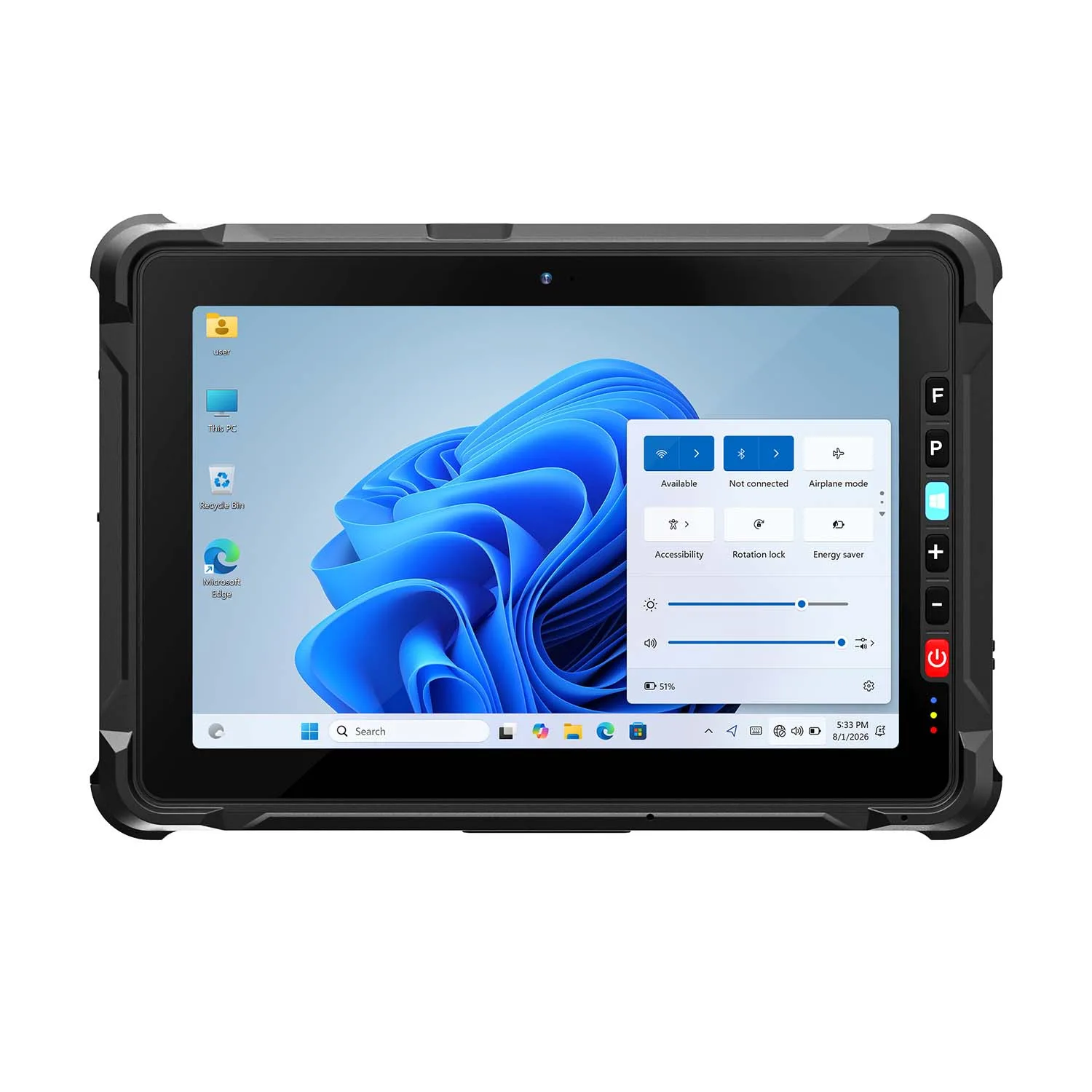
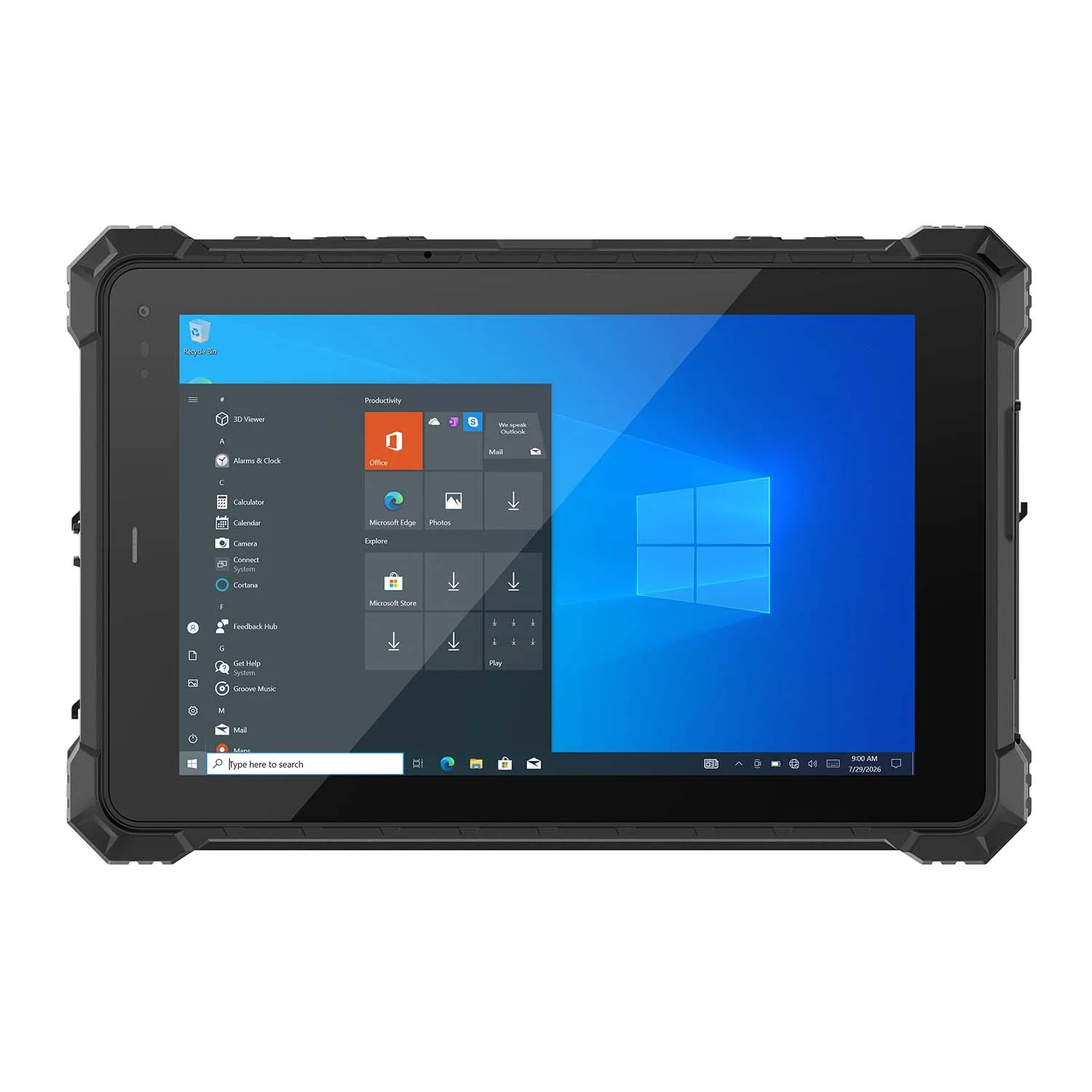
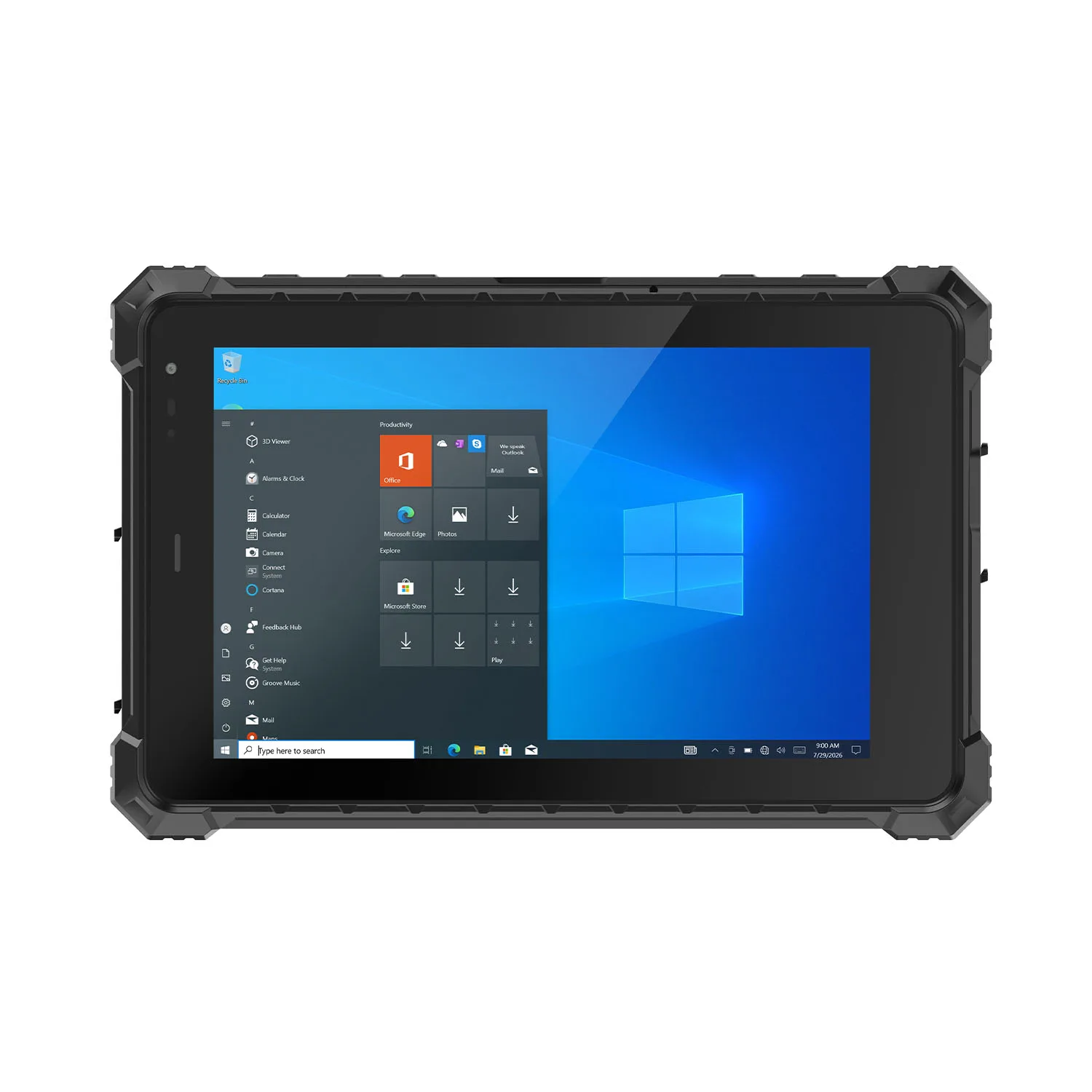
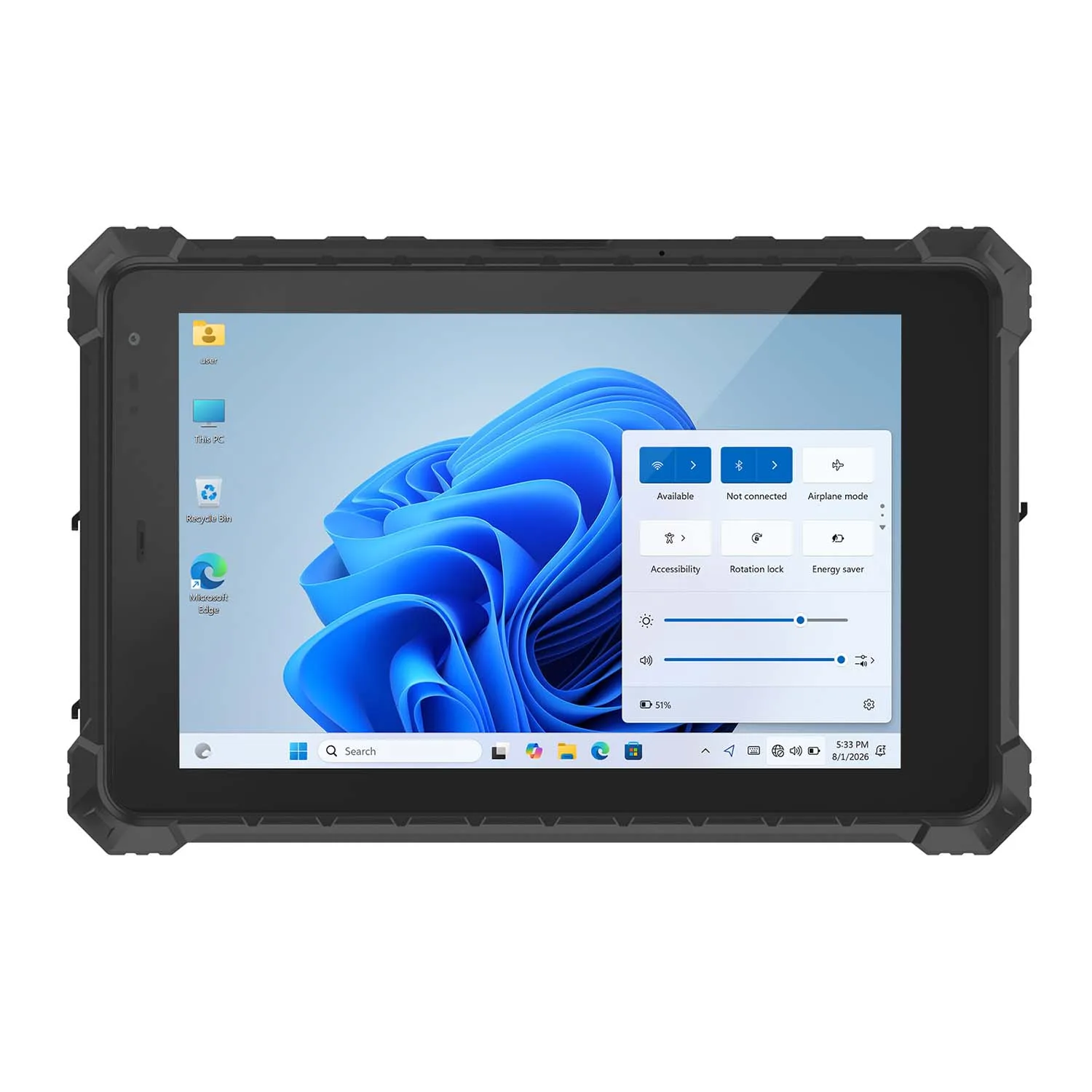
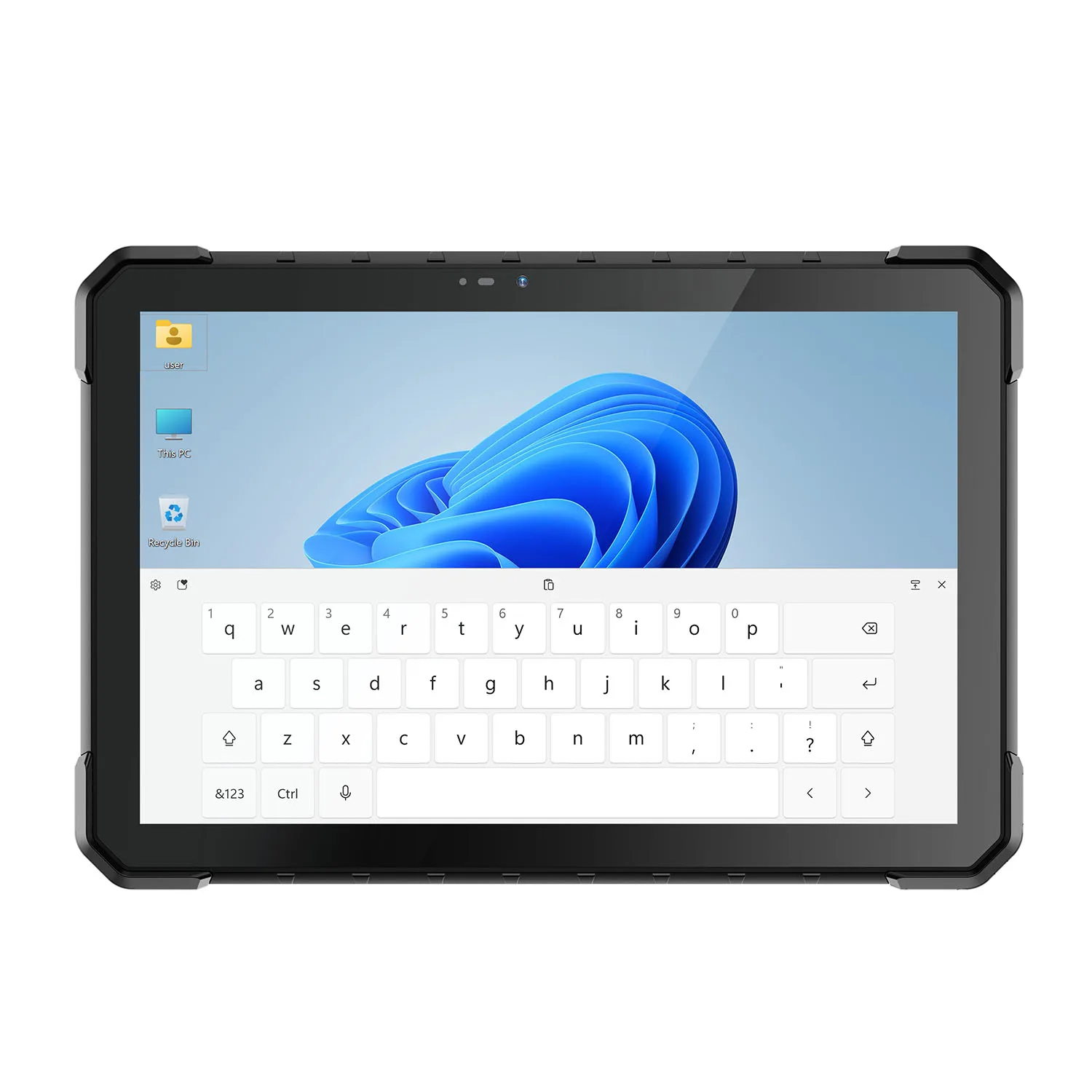
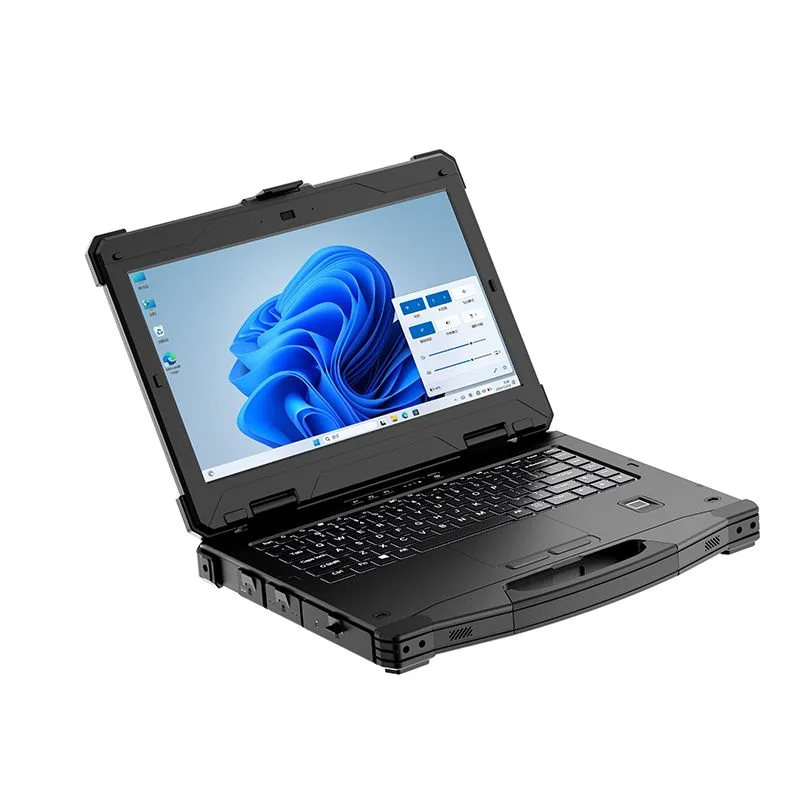
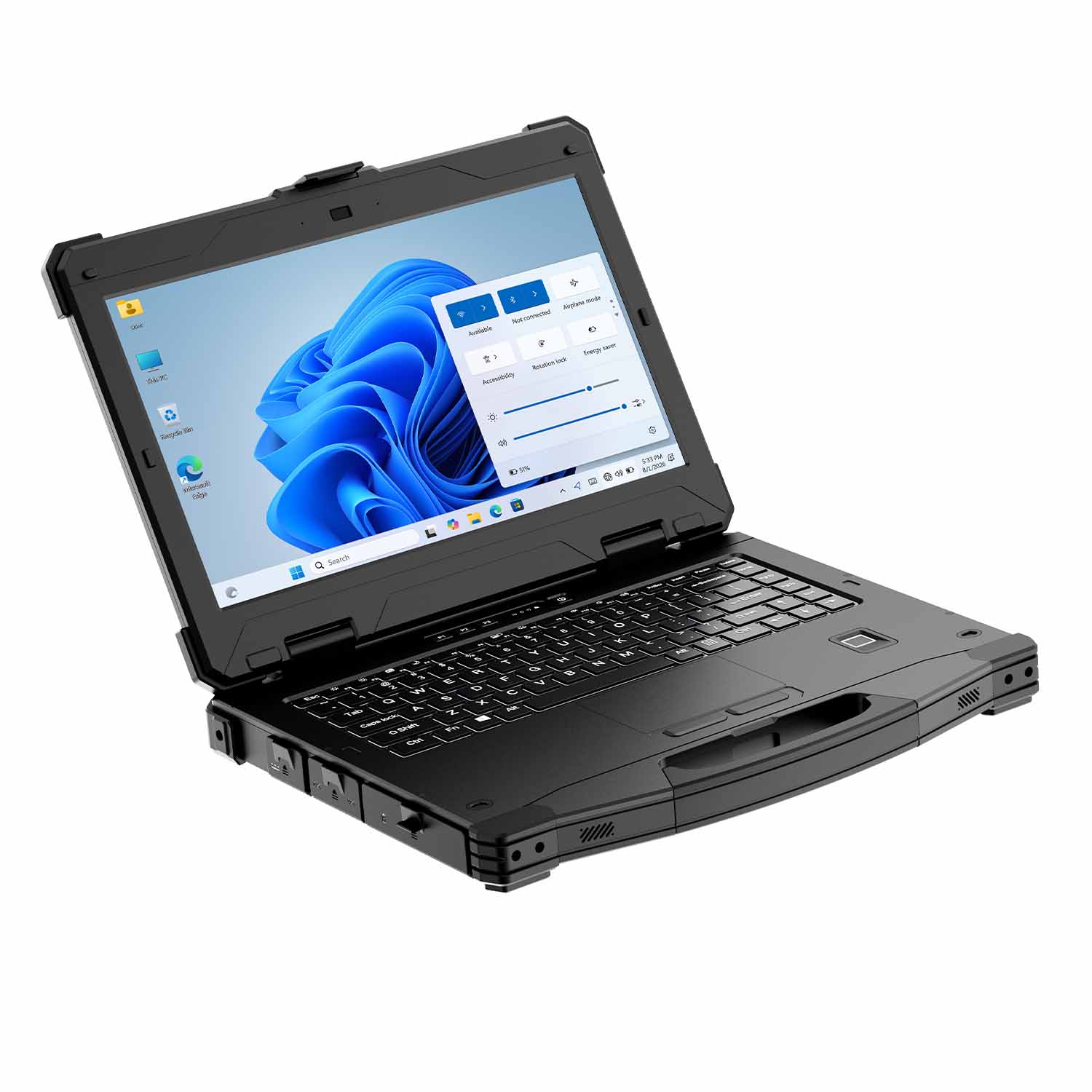
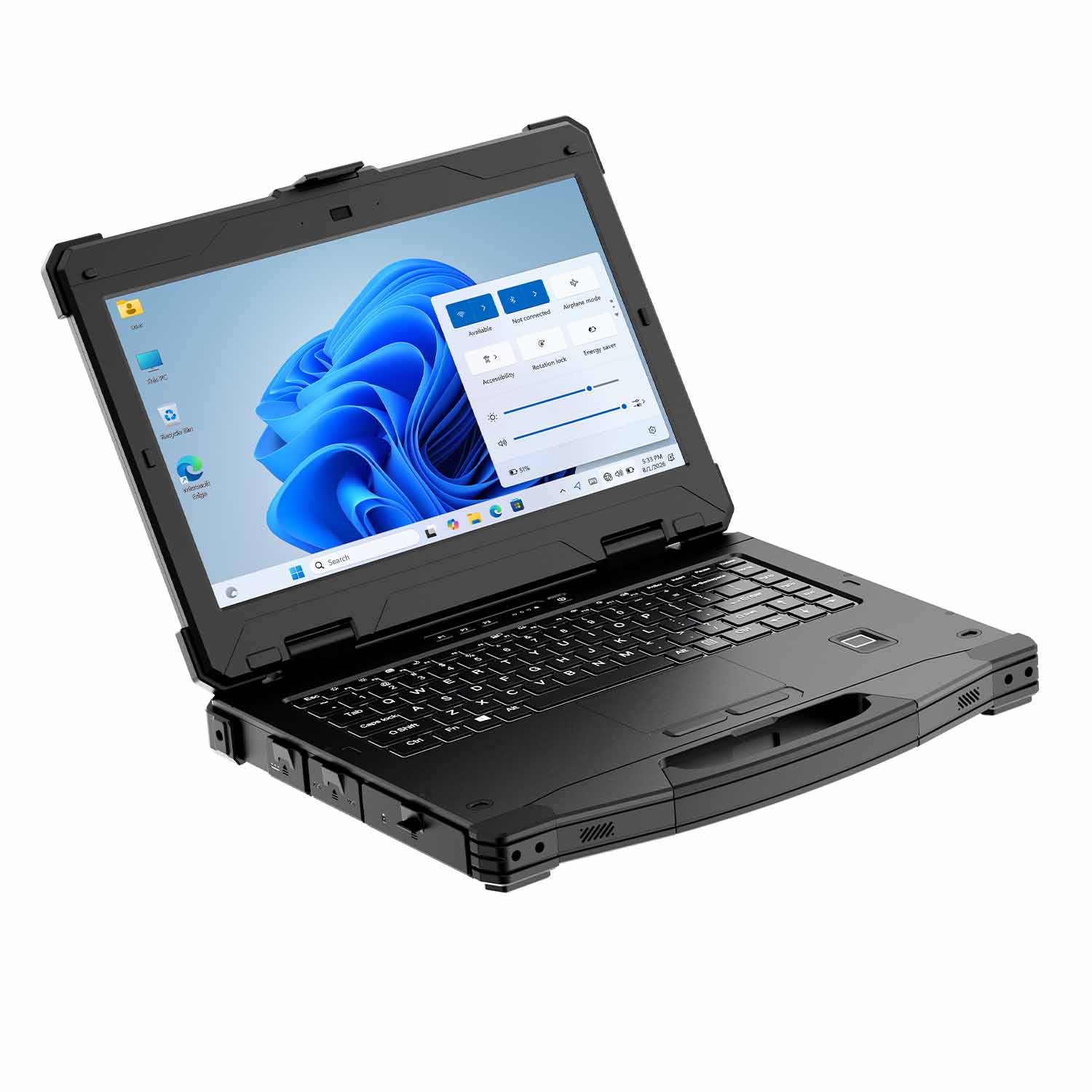
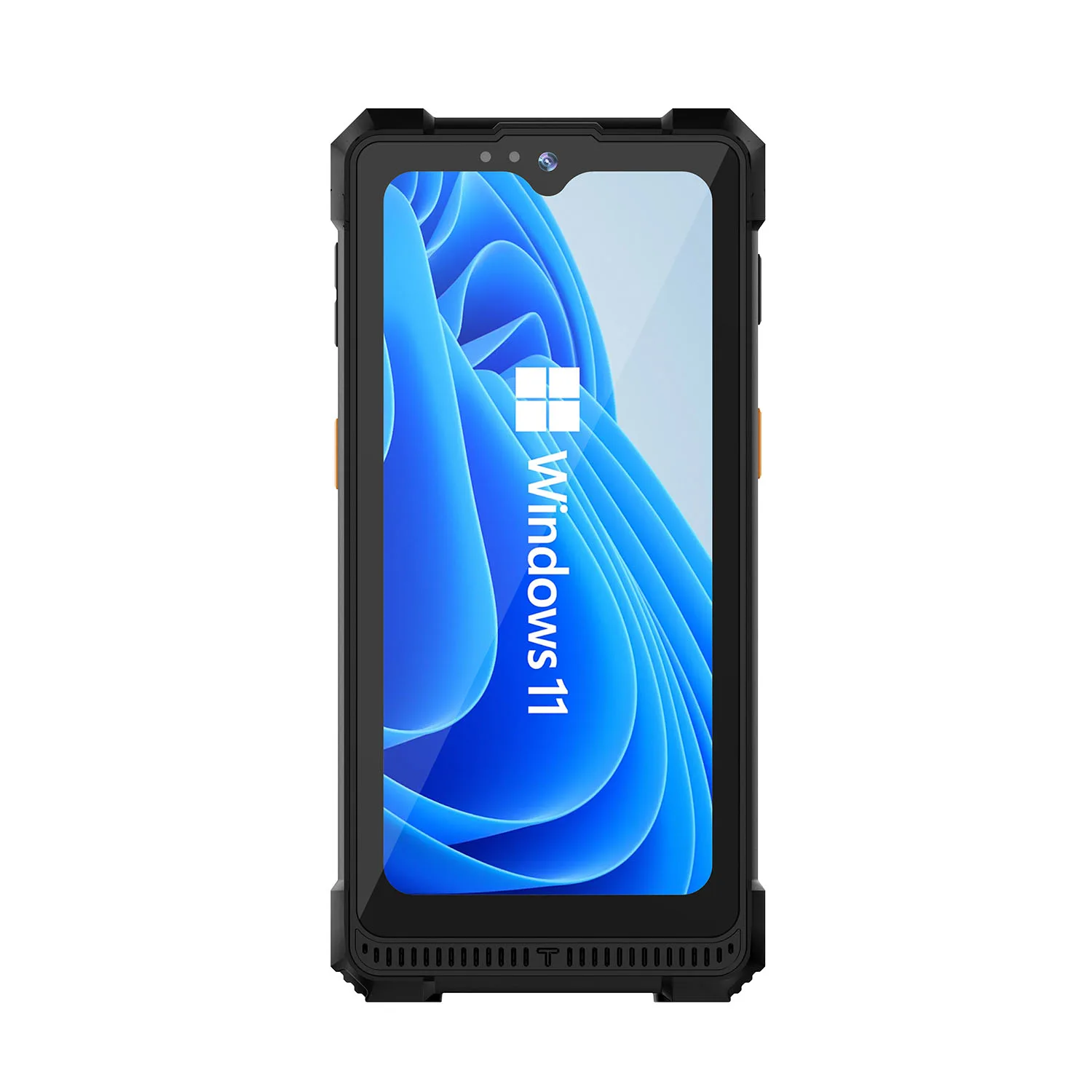
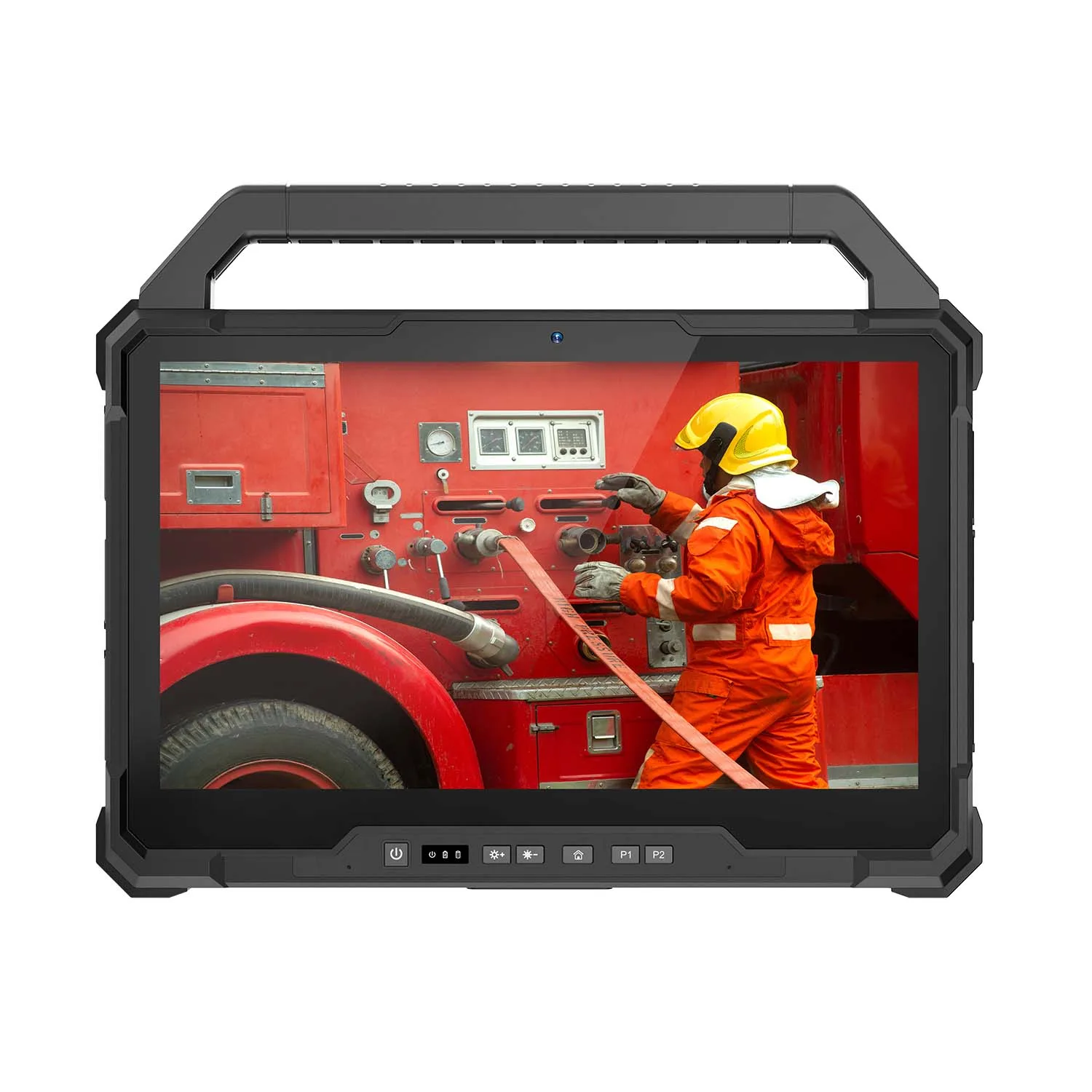
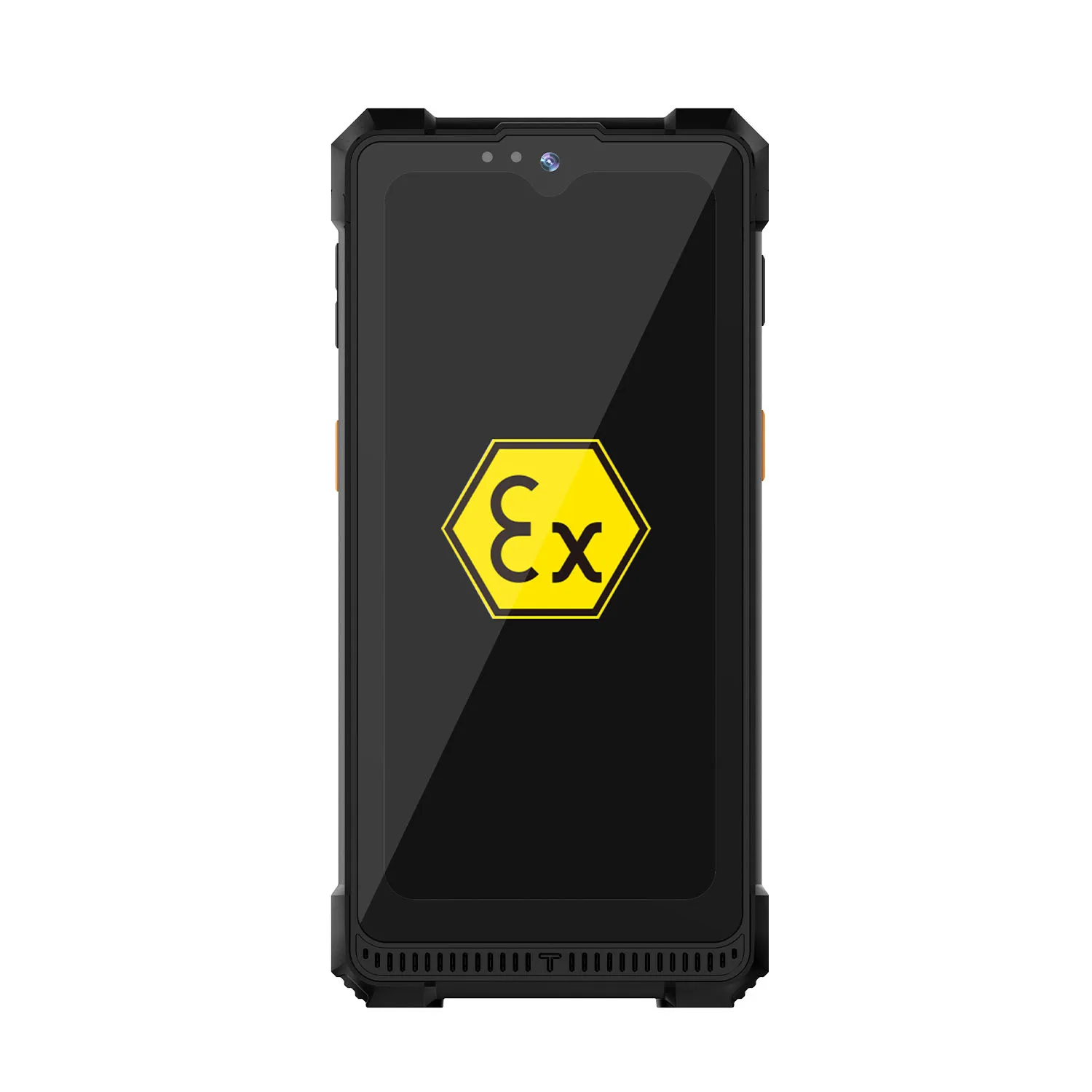
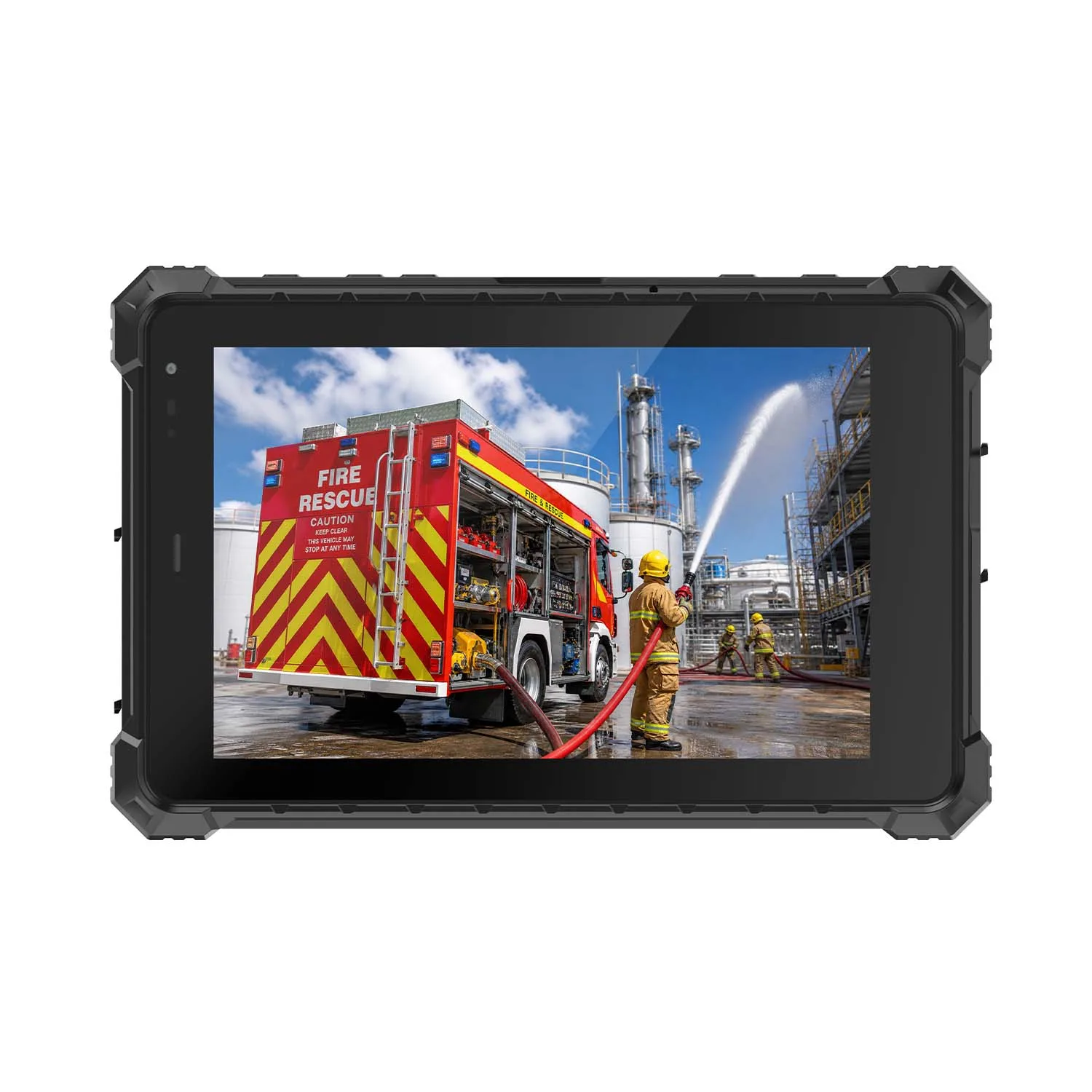
CENAVA rugged-computing platforms currently include IP65, IP67 and IP68 configurations for different industrial and field applications. Models such as W14US, W15US and W30NS are IP65, while W109U and W109NS are IP67 platforms.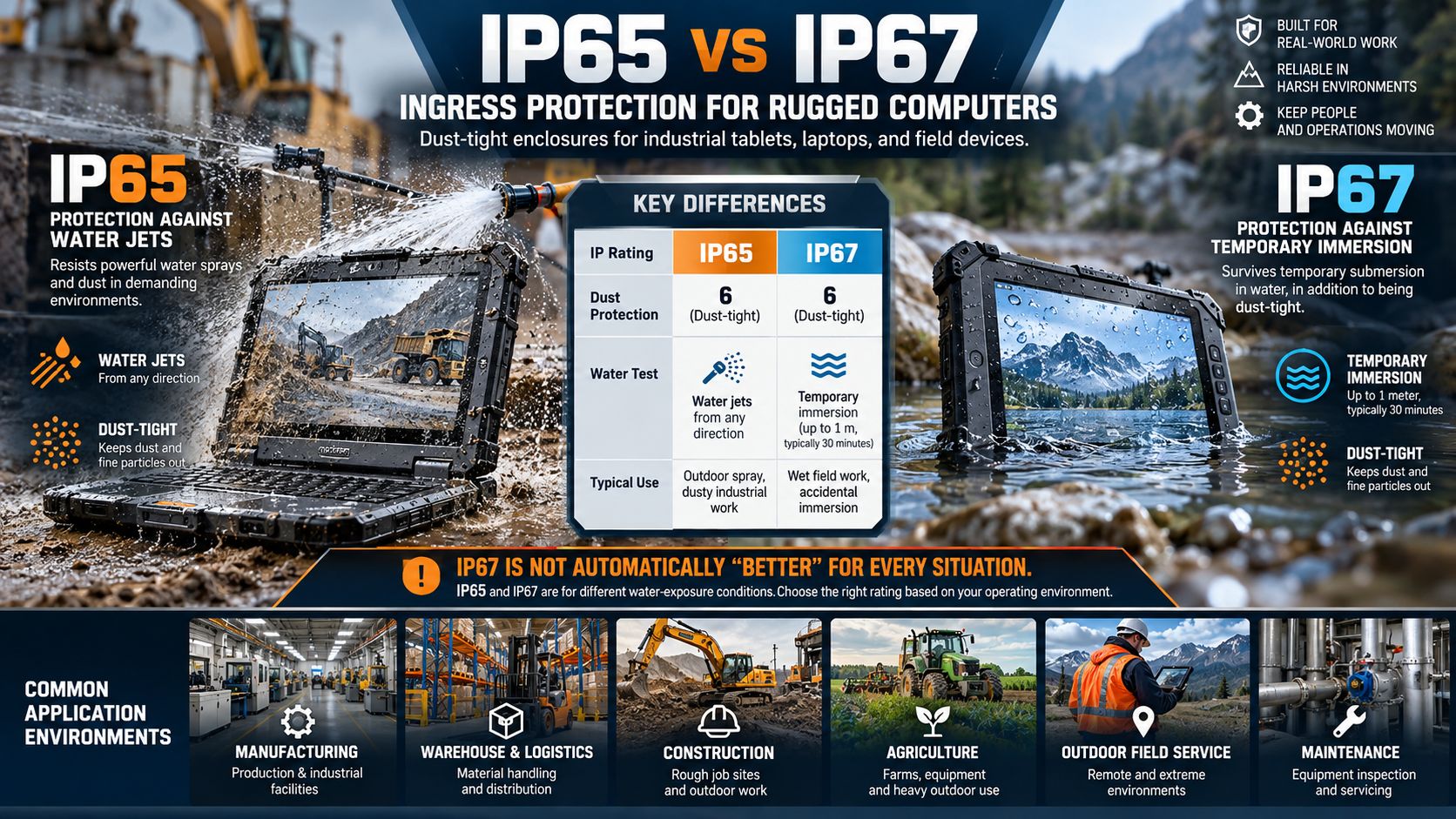
What Does an IP Rating Mean?
IP stands for Ingress Protection.
IEC 60529 uses an IP code to indicate the degree of protection provided by an enclosure against:
- Solid foreign objects such as dust
- Water entering the enclosure
A typical rating looks like:
IP65
or:
IP67
The two numbers should be read independently rather than as one number.
For example:
IP67 = IP 6 + 7
The first digit represents solid-particle protection.
The second digit represents water-ingress protection.
Understanding the First Digit: Dust Protection
For both IP65 and IP67, the first digit is:
6
This is the highest standard solid-particle protection level in the conventional IEC IP scale.
It indicates a dust-tight enclosure.
This is particularly important in environments such as:
- Manufacturing
- Warehouses
- Construction
- Agriculture
- Vehicle maintenance
- Outdoor field service
- Mining support
- Telecommunications
- Logistics
Dust can otherwise enter through enclosure seams, connectors and controls and eventually affect electronic components.
IP65 Meaning
An IP65 device combines:
6 — Dust-tight
with:
5 — Protection against water jets
This means the enclosure has been evaluated for directed water-jet exposure under the applicable IEC 60529 test conditions.
CENAVA's W14US rugged laptop, for example, is rated IP65 and its current product documentation describes this as protection against dust ingress and low-pressure water jets under defined test conditions.
IP65 can therefore be useful for environments involving:
- Rain
- Outdoor field work
- Dust
- Water spray
- Equipment maintenance
- Industrial cleaning around the device
- Construction environments
However, IP65 does not mean the device has been certified for immersion.
IP67 Meaning
An IP67 device combines:
6 — Dust-tight
with:
7 — Protection against temporary immersion
A typical summary of the IPX7 test is temporary immersion in approximately one meter of water for approximately 30 minutes under defined test conditions.
IP67 is therefore particularly relevant where a tablet may be accidentally:
- Dropped into shallow water
- Exposed to flooding
- Placed in wet field environments
- Used around outdoor equipment
- Operated in locations where standing water is possible
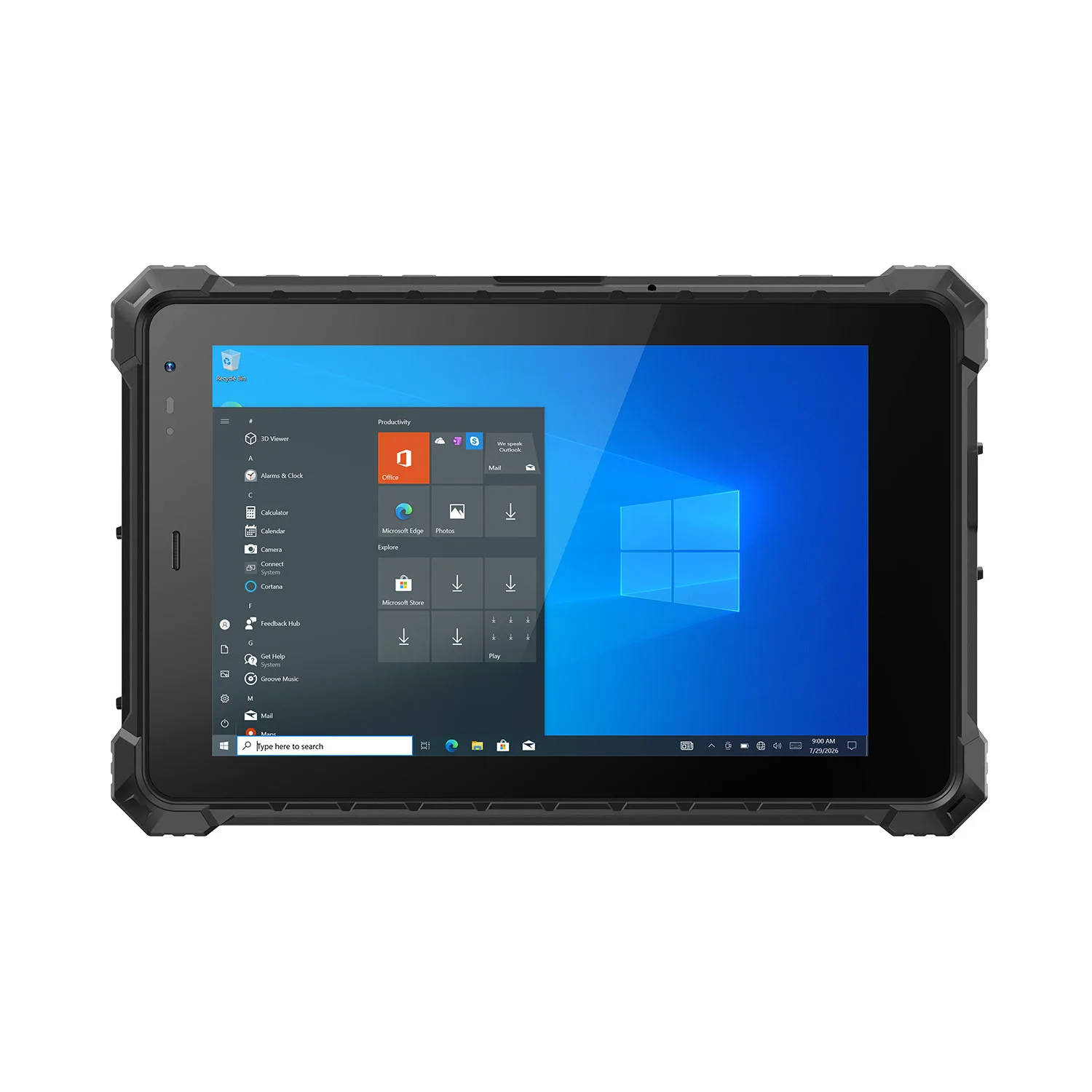
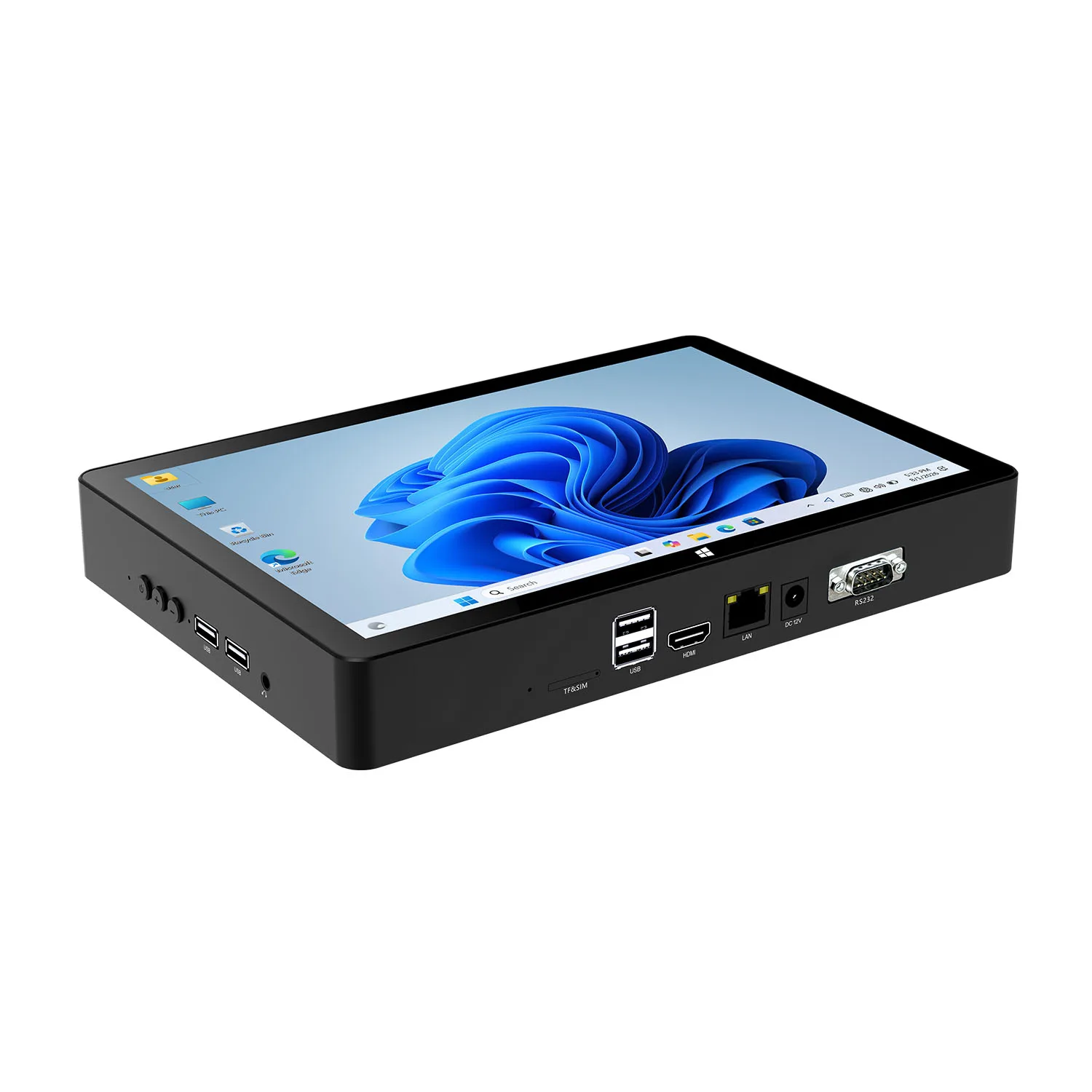
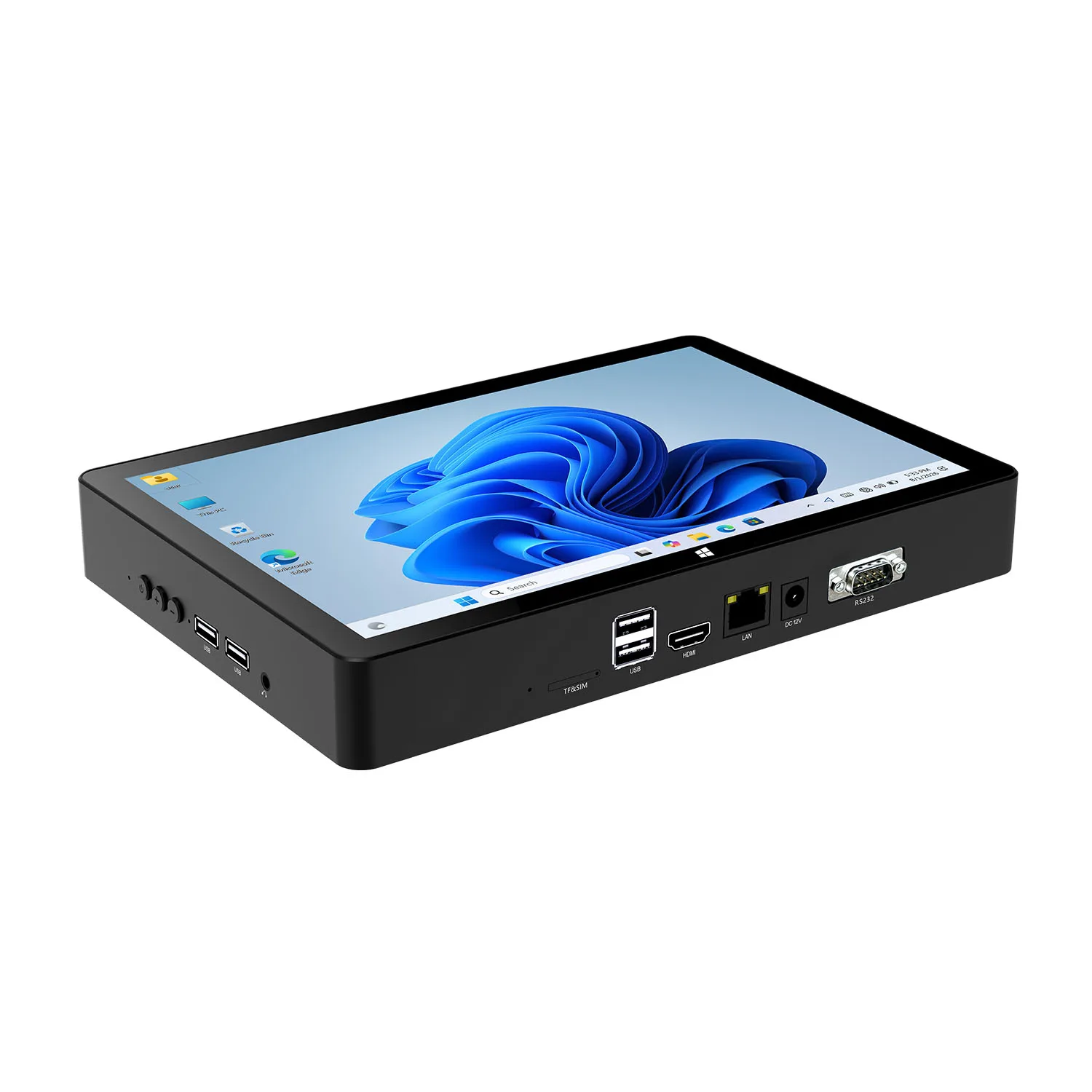
CENAVA W109U is currently listed as an IP67 Windows rugged tablet, while W109NS combines IP67 protection with a 10.95-inch Windows platform, Gigabit Ethernet and RS232.
IP65 vs. IP67
The most important difference is the type of water exposure tested.
| Feature | IP65 | IP67 |
|---|---|---|
| Dust protection | Dust-tight | Dust-tight |
| First digit | 6 | 6 |
| Water test | Water jets | Temporary immersion |
| Rain exposure | Appropriate under specified conditions | Appropriate depending on device design |
| Directed hose spray | Specifically addressed by IPX5 test | Not automatically established |
| Temporary immersion | Not established | Specifically addressed |
| Typical use | Outdoor spray and dusty industrial work | Wet field work and accidental immersion |
The correct choice therefore depends on how water reaches the computer.
Is IP67 Better Than IP65?
Not necessarily.
This is one of the most common misunderstandings about IP ratings.
It is tempting to interpret:
67 > 65
and conclude that IP67 automatically includes everything provided by IP65.
That is not how the water portion of IEC 60529 should be interpreted.
IPX5 is a water-jet test.
IPX7 is an immersion test.
These create different stresses on enclosure seals.
A device that has been tested for temporary immersion has not necessarily been tested for directed water jets.
Industry guidance on IEC 60529 therefore notes that a product rated only IP67 should not automatically be assumed to have passed IP65/IPX5 testing. Equipment requiring both may be declared with dual ratings after the relevant tests have been performed.
When Is IP65 Better for the Application?
IP65 may be the more relevant specification where water is expected to arrive as spray or jets rather than immersion.
Examples include:
- Outdoor equipment maintenance
- Construction
- Workshop environments
- Vehicle-service areas
- Rain exposure
- Industrial facilities
- Utility maintenance
For these workflows, resistance to directed water may be more relevant than the ability to survive temporary immersion.
CENAVA W14US and W15US are examples of IP65 rugged laptops designed for field engineering, maintenance and industrial work.
When Is IP67 More Appropriate?
IP67 can be more appropriate where accidental temporary immersion is a realistic risk.
Examples include:
- Utility field work
- Marine-support operations
- Wet outdoor inspections
- Water infrastructure
- Drainage work
- Outdoor service near standing water
W109U and W109NS provide IP67 rugged Windows tablet platforms for this type of mobile industrial deployment.
IP65 Rugged Tablets and Laptops
CENAVA's current portfolio includes several IP65 platforms.
Examples include:
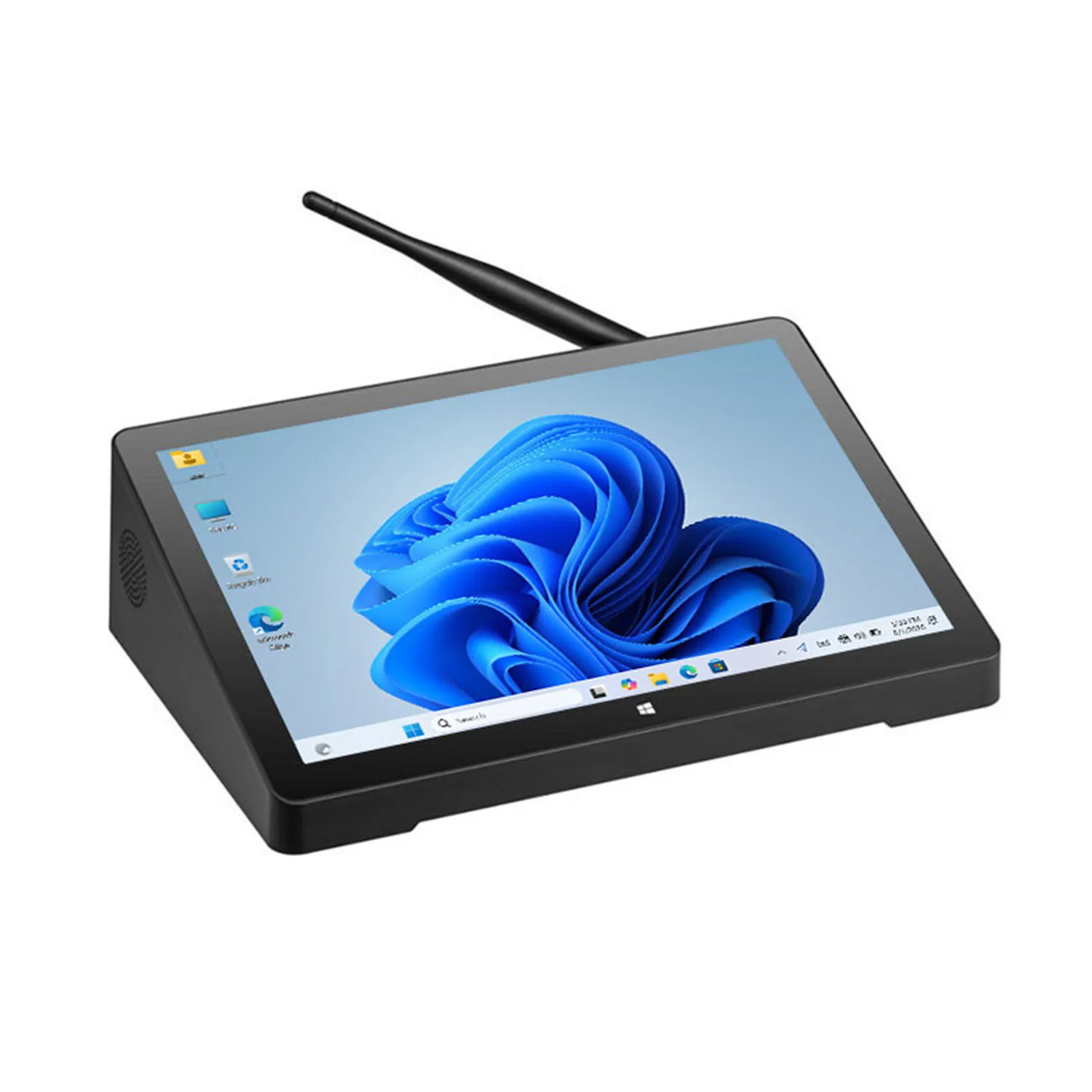
W30NS
W30NS is a 13.3-inch Windows 11 rugged tablet with:
- IP65 protection
- MIL-STD-810H-related 1.22m drop testing
- -20°C to 60°C operating temperature
- 8300mAh removable main battery
- 300mAh backup battery
- Hot-swap capability
- Gigabit Ethernet
- RS232
- HDMI
- USB
- Optional 4G/5G
It is designed for industrial maintenance, equipment communication, vehicle-mounted work and large-screen field-service applications.
W14US
W14US is a 14-inch rugged laptop with:
- IP65
- MIL-STD-810H-related 1.22m drop protection
- -20°C to 60°C operation
- Windows 11 Pro
- Dual 2.5GbE
- RS232
- Four USB-A ports
- Hot-swappable dual batteries
It is intended for field engineering, equipment maintenance and other professional environments.
W15US
W15US provides a larger 15.6-inch form factor while retaining IP65 protection and industrial connectivity.
It is better suited to users who need more screen space for diagnostics, engineering applications and technical documentation.
IP67 Rugged Tablets
CENAVA also provides several IP67 tablet platforms.
W109U
W109U is a 10.95-inch Windows rugged tablet currently listed with:
- IP67 protection
- MIL-STD-810H
- 1.22m drop specification
- 8300mAh removable hot-swap battery
- 300mAh backup battery
- Gigabit RJ45
- RS232
- USB-A
- USB-C
- HDMI
- POGO
It is positioned for diagnostics, vehicle systems and continuous multi-shift operation.
W109NS
W109NS combines:
- Windows 11
- IP67 protection
- MIL-STD-810H-related 1.22m drop
- -20°C to 60°C operating temperature
- 8300mAh removable battery
- Gigabit Ethernet
- RS232
- Optional 4G/5G
- Optional barcode/RFID/NFC modules
It is designed for equipment servicing, industrial maintenance, vehicle work and inspection reporting.
CENAVA's current product portfolio also includes additional IP67 Android and Windows configurations depending on product family.
What About IP68?
CENAVA also offers many IP68 rugged tablets, including W10Y, W10N, A10ST, A80ST, A88ST and A109TB configurations.
IP68 addresses immersion beyond the IPX7 test conditions, but the exact depth and duration associated with an IPX8 rating must be defined by the manufacturer/test specification.
Therefore:
IP68 should not simply be translated as “completely waterproof.”
The actual immersion conditions should be checked for the specific model.
And, just as with IP67, an immersion-oriented rating does not automatically demonstrate every separate jet-test requirement unless those tests were also performed and declared.
IP65 Is Not “65% Waterproof”
IP ratings are sometimes misunderstood as percentages.
IP65 does not mean:
65% waterproof.
IP67 does not mean:
67% waterproof.
The two digits represent two independent protection categories.
For IP65:
6 = solid protection
5 = water protection
For IP67:
6 = solid protection
7 = water protection
This distinction is useful in purchasing specifications because it prevents inappropriate comparisons based only on the apparent numerical value.
Are IP65 and IP67 Dustproof?
Both ratings use a first digit of 6.
This represents a dust-tight enclosure under the relevant IEC 60529 testing.
This level is useful in dusty environments such as:
- Construction
- Warehouses
- Manufacturing
- Agriculture
- Equipment maintenance
- Outdoor inspection
However, field durability also depends on continued maintenance of enclosure seals and port covers.
Are IP65 Devices Waterproof?
“Waterproof” is often too broad a description.
A more precise statement is:
IP65 devices are protected against water jets under defined test conditions.
They are not automatically certified for temporary immersion.
For example, CENAVA describes W14US as dust and water resistant and specifically states that it is not designed for submersion.
This wording is more technically accurate than simply calling the device waterproof.
Are IP67 Devices Waterproof?
IP67 demonstrates temporary immersion protection under specified laboratory conditions.
That does not mean:
- Unlimited underwater use
- Deep-water operation
- High-pressure washing
- Saltwater resistance
- Chemical resistance
- Permanent immersion
The appropriate wording is therefore:
temporarily immersion-resistant under specified IP67 conditions
rather than “completely waterproof.”
Port Covers Matter
An enclosure can only maintain its intended ingress protection when seals and protective components are used correctly.
Rugged devices may include covers over:
- USB
- Ethernet
- RS232
- HDMI
- SIM
- TF/microSD
- Charging connectors
CENAVA explicitly notes for W14US that port covers must be properly closed to maintain its IP65 protection.
This principle is important across rugged computing systems.
An open connector cover can change the effective protection of the device during field use.
Removable Batteries and IP Protection
Removable-battery systems require carefully designed seals and mechanical interfaces.
Devices such as W109NS combine a removable 8300mAh battery with an IP67 rugged enclosure. CENAVA describes its battery compartment as reinforced and sealed for repeated field use.
When servicing removable batteries:
- Inspect the seal
- Remove dirt
- Fully seat the battery
- Lock the battery correctly
- Avoid damaging gasket surfaces
Ingress protection depends on maintaining the complete enclosure.
IP Rating and Device Aging
An IP rating describes a tested product condition.
Real devices may experience:
- Repeated drops
- UV exposure
- Worn seals
- Repeated battery changes
- Connector-cover wear
- Chemical cleaning
- High and low temperatures
These factors can affect enclosure condition over time.
For long-term industrial fleets, routine physical inspection should therefore include:
- Port covers
- Rubber seals
- Battery doors
- Gaskets
- Chassis damage
Rugged design improves environmental resistance, but it does not eliminate normal wear.
IP Protection and Temperature Changes
Temperature cycling can create additional stress on enclosure materials.
A rugged computer may move between:
- Cold storage and warm loading docks
- Air-conditioned vehicles and hot outdoor areas
- Winter outdoor sites and heated buildings
Seals, battery compartments and connectors can all experience expansion and contraction.
For this reason, IP protection and wide-temperature capability should be evaluated together rather than treated as completely unrelated specifications.
CENAVA W30NS combines IP65 with -20°C to 60°C operation, while W109NS combines IP67 with the same published operating-temperature range.
IP Rating and Condensation
An IP rating describes water ingress testing, but condensation introduces a different operating challenge.
Moving a cold tablet into a warm humid environment can create moisture on the display and enclosure.
For cold-chain applications, users should therefore consider:
- IP protection
- Operating temperature
- Wet-hand touch
- Glove touch
- Charging conditions
rather than selecting a device based only on its IP code.
IP65/IP67 and Rain
Both IP65 and IP67 rugged devices may be appropriate for many outdoor workflows, but the exact exposure pattern matters.
For normal rain and field work:
- IP65 offers water-jet-oriented protection
- IP67 provides temporary immersion protection
If the device must operate under unusual spray pressure or prolonged immersion, the required test condition should be specified rather than assuming either rating covers every possible scenario.
IP Protection and Washdown
Industrial users sometimes clean equipment with water hoses.
This is exactly where understanding IP65 vs. IP67 becomes important.
An IP65 rating directly addresses water jets.
An IP67 rating addresses temporary immersion.
Because the tests differ, a procurement specification requiring washdown should state the actual water-jet requirement instead of simply requesting “IP67 or higher.”
IEC 60529-oriented industry guidance explicitly notes that immersion ratings are not automatically substitutes for jet ratings.
IP Protection and Salt Water
IP65 or IP67 should not automatically be interpreted as salt-spray or marine-corrosion resistance.
Water-ingress resistance and corrosion resistance are separate requirements.
Marine applications may additionally require evaluation of:
- Salt spray
- Connector materials
- Fasteners
- Coatings
- Galvanic corrosion
- Environmental certification
A tablet surviving freshwater ingress testing may still require additional material considerations for long-term offshore deployment.
IP Protection and Chemicals
IEC 60529 ratings describe ingress protection involving water under defined conditions.
They do not automatically prove resistance to:
- Alcohol
- Solvents
- Fuels
- Oils
- Acids
- Alkalis
- Disinfectants
Chemical-resistance requirements should therefore be evaluated separately.
This is particularly important in:
- Healthcare
- Chemical manufacturing
- Oil and gas
- Food processing
- Automotive workshops
IP65/IP67 vs. MIL-STD-810H
These two specifications address different risks.
IP65/IP67
primarily describe ingress protection.
MIL-STD-810H
addresses defined environmental test methods such as drop, vibration and temperature-related stresses depending on the tests performed.
A device can have a high IP rating and still lack adequate mechanical drop protection.
Conversely, a product can survive drop testing while having limited water protection.
CENAVA W14US combines IP65 with MIL-STD-810H-related 1.22m drop testing, while W109U combines IP67 with MIL-STD-810H-related rugged protection.
These specifications complement each other.
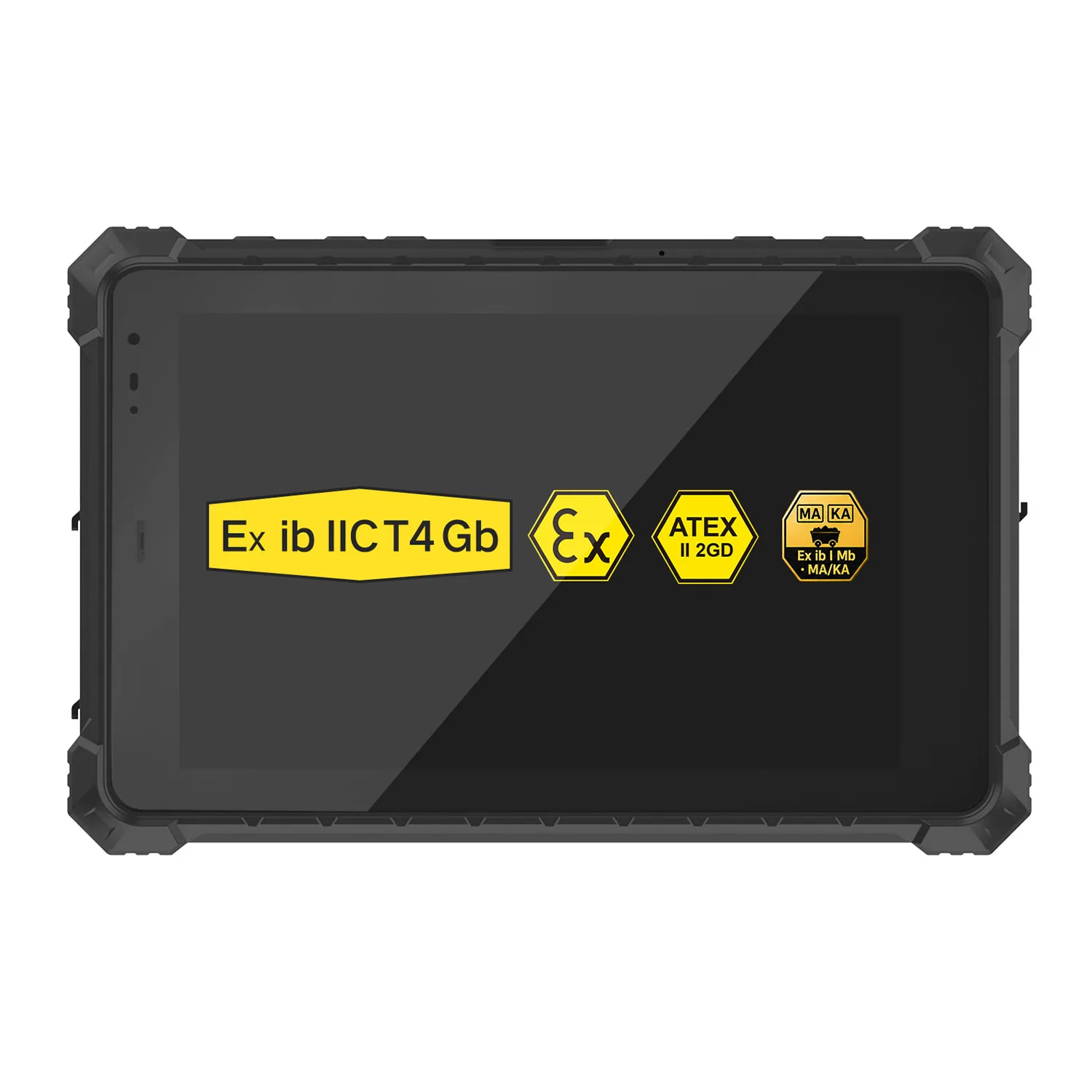
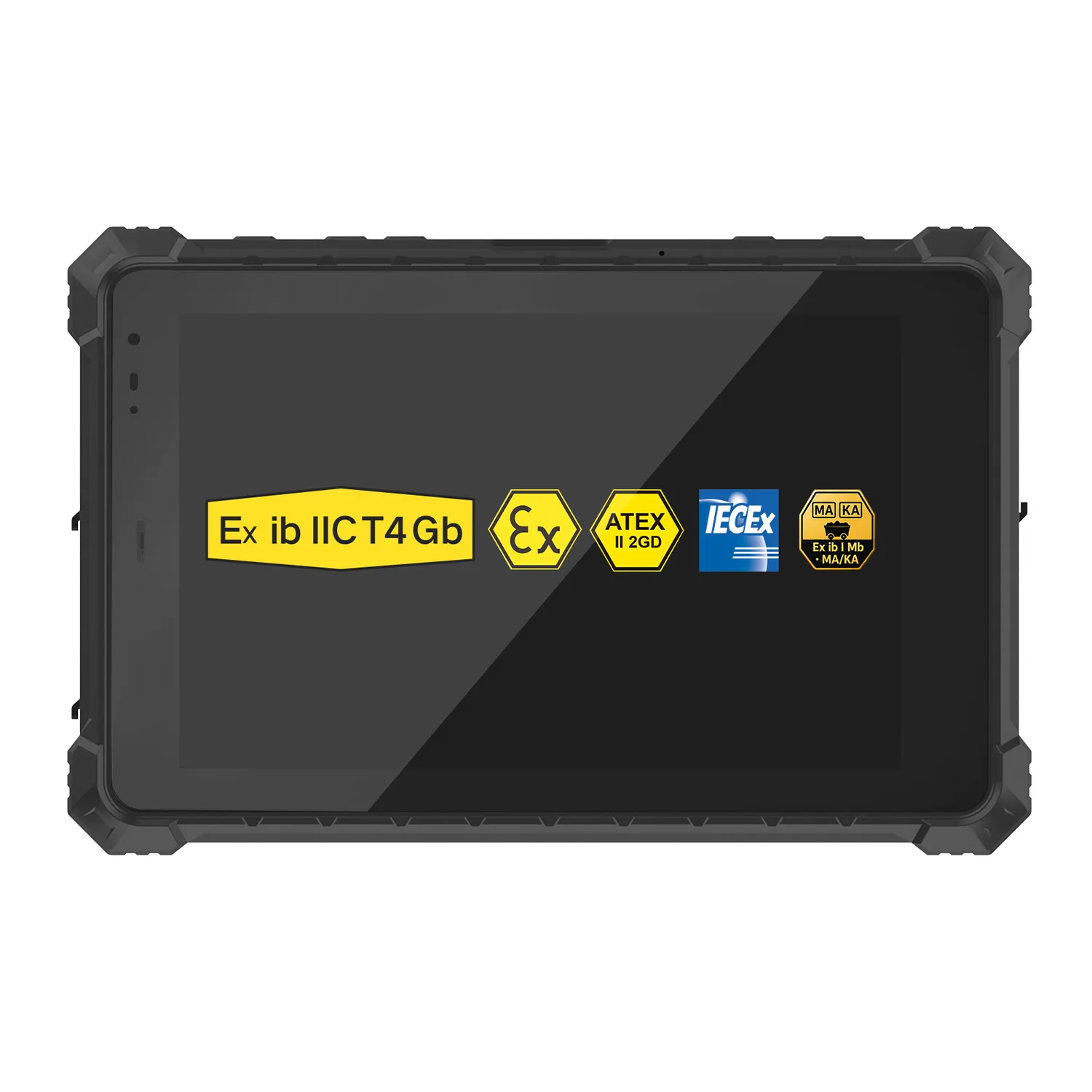
IP65/IP67 vs. ATEX and IECEx
Ingress protection should also not be confused with explosion protection.
IP65/IP67 address dust and water entering the enclosure.
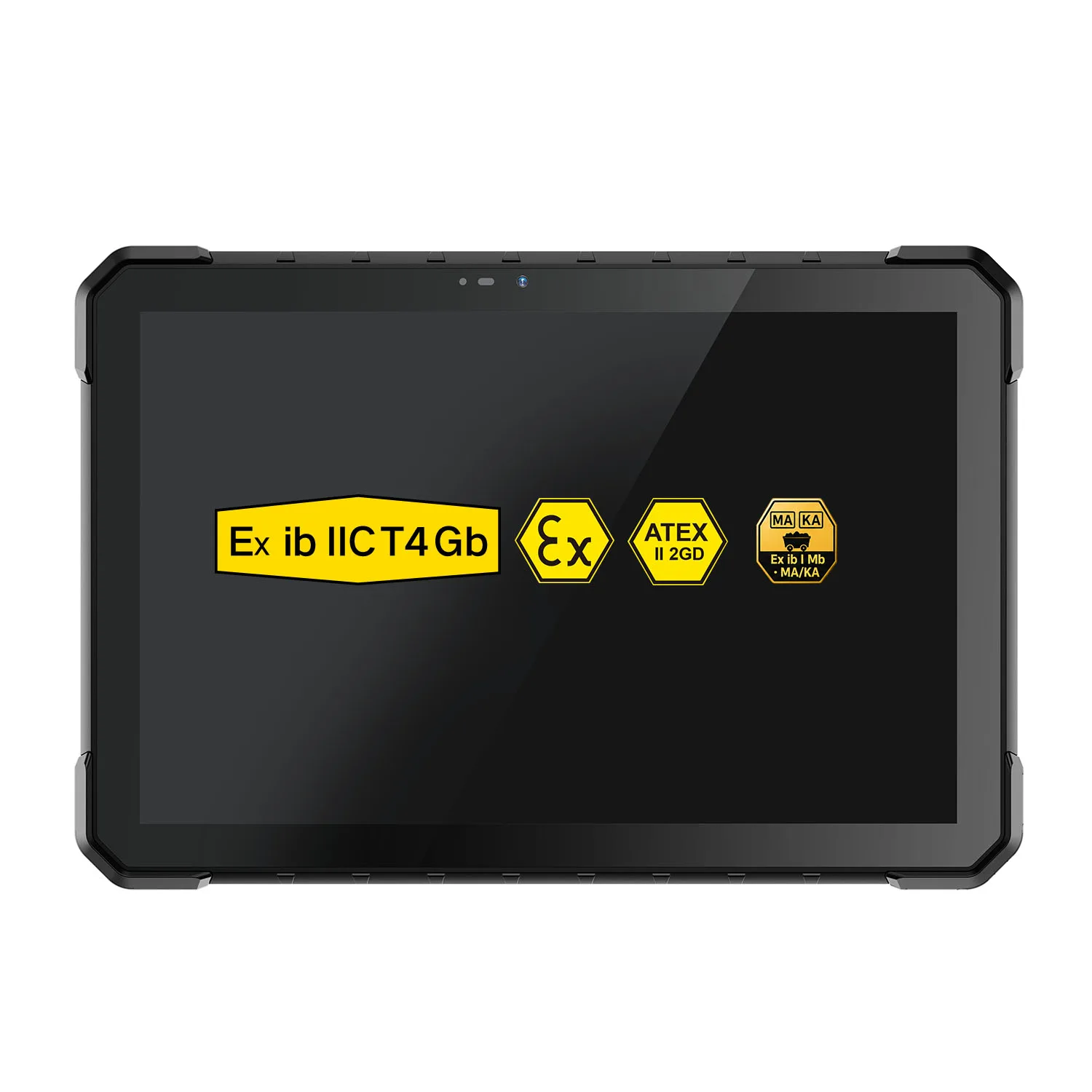
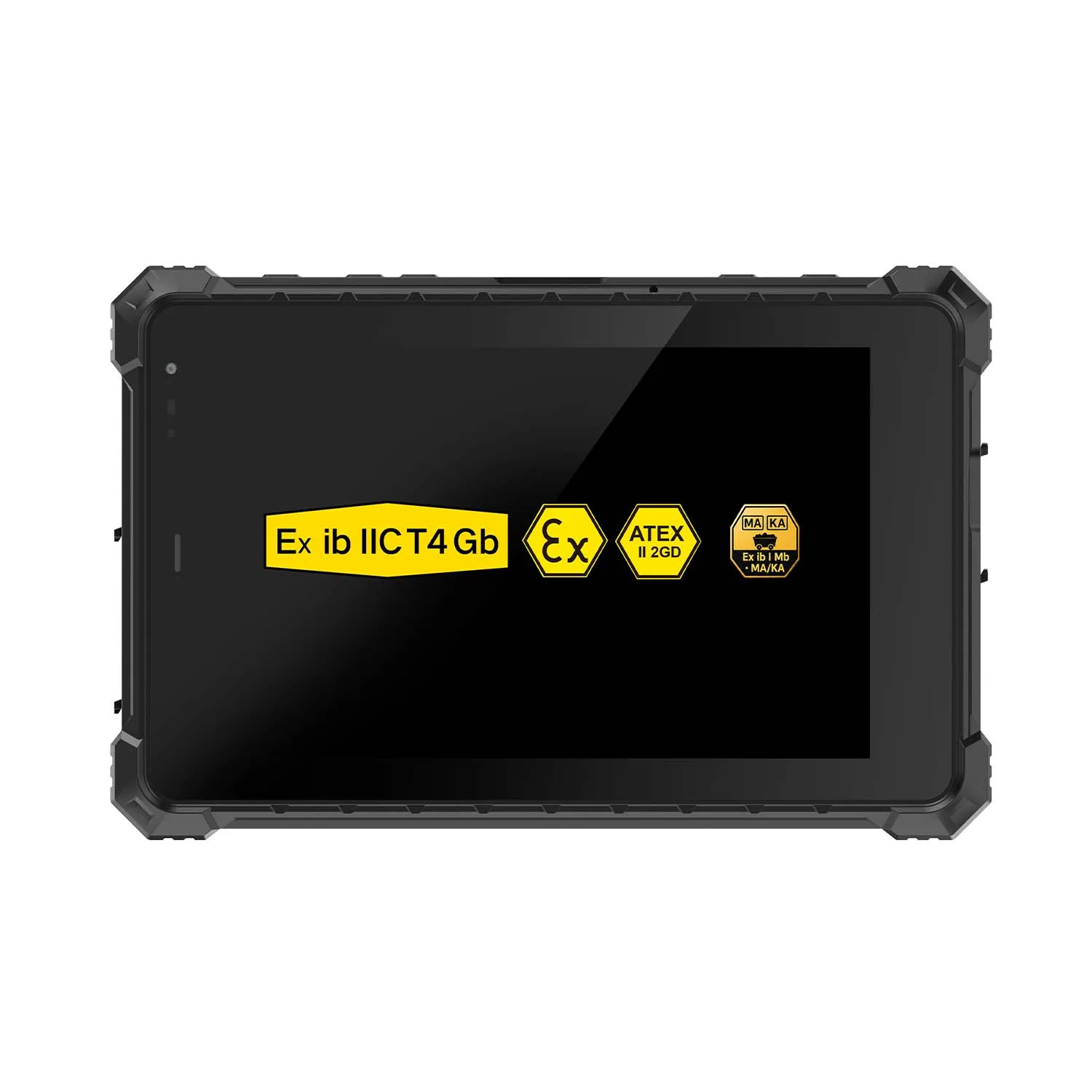
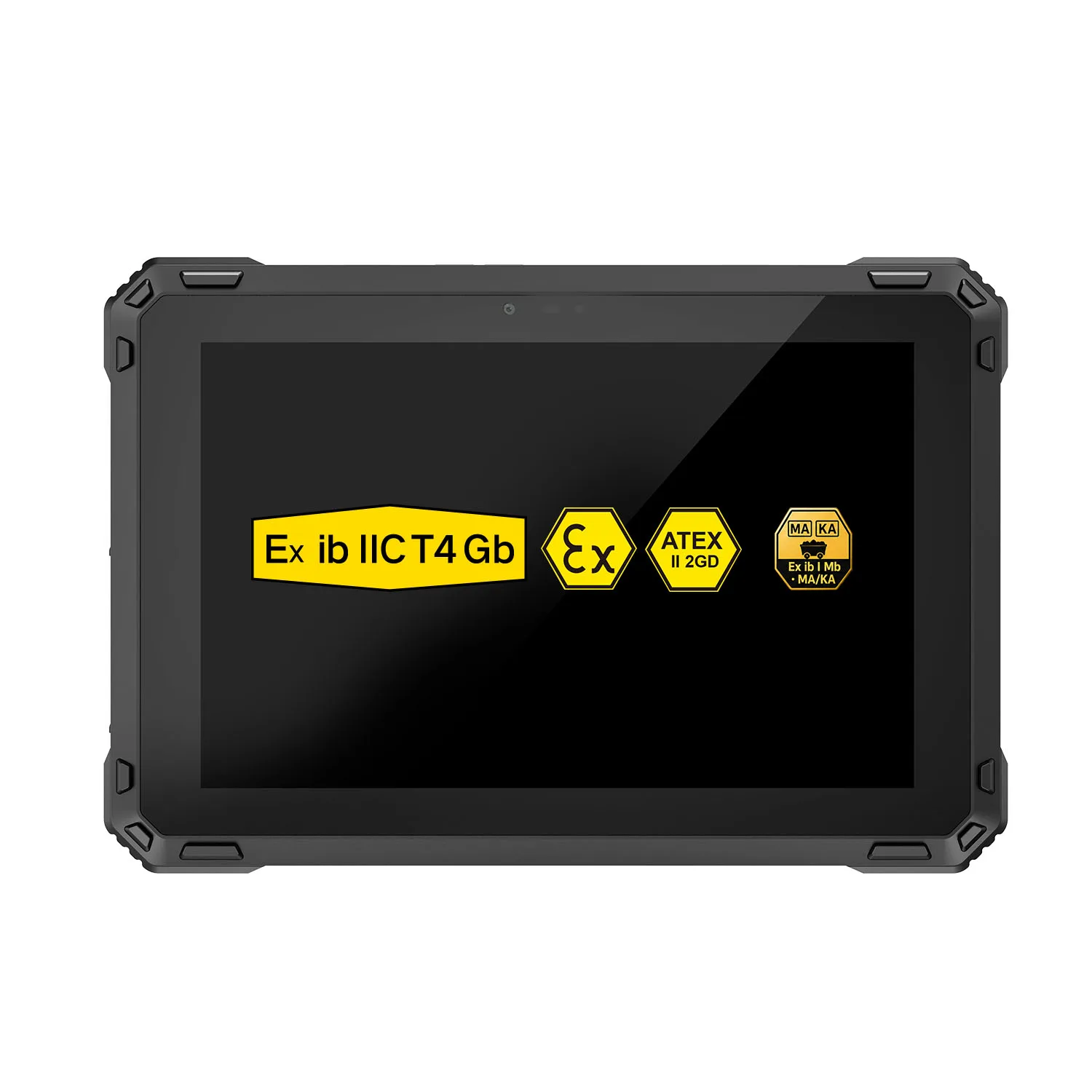
ATEX/IECEx address potential ignition risks in explosive atmospheres.
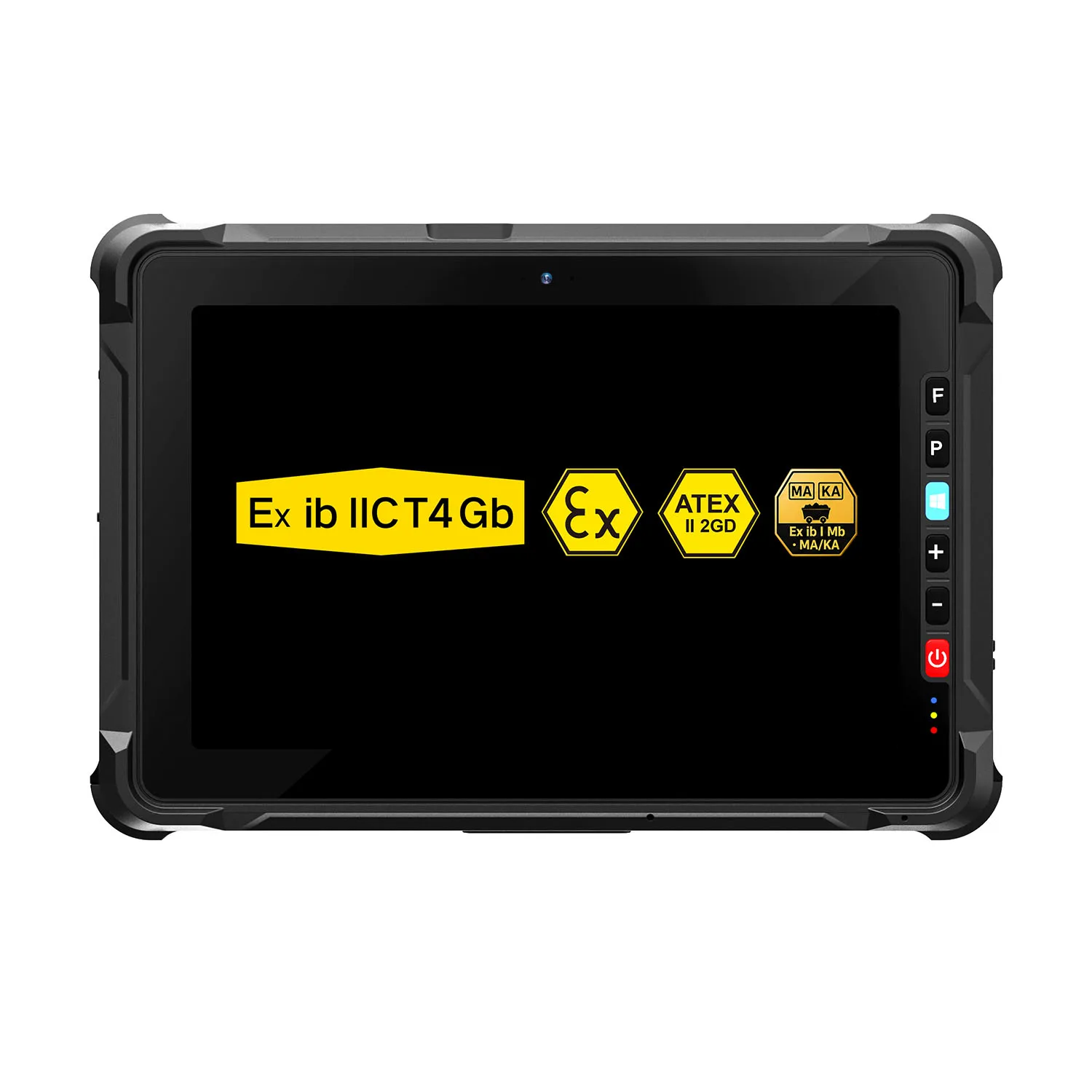
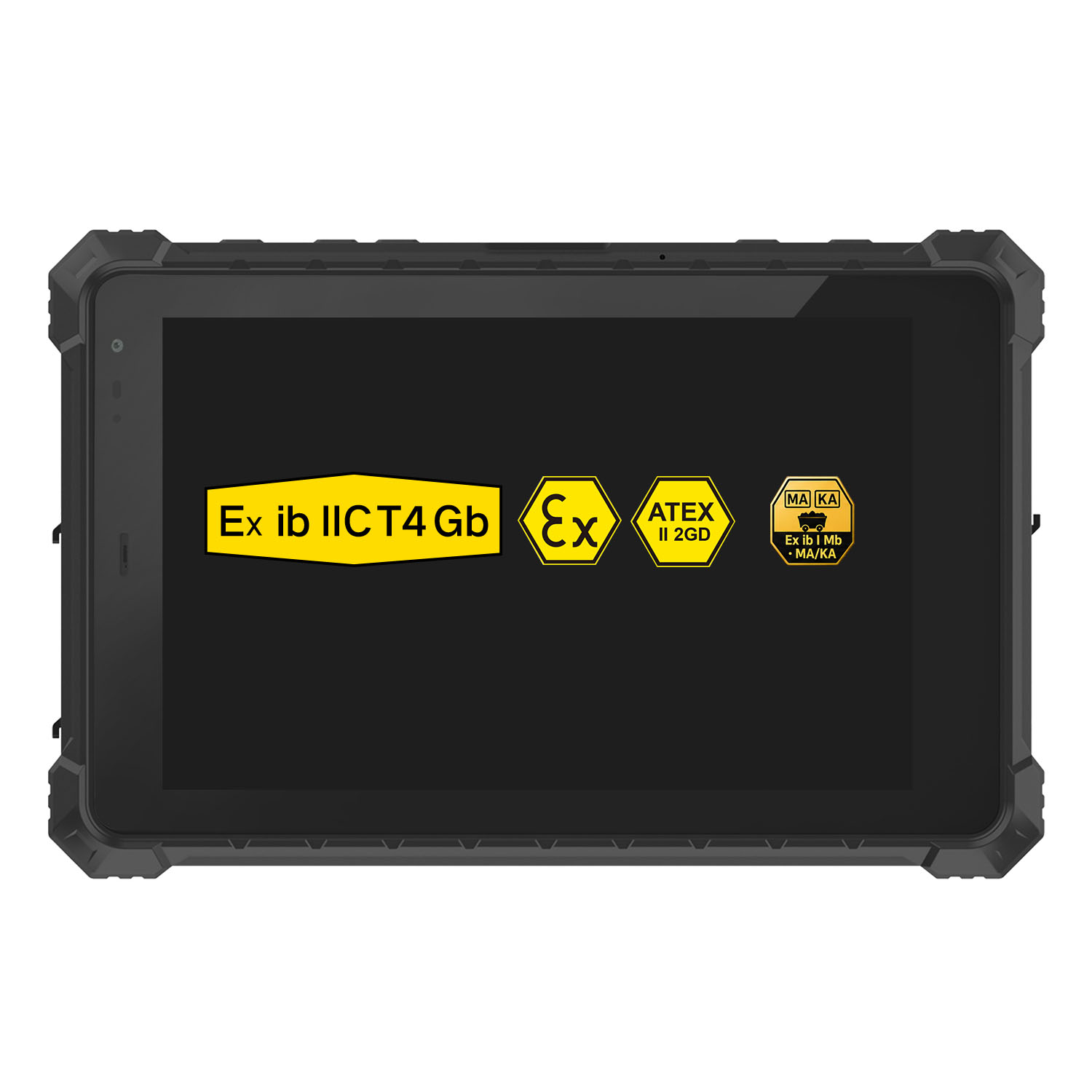
An IP67 tablet is therefore not automatically suitable for Zone 1 or Zone 2 hazardous areas.
Oil and gas, petrochemical, mining and combustible-dust environments may require an appropriately certified hazardous-area configuration.
IP and Ex certification should be evaluated independently.
IP Rating vs. Drop Resistance
IP protection does not indicate how far a tablet can be dropped.
A device rated IP67 may still be mechanically fragile unless additional rugged construction and drop testing are specified.
For field tablets, evaluate both:
Ingress protection
and:
Mechanical ruggedness
CENAVA W109NS, for example, combines IP67 with a stated MIL-STD-810H 1.22m drop specification.
IP Rating vs. Screen Durability
IP protection also does not describe screen scratch resistance.
A device can be highly sealed but still require appropriate cover glass for industrial handling.
For rugged computing applications, screen specifications can include:
- Glass structure
- Surface hardness
- Anti-fingerprint coating
- Glove touch
- Wet-hand touch
All of these characteristics should be evaluated separately from the IP rating.
IP65 Rugged Computers for Manufacturing
Manufacturing environments often involve:
- Dust
- Oil mist
- Routine cleaning
- Material debris
- Machine vibration
An IP65 rugged computer can provide an appropriate level of enclosure protection when immersion is not a normal hazard.
W30NS is an example of an IP65 tablet designed for equipment communication, industrial maintenance and production data entry.
IP65 Rugged Laptops for Field Engineering
Field engineers frequently need a traditional keyboard and multiple physical interfaces.
IP65 rugged laptops such as W14US and W15US provide:
- Physical keyboard
- Windows 11 Pro
- Multiple USB ports
- Dual Ethernet
- RS232
- Hot-swappable batteries
- Industrial environmental protection
This makes IP65 particularly useful where the primary risks are dust, rain and spray rather than accidental submersion.
IP67 Rugged Tablets for Field Service
Field technicians frequently carry tablets between:
- Vehicles
- Machinery
- Outdoor equipment
- Customer sites
- Utility infrastructure
An IP67 tablet provides dust-tight construction together with temporary-immersion protection.
W109U and W109NS combine this enclosure protection with Windows and industrial connectivity for field-service applications.
IP67 Tablets for Utilities
Water, electricity and telecommunications workers may operate near:
- Rain
- Mud
- Standing water
- Underground infrastructure
- Outdoor cabinets
An IP67 rugged tablet can be appropriate when accidental temporary immersion is part of the risk profile.
Useful supporting features include:
- High-brightness display
- GPS/GNSS
- 4G/5G
- Glove touch
- Long battery life
The IP rating should form one part of the complete field-device specification.
IP Protection for Construction
Construction devices face simultaneous exposure to:
- Dust
- Rain
- Concrete debris
- Mud
- Drops
- Sunlight
IP65 or IP67 addresses only part of this environment.
A construction tablet should also be evaluated for:
- Drop resistance
- Operating temperature
- Display brightness
- Glove touch
- Battery runtime
Selecting the highest IP number alone does not guarantee the best construction tablet.
IP Protection for Vehicle-Mounted Computers
Vehicle-mounted equipment may encounter:
- Dust
- Rain
- Road spray
- Vibration
- Temperature changes
IP65 can be highly relevant for exposed equipment where spray is the primary concern.
IP67 can be useful where temporary immersion or standing water is a realistic risk.
Mounting location should therefore influence the IP requirement.
IP Protection for Warehouses
Many warehouses do not require immersion protection.
Common hazards include:
- Dust
- Loading-dock rain
- Spills
- Repeated handling
In these environments, the required IP level should be selected according to actual exposure rather than automatically purchasing the highest rating.
The device's battery, scanner, Wi-Fi and ergonomic design may ultimately have a larger productivity impact than moving from one IP level to another.
IP Protection for Cold Storage
Cold-chain deployments need more than ingress protection.
Workers may experience:
- Condensation
- Gloves
- Freezer temperatures
- Wet surfaces
Consider the combination of:
IP rating + wide temperature + glove touch + wet-hand touch + battery performance
rather than treating IP65/IP67 as a complete cold-storage specification.
How to Choose Between IP65 and IP67
1. Identify the Dust Environment
Both IP65 and IP67 provide dust-tight protection because both use the first digit 6.
2. Identify How Water Reaches the Device
Ask whether the main exposure is:
- Rain
- Hose spray
- Water jets
- Standing water
- Temporary immersion
3. Do Not Select by Number Alone
IP67 is not simply an upgraded IP65 water-jet test.
4. Define the Actual Test Requirement
For industrial procurement, specify whether you require:
Water-jet resistance
or:
Temporary immersion resistance
or both.
5. Evaluate Port Usage
If workers frequently open USB, Ethernet or charging covers, consider how that affects real-world protection.
6. Check Removable Components
Battery doors and removable storage must be properly sealed.
7. Evaluate Drop Resistance
Add the appropriate mechanical ruggedness requirement.
8. Check Temperature
Include minimum and maximum operating temperatures.
9. Consider Chemicals and Corrosion Separately
Do not assume the IP rating addresses them.
10. Verify the Exact Model
Do not transfer one model's IP rating to another model in the same product family.
Why Choose CENAVA IP-Rated Rugged Computers?
IP65 Rugged Platforms
CENAVA offers IP65 tablets and laptops for industrial environments where dust and water-jet exposure are important.
IP67 Rugged Platforms
IP67 Windows and Android configurations are available for applications requiring temporary-immersion protection.
IP68 Rugged Tablets
Many CENAVA compact and 10-inch rugged tablets provide IP68 configurations for more demanding immersion requirements.
Windows and Android
Different operating systems allow enclosure protection to be matched with the required enterprise software.
Industrial Interfaces
Selected IP-rated devices integrate:
- RJ45
- RS232
- USB
- HDMI
- POGO
MIL-STD-810H Rugged Designs
Selected products combine IP protection with documented 1.22m-class drop testing.
Wide-Temperature Operation
Several platforms combine ingress protection with approximately -20°C to 60°C operation.
High-Brightness Displays
Outdoor-oriented models offer high-brightness display configurations.
OEM and ODM Integration
For qualified projects, CENAVA can evaluate enclosure protection together with interfaces, batteries, displays, communication modules and other hardware requirements.
Frequently Asked Questions About IP65 and IP67
1. What does IP65 mean?
IP65 means the enclosure is dust-tight and has been tested for protection against water jets under the applicable test conditions.
2. What does IP67 mean?
IP67 means the enclosure is dust-tight and has been tested for temporary immersion under applicable IEC 60529 conditions.
3. Is IP67 better than IP65?
Not in every respect.
IP65 and IP67 use different water tests.
IP65 addresses jets.
IP67 addresses temporary immersion.
Choose according to the actual exposure.
4. Does IP67 automatically include IP65?
Not necessarily.
Immersion testing and water-jet testing are different.
If both are required, verify that the product has been evaluated for both conditions.
5. Are IP65 and IP67 both dustproof?
Both use the first digit 6, representing a dust-tight enclosure under the applicable IEC test.
6. Can an IP65 device be submerged?
IP65 does not establish temporary-immersion protection.
Choose an immersion-rated configuration where that risk exists.
7. Can an IP67 device be washed with a hose?
Do not assume this from IP67 alone.
IPX7 is an immersion test rather than an IPX5 water-jet test.
8. Is IP67 completely waterproof?
No.
It addresses temporary immersion under defined conditions rather than unlimited underwater operation.
9. Is IP65 enough for outdoor use?
It can be appropriate for many outdoor industrial applications involving dust, rain and water spray.
Other requirements such as temperature, sunlight readability, drops and battery life should also be considered.
10. Which CENAVA products are IP65?
Current examples include W14US, W15US and W30NS, among other configurations.
11. Which CENAVA products are IP67?
Current examples include W109U and W109NS, together with additional IP67 Android/Windows configurations in the CENAVA portfolio.
12. Does IP65 or IP67 mean the device is drop-proof?
No.
Ingress protection and mechanical drop resistance are separate specifications.
Look for documented drop testing such as applicable MIL-STD-810H methods.
13. Does an IP67 tablet meet ATEX or IECEx requirements?
No.
Ingress protection and hazardous-area explosion protection are different certification systems.
ATEX/IECEx requirements must be verified independently.
14. Does an IP rating cover saltwater or chemical resistance?
Not automatically.
Corrosion and chemical compatibility require separate evaluation.
15. Which IP rating should I choose?
Choose based on the real hazard:
Dust + water jets → consider IP65
Dust + accidental temporary immersion → consider IP67
More demanding immersion → evaluate the exact IP68 specification
Jets + immersion → require evidence that both applicable tests have been passed
Then add the necessary drop, temperature, display, battery and hazardous-location requirements separately.
Reading an IP Rating
IP (Ingress Protection) ratings, defined by IEC 60529, use two digits. The first digit rates protection against solids (0–6), the second against liquids (0–9). An IP67 tablet is therefore fully dust-tight and protected against temporary immersion.
| Rating | Solids | Liquids | Real-world meaning |
|---|---|---|---|
| IP65 | Dust-tight | Water jets | Survives hose-down and heavy rain |
| IP66 | Dust-tight | Powerful jets | Ship-deck washdown, driving rain |
| IP67 | Dust-tight | Immersion 1 m / 30 min | Dropped in a puddle? Pick it up and keep working |
Why Sealing Quality Differs Between Brands
An IP certificate is only as good as the sealing architecture behind it. True IP67 devices seal every seam with gaskets and O-rings, use waterproof membrane vents over speakers and microphones, and pot their connectors. CENAVA rugged computers are sealed at the enclosure, port and key-membrane level so the rating survives years of gasket compression, thermal cycling and drops — not just the day of testing.
IP Rating + MIL-STD-810 Together
IP ratings say nothing about drops or vibration — that is MIL-STD-810 territory. Professional deployments should require both: IP65/IP67 for water and dust, plus MIL-STD-810 for mechanical shock. CENAVA rugged tablets are engineered to both standards — the exact test scope is documented per model.
Need a Custom Rugged Solution?
Our engineering team can tailor rugged hardware to your exact environment, certifications and workflow. Tell us your requirements.
Talk to an Engineer All Technologies