




How to Digitize Mine Fleet Inspections
How do you digitize mine fleet inspections without losing control of the safety decisions? Our working answer: bind each examination to the correct vehicle, operator, shift and location; route safety-affecting defects into a controlled physical response; and close the record only after the maintenance system returns an authoritative receipt. A mine fleet management tablet adds value when it preserves that chain offline instead of turning a paper walk-around into an isolated electronic checklist.
Fleet inspection is not one process. An operator's pre-use examination, a workplace examination, a scheduled maintenance inspection and a post-repair release may all touch the same haul truck, yet they have different owners and completion rules. Fold them into one "inspection complete" status and the dashboard looks tidy — while nobody can say who actually decided the machine could return to service.
Most digital failures begin at handover points. A worker picks the neighboring truck. A replacement tablet holds yesterday's asset file. A defect shows as submitted on the device even though the CMMS rejected its code. Photographs do not cure those gaps; an image without asset, time, author and server identity is only an attachment.
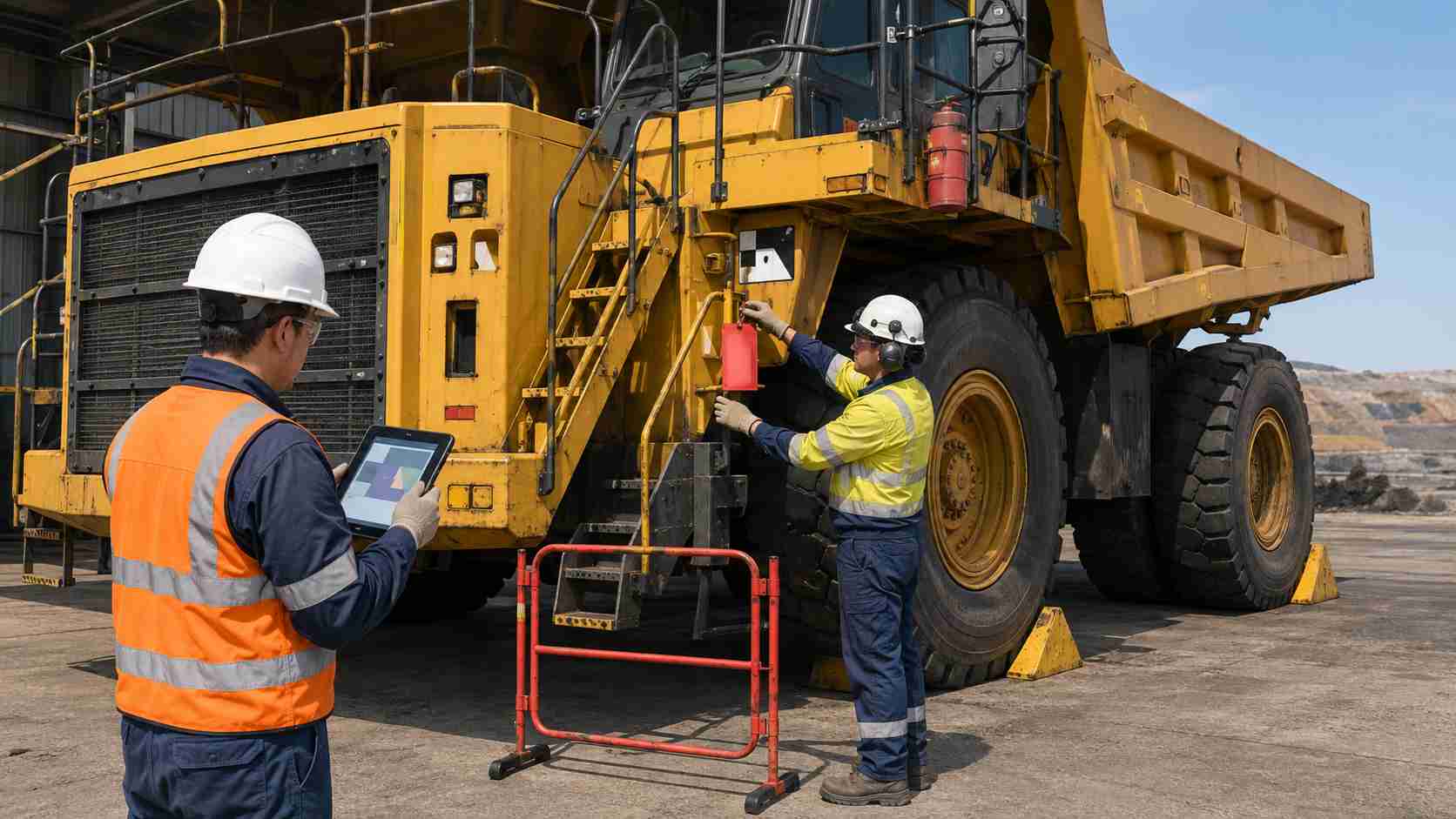
The software must also remain subordinate to physical safety action. If continued operation is hazardous, the approved stop, isolation and tagging procedure takes priority over completing a screen. A work-order number records a maintenance demand. It does not prove that the equipment was parked, marked against use, repaired or independently released.
In this 2026 guide we evaluate ten tablet manufacturers through that workflow. It covers ordinary open-pit and quarry routes rather than underground or explosive-atmosphere admission. Each model's environmental specification appears once in its own entry, while the application discussion focuses on asset identity, offline evidence and maintenance closure instead of repeating processors, radios or laboratory standards.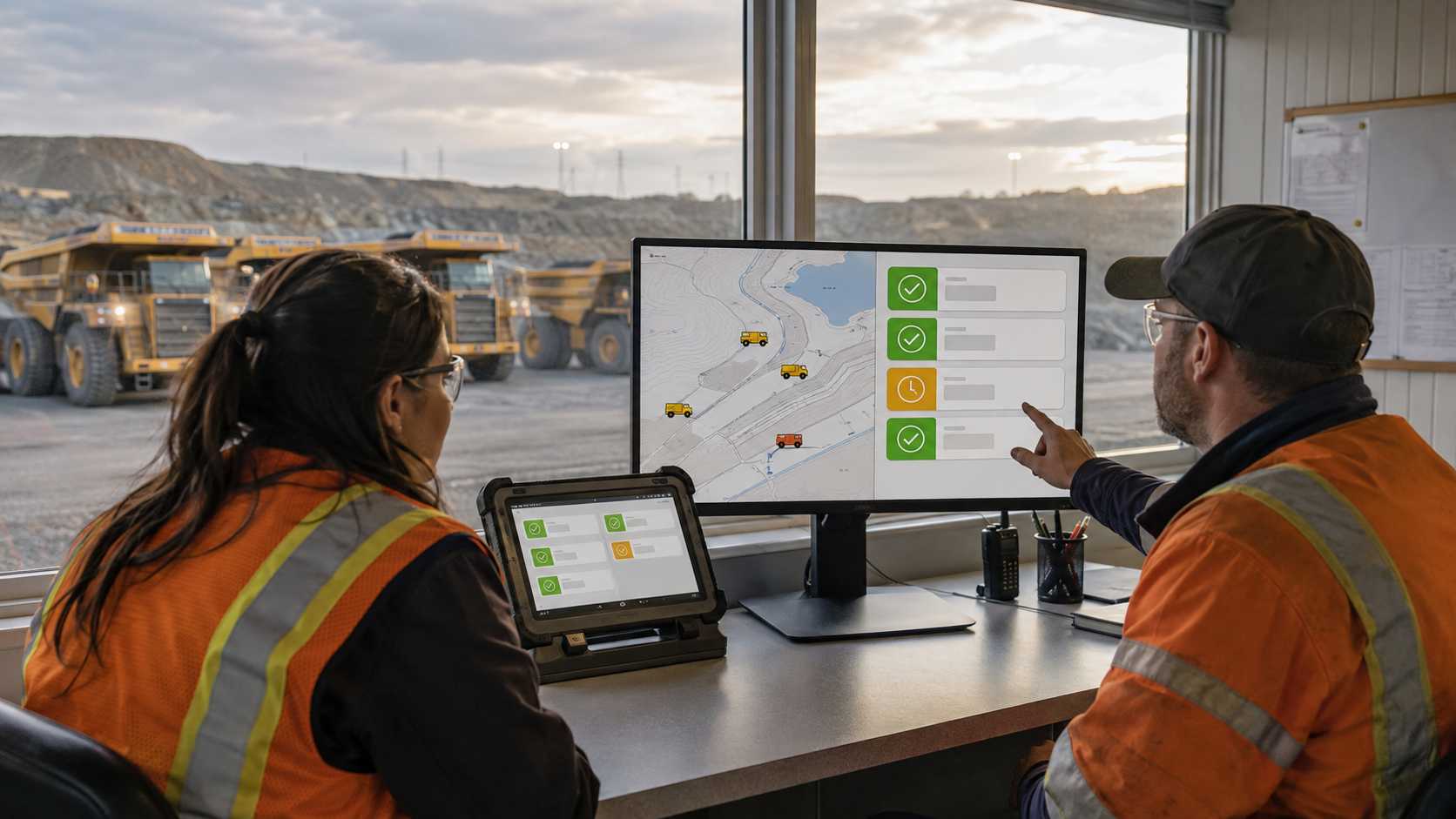
Open Pit Equipment Inspection Tablet: What Defines a Reliable Digital Workflow?
A dependable mobile workflow begins with a governed fleet hierarchy. The tablet should receive a released asset record containing the mine, operating area, fleet class, unit number, serial or VIN reference, active shift assignment and inspection-template version. Scanning a label may accelerate selection, but the application should still display the full identity. A successful scan of a replaced door or component is not proof that the entire truck was selected correctly.
- Separate inspection authority: Distinguish the operator examination from a supervisor review and a maintenance decision. Store the responsible role with each event instead of reusing one shared login at the fuel bay.
- Make defect severity actionable: A safety-affecting condition needs an immediate route to the mine's approved stop and marking procedure. Lower-priority observations may enter planning without borrowing the same red status.
- Require a work-order handshake: Keep the tablet event ID, integration receipt and CMMS order ID as separate fields. “Queued” is not “accepted,” and an accepted order is not evidence of repair completion.
- Preserve repair and release history: Link the original observation, repair task, parts or labor evidence, post-repair check and authorized return-to-service decision without overwriting the first record.
For United States metal and nonmetal surface mines, 30 CFR 56.14100 requires self-propelled mobile equipment to be inspected by the operator before use on a shift. It also separates timely correction, removal from service when continued operation is hazardous, and records for safety defects not corrected immediately. A digital design should mirror those states instead of treating “defect saved” as the end of the obligation.
30 CFR 56.18002 addresses working-place examinations, notification, corrective action and record content. Those records include the examiner, date, examined locations and adverse conditions, with correction dates added when work is completed. The rule illustrates why fleet examination and workplace examination may share a map but should not share an undifferentiated form. Other jurisdictions require their own rule mapping.
Our proposed dry run uses 14 training assets: four haul trucks, two loaders, two excavators, two dozers, one grader, one water truck, one drill and one light vehicle. Seed two swapped labels, one retired asset, three safety-affecting defects, two maintenance observations and one rejected work-order code. The objective is not rapid tapping. It is to find where identity, physical action and system acknowledgement break apart.
Quarry Maintenance Work Order Tablet: Top 10 Manufacturers for 2026
The ten manufacturers below are compared as workflow endpoints, not as interchangeable mining approvals. A vehicle-mounted unit, a walk-around tablet and a survey controller solve different tasks even when their screens are similar. The credible choice depends on how the mine issues devices, how workers carry them and where an authoritative maintenance record is created.
1. CENAVA (China)
Core Strength: Project-level configuration for inspection, asset identification and optional field positioning
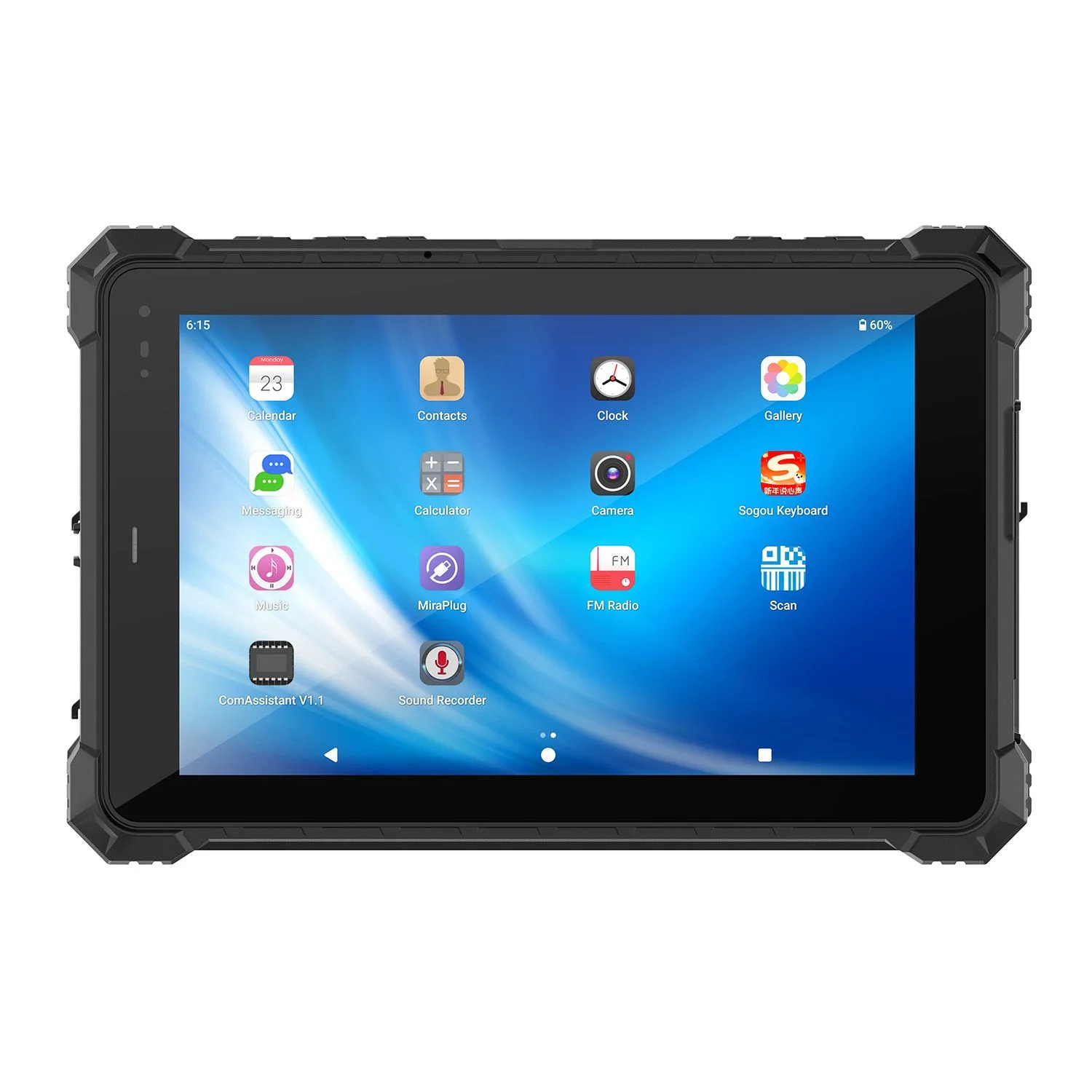
CENAVA develops rugged tablets and industrial mobile computers for OEM/ODM deployments. Its practical advantage in a mine-fleet project is the ability to freeze the operating image, data-capture option and accessory set against one configuration record rather than asking the site to govern many informal variants.
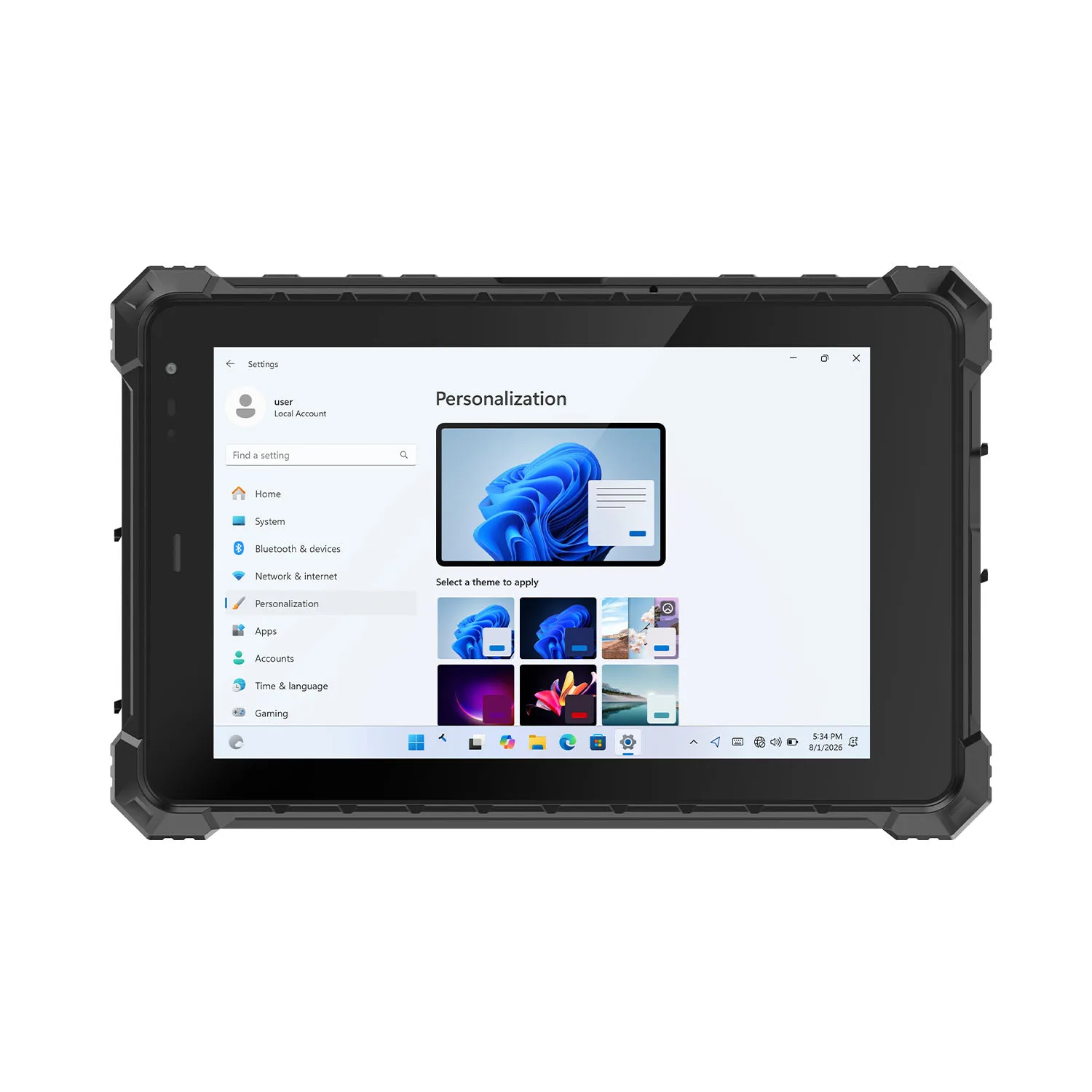
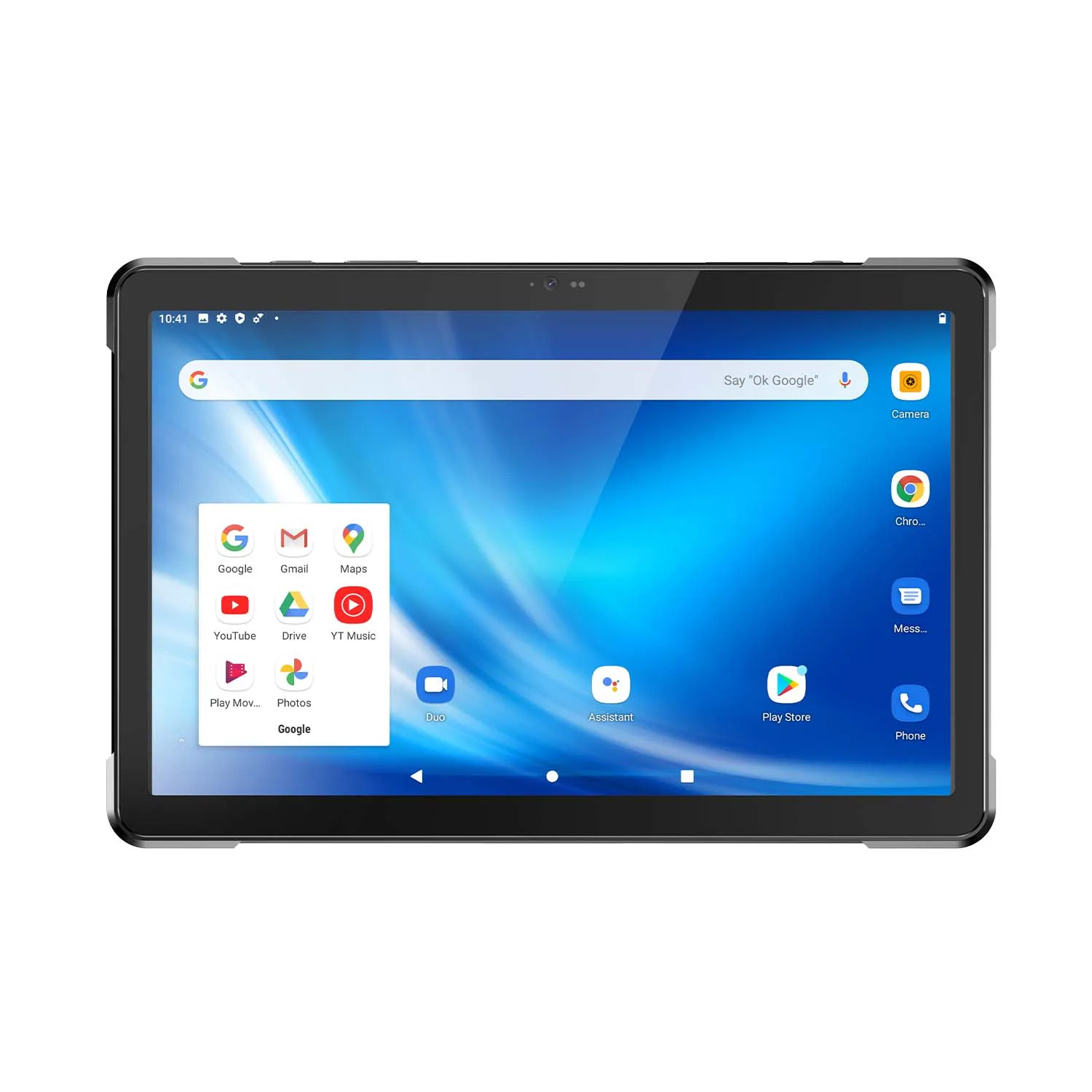
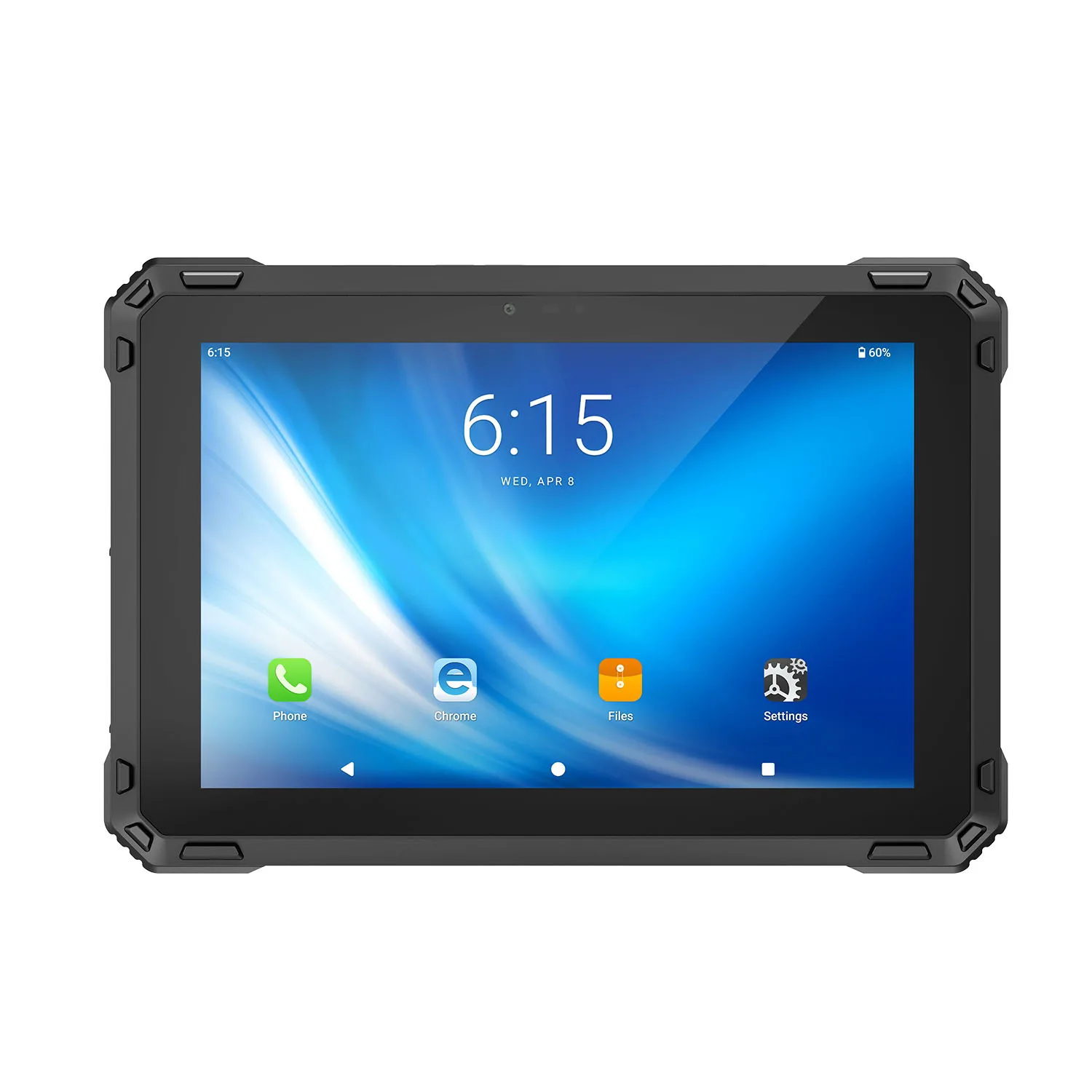
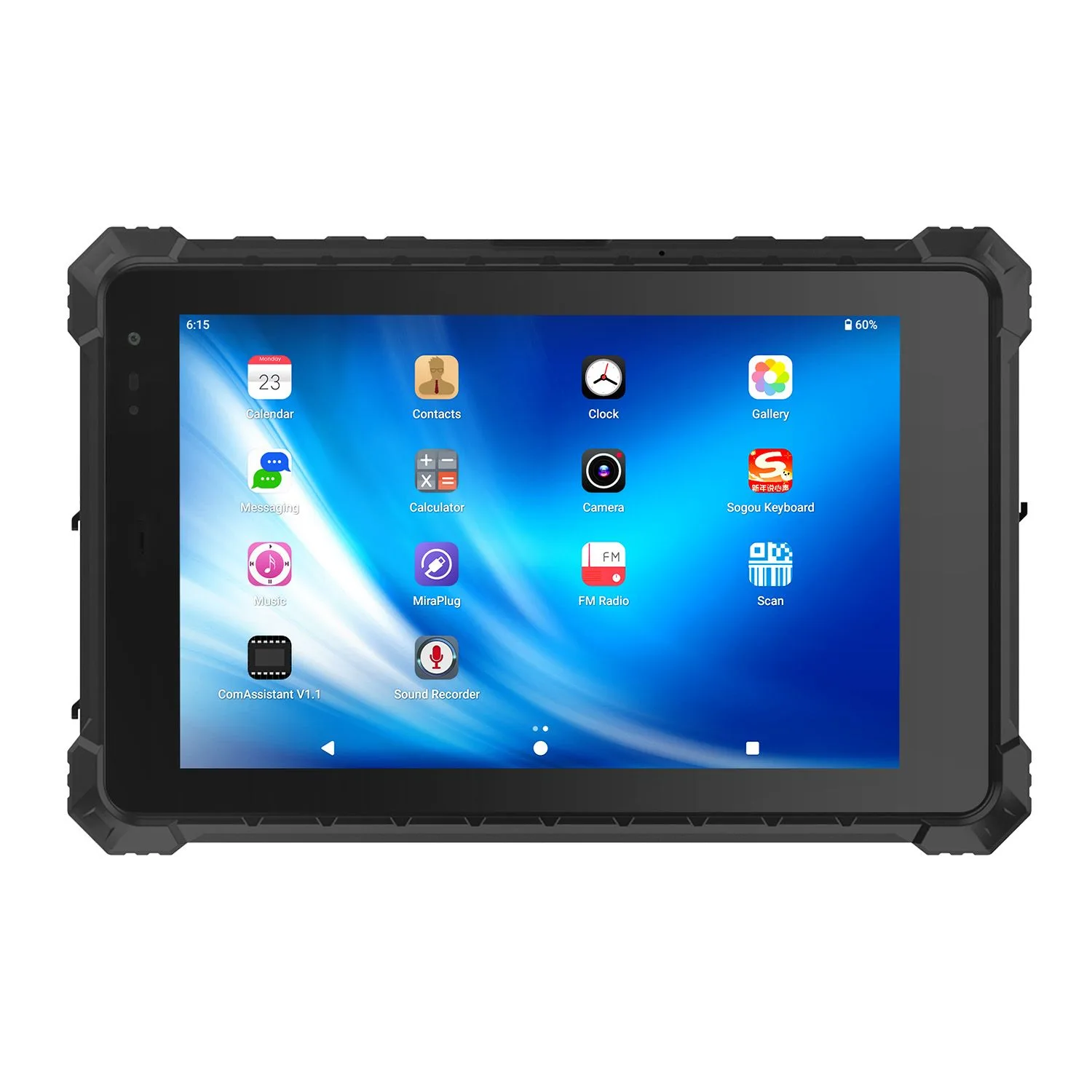
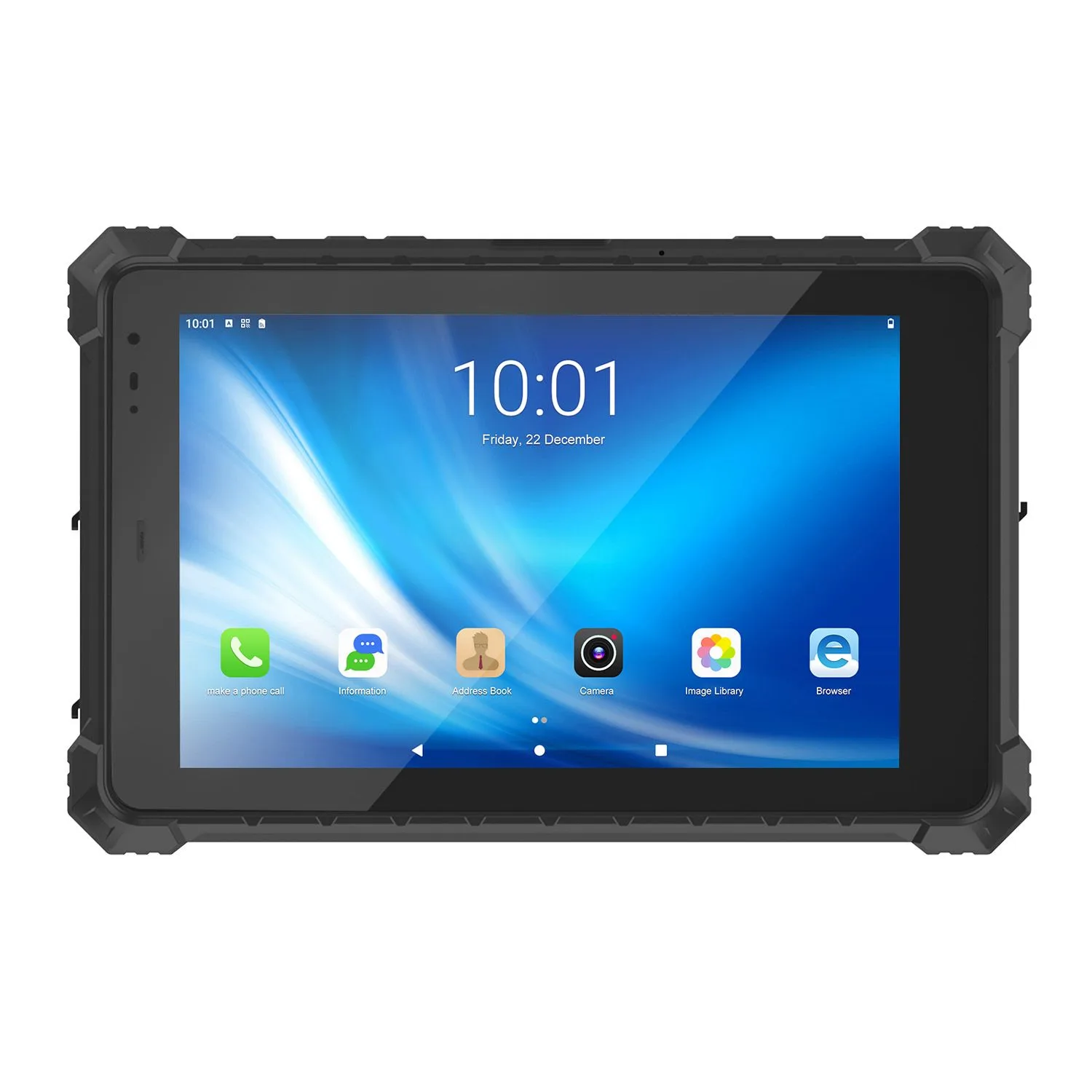
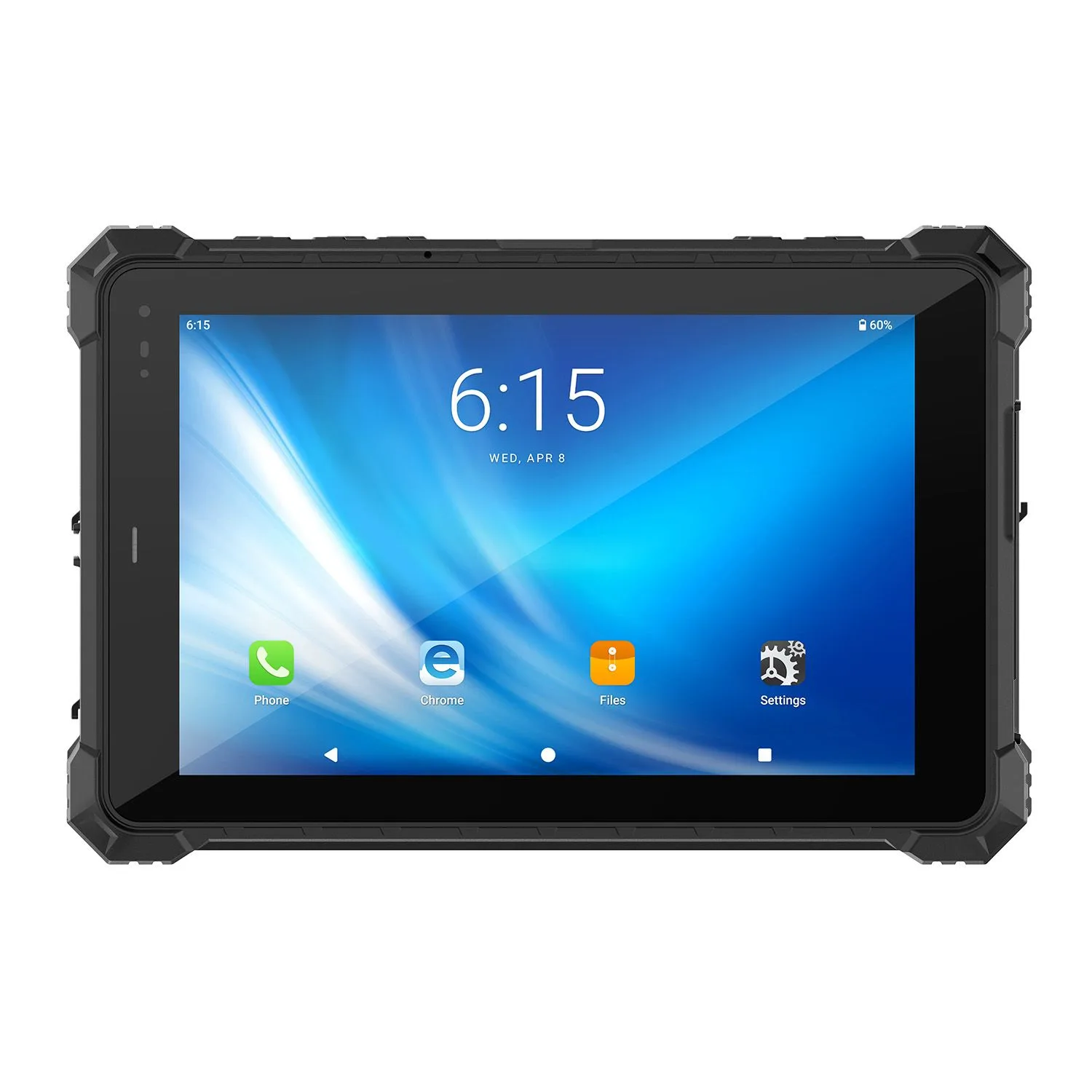
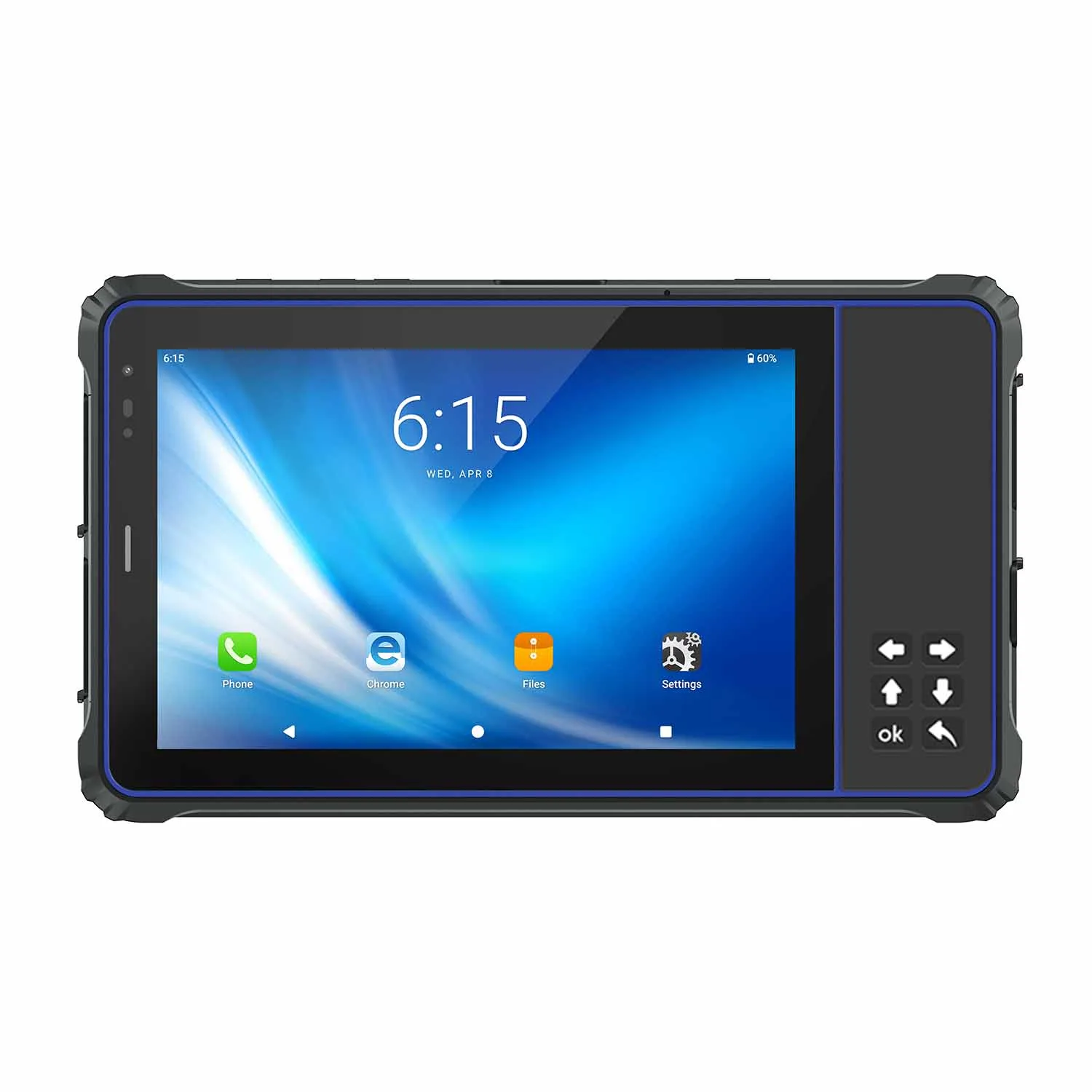
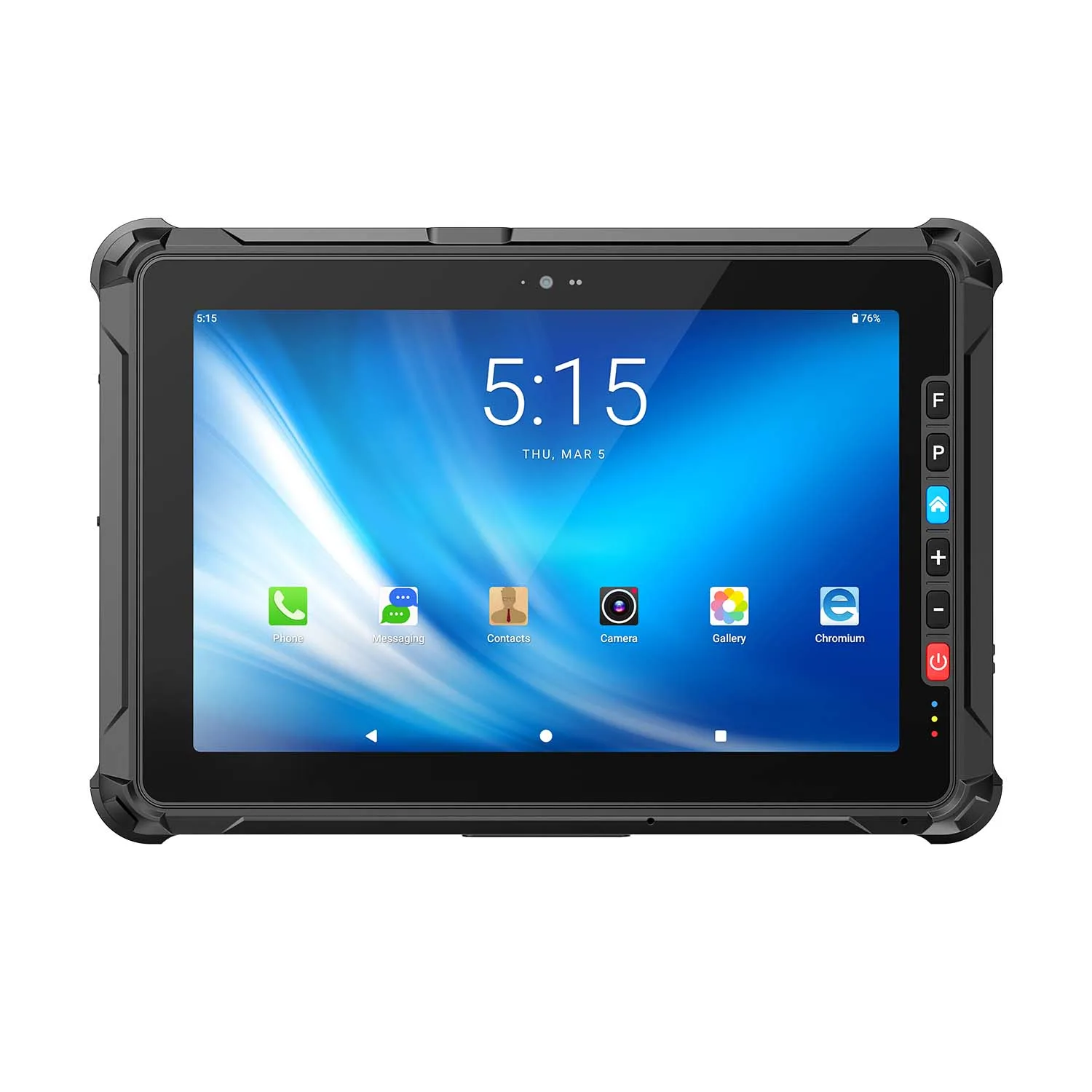
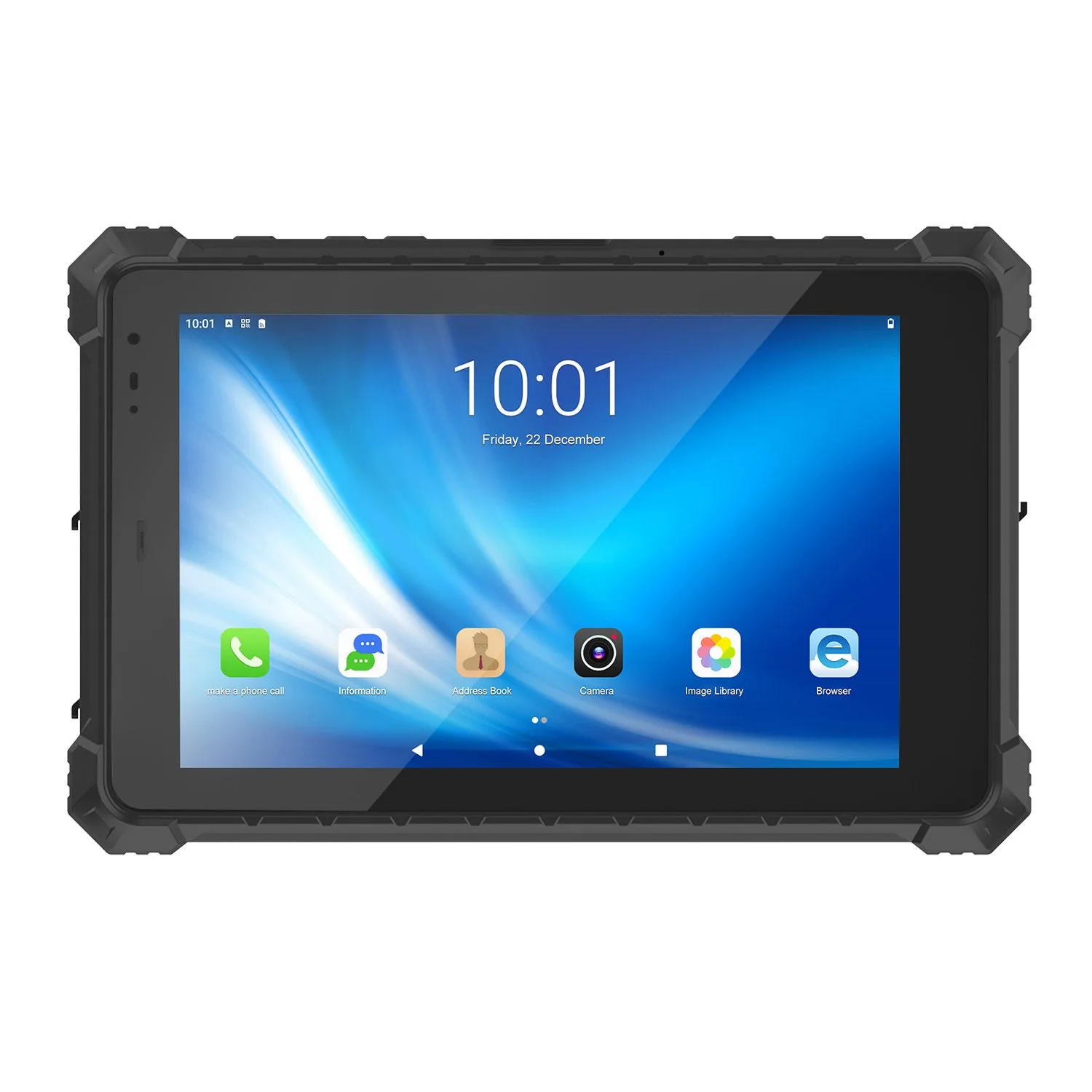
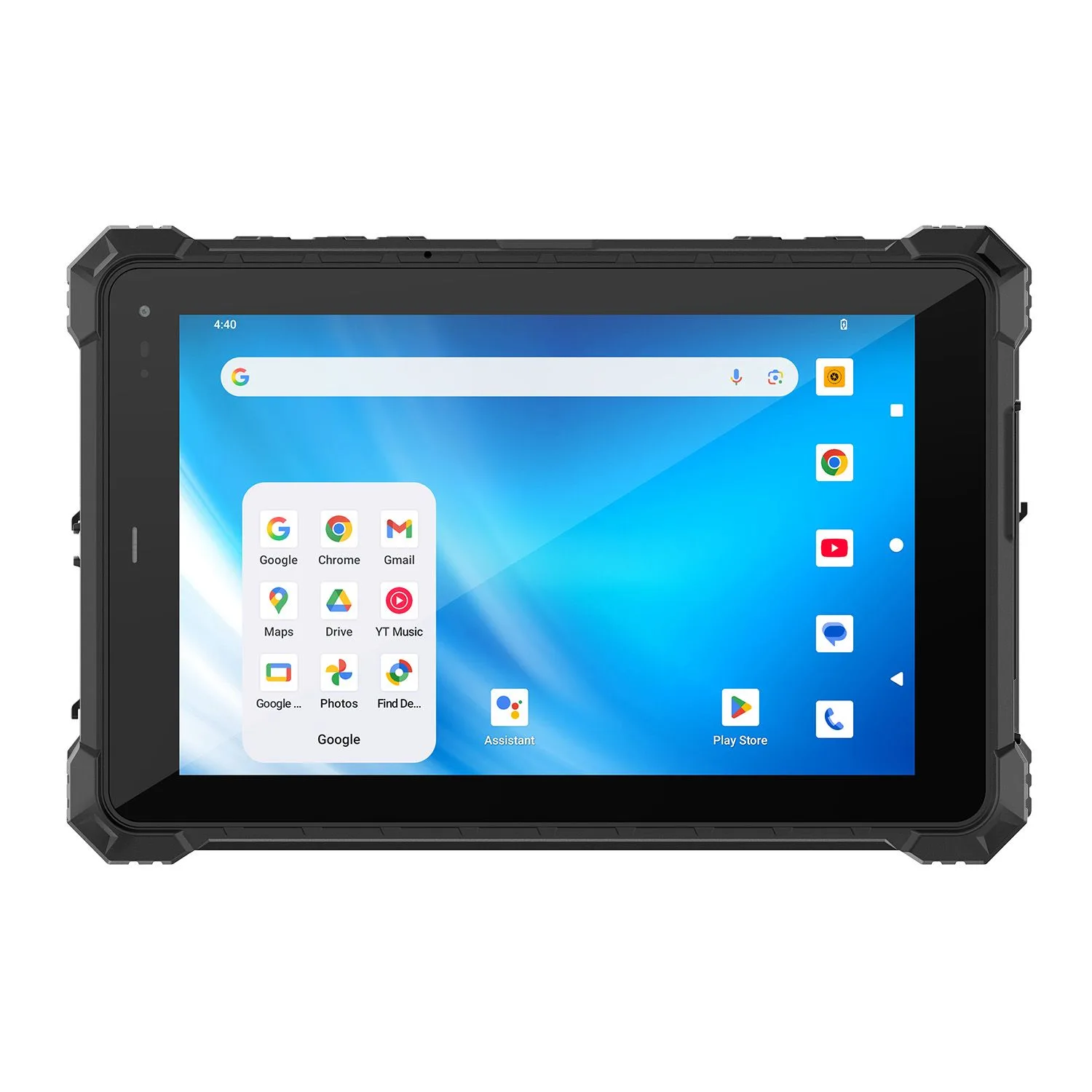
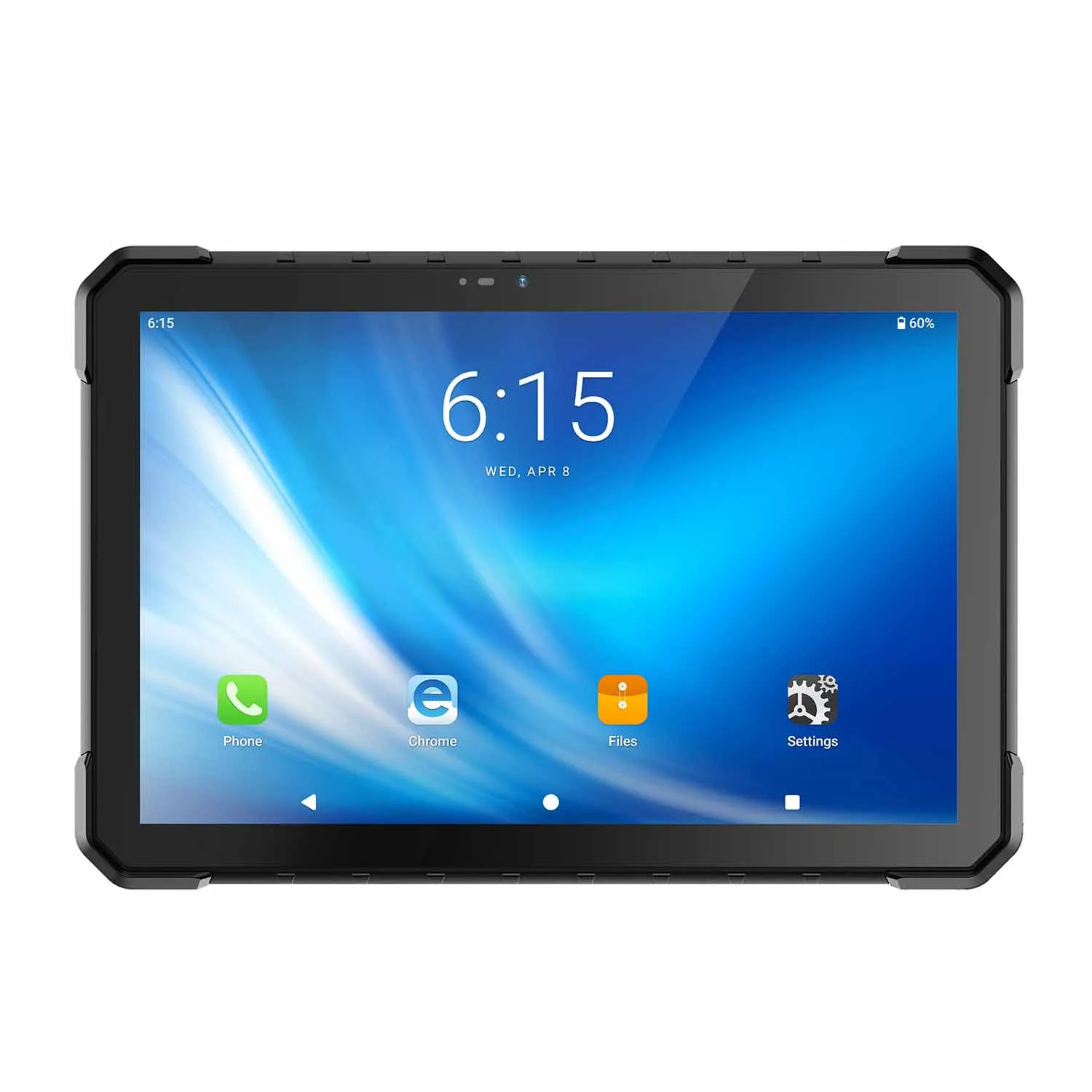
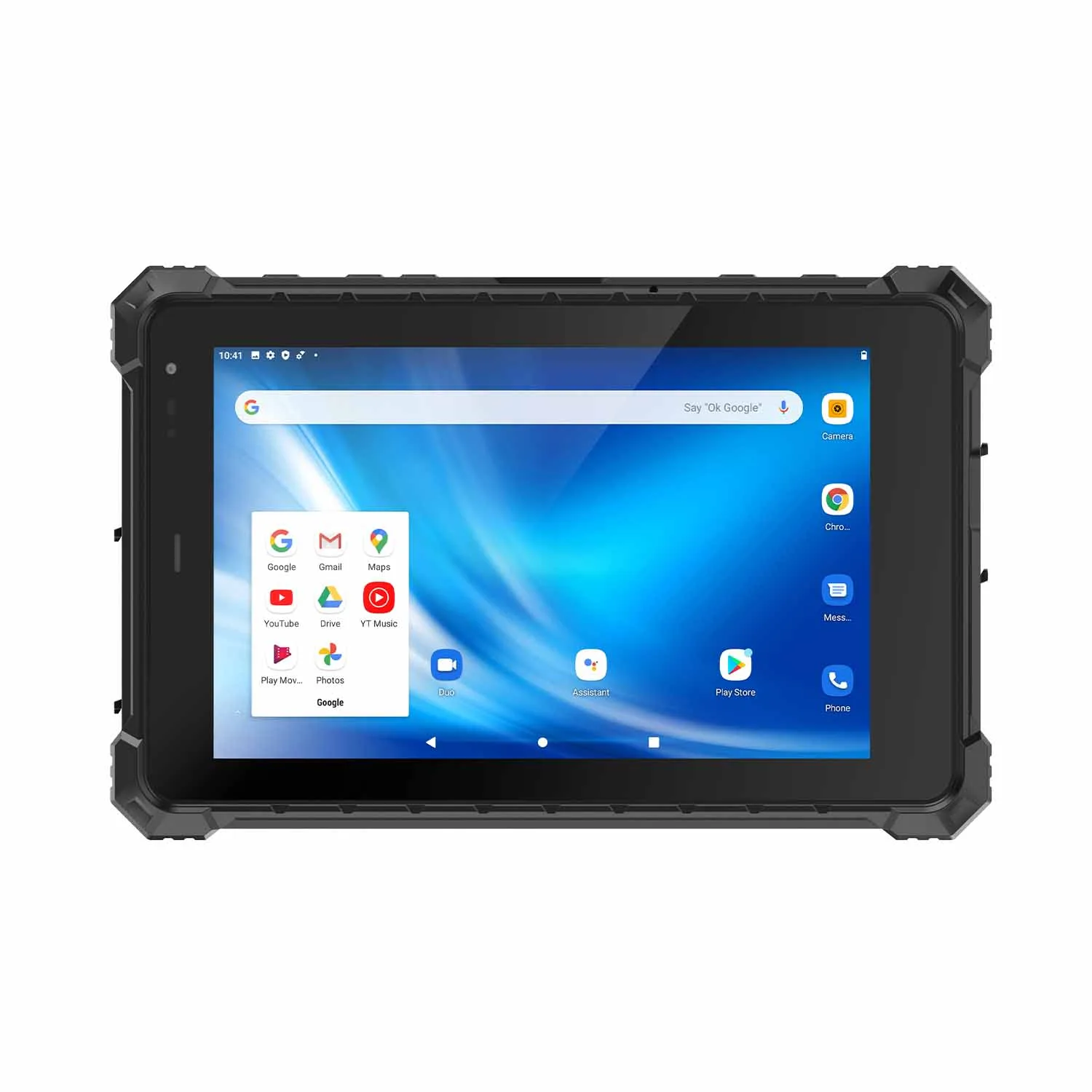
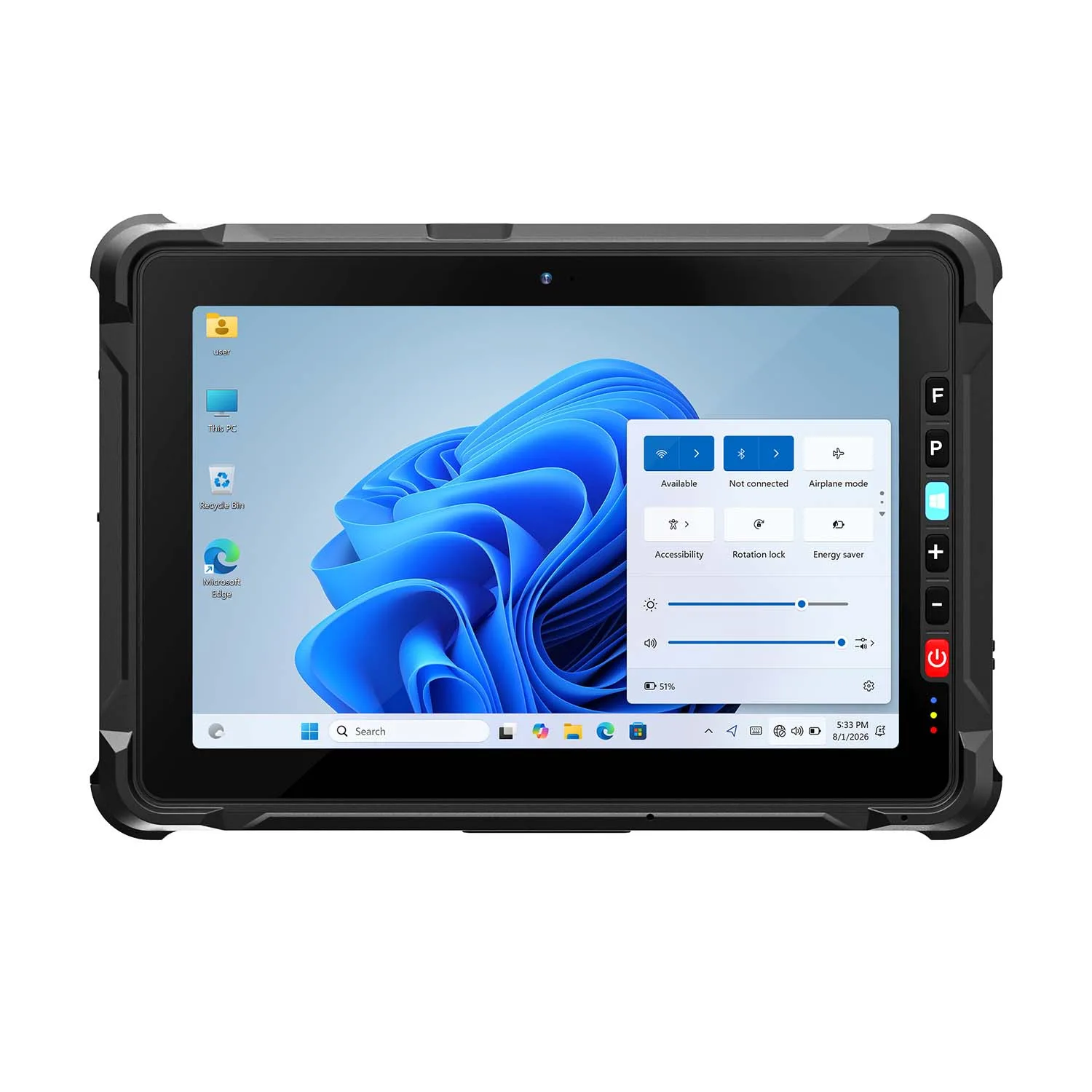
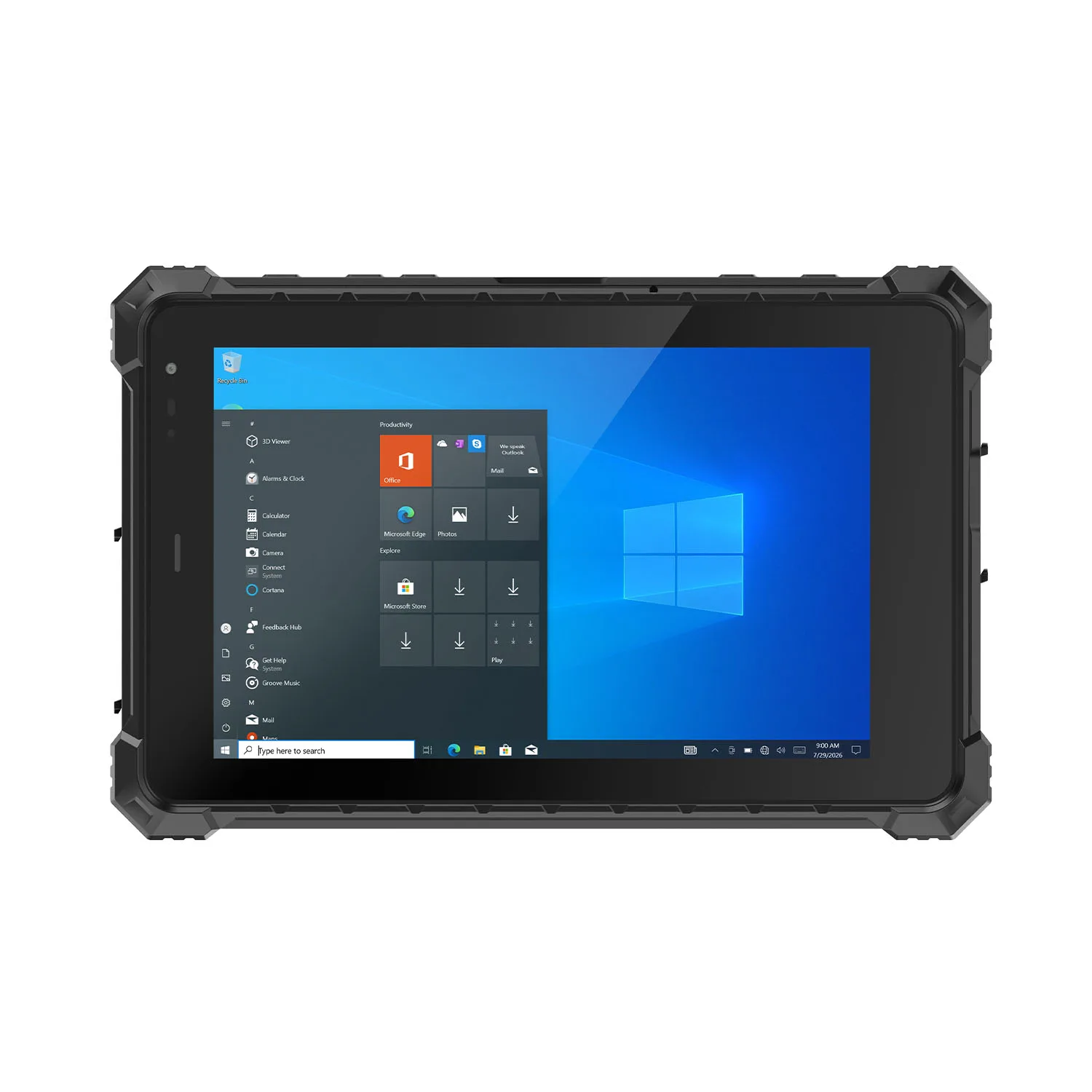
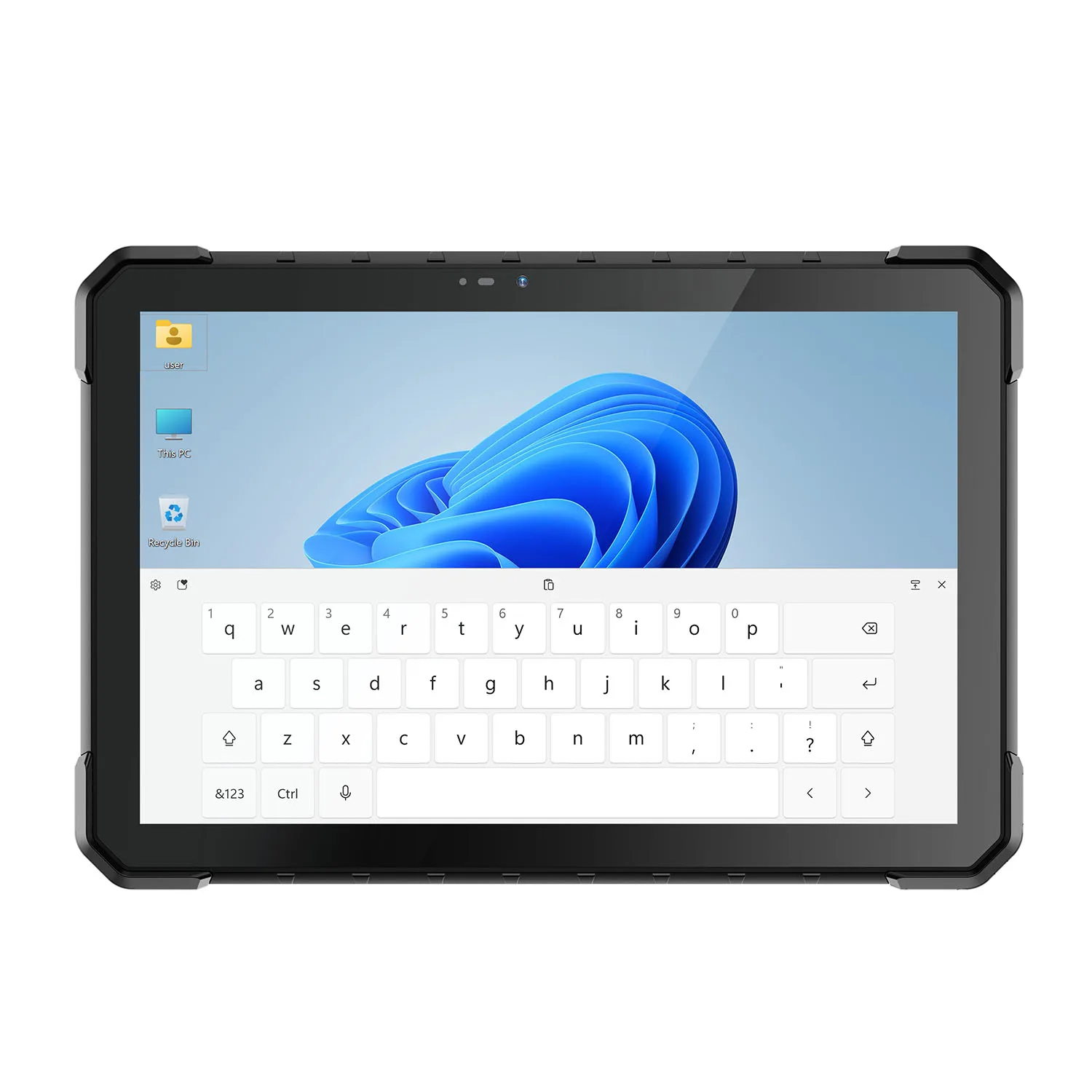
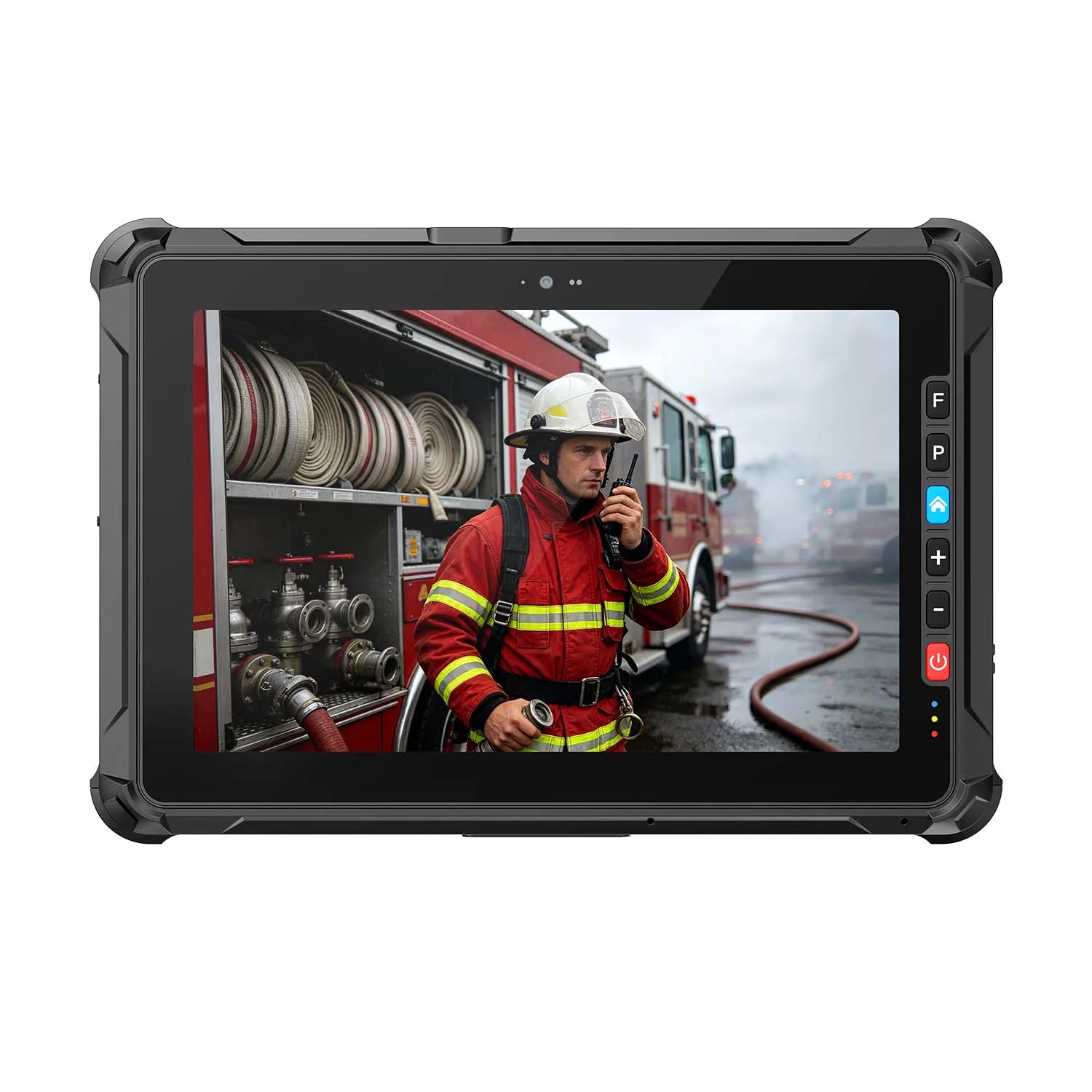
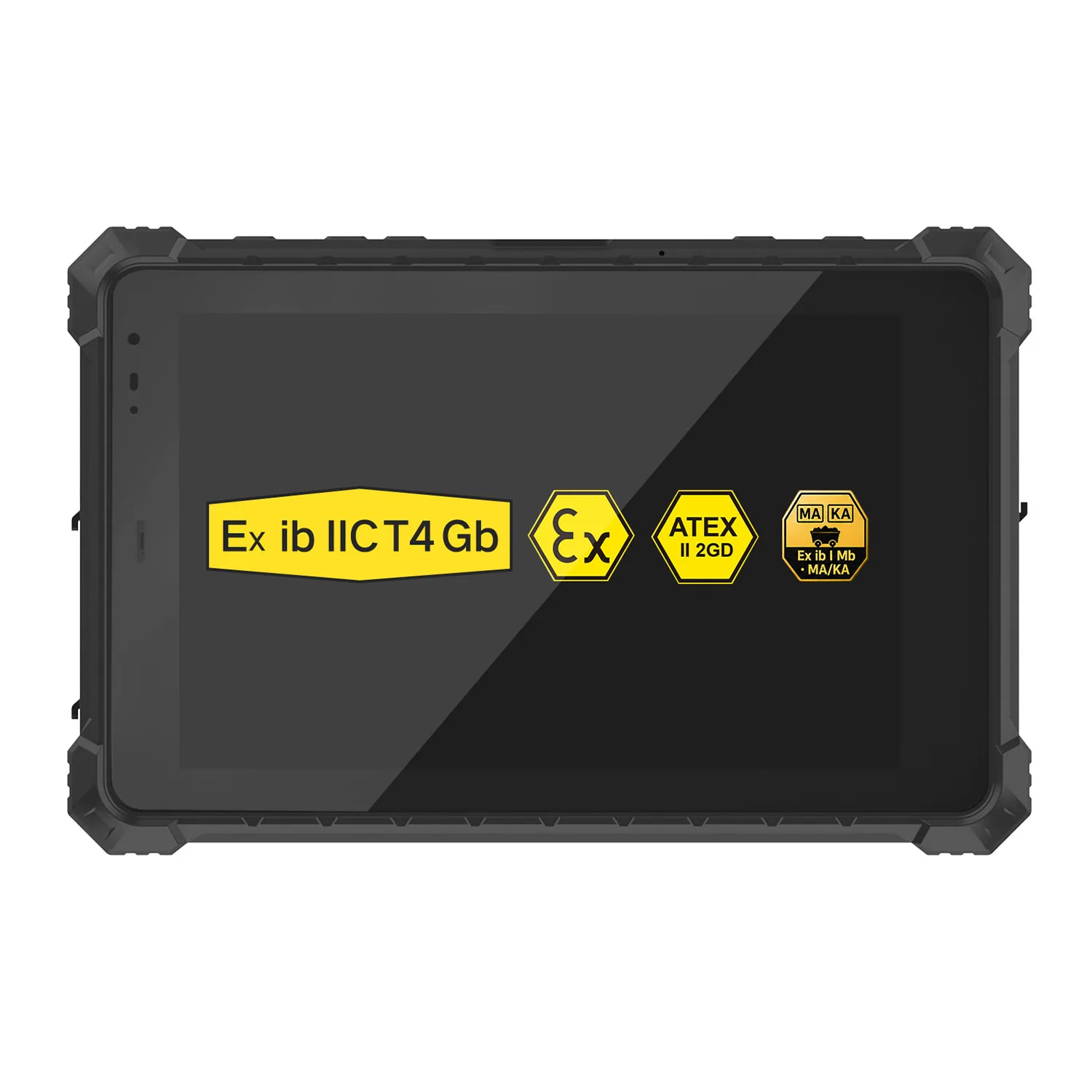
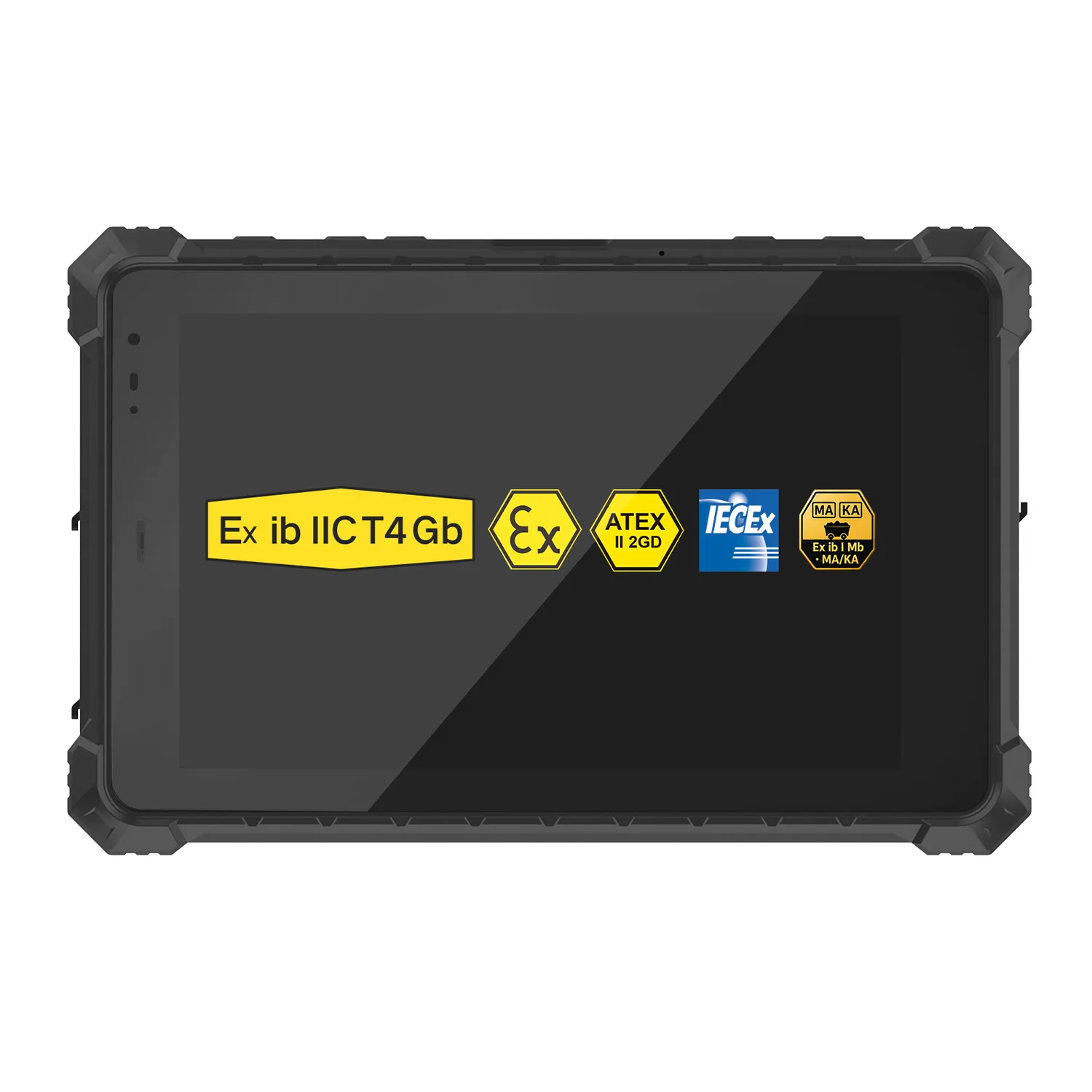
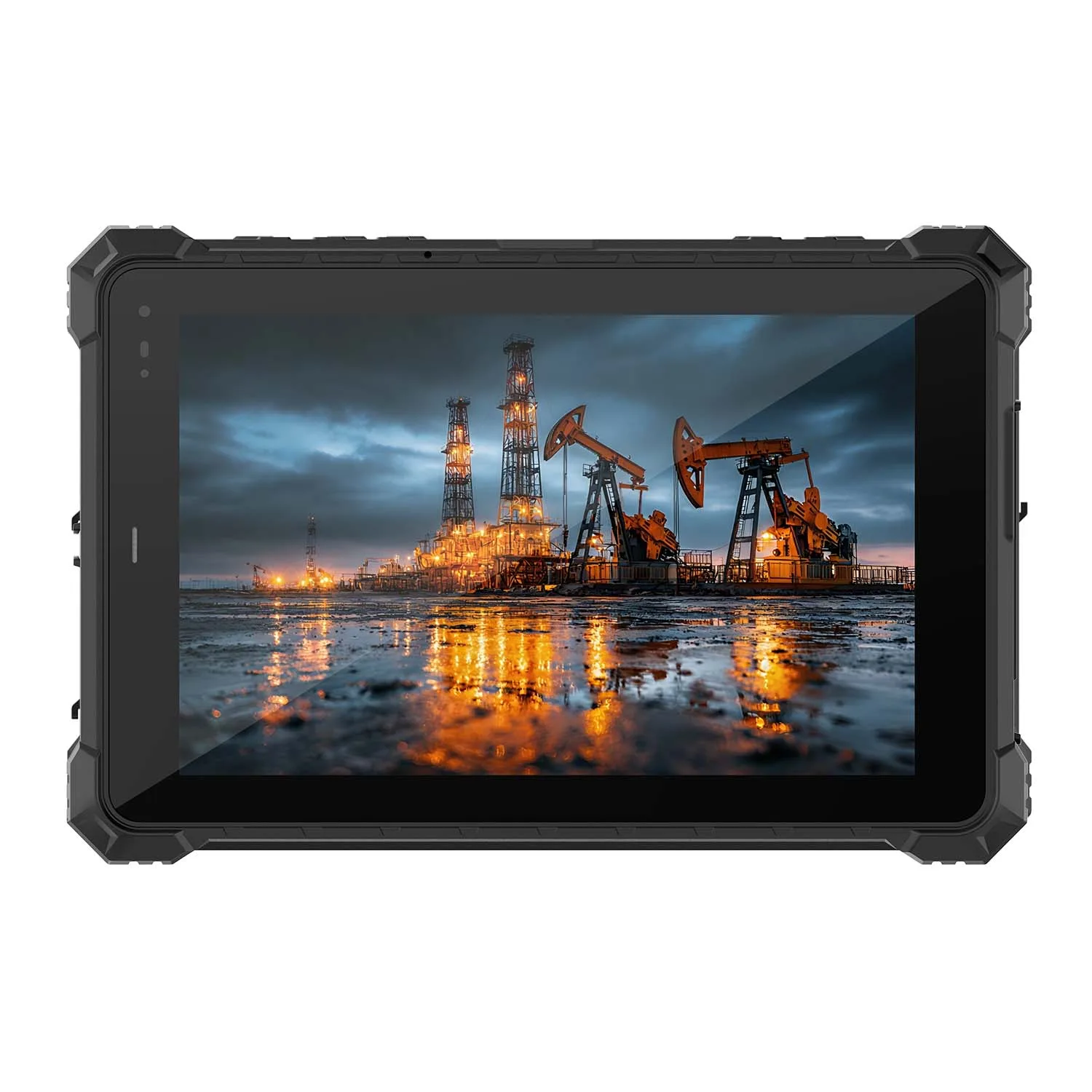
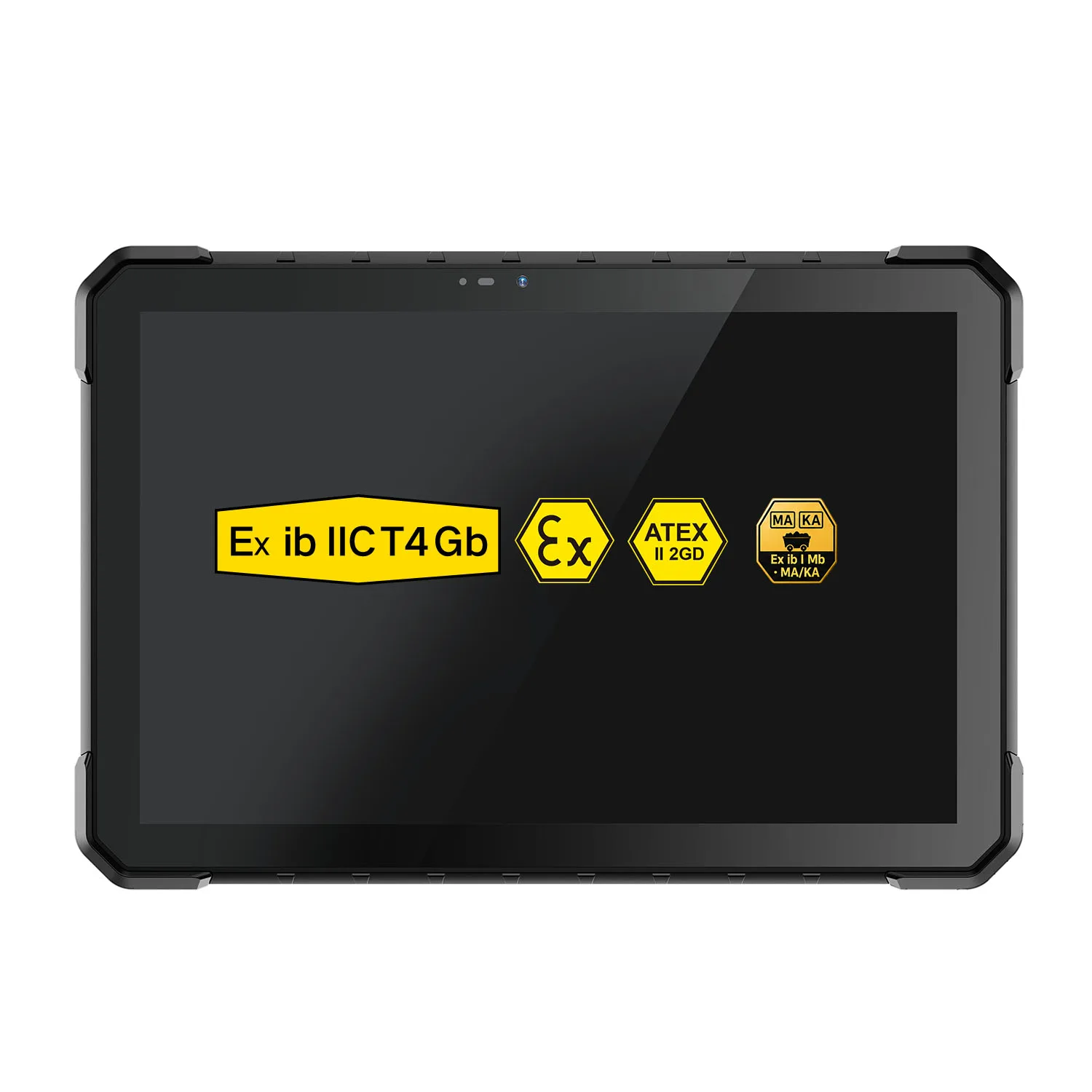
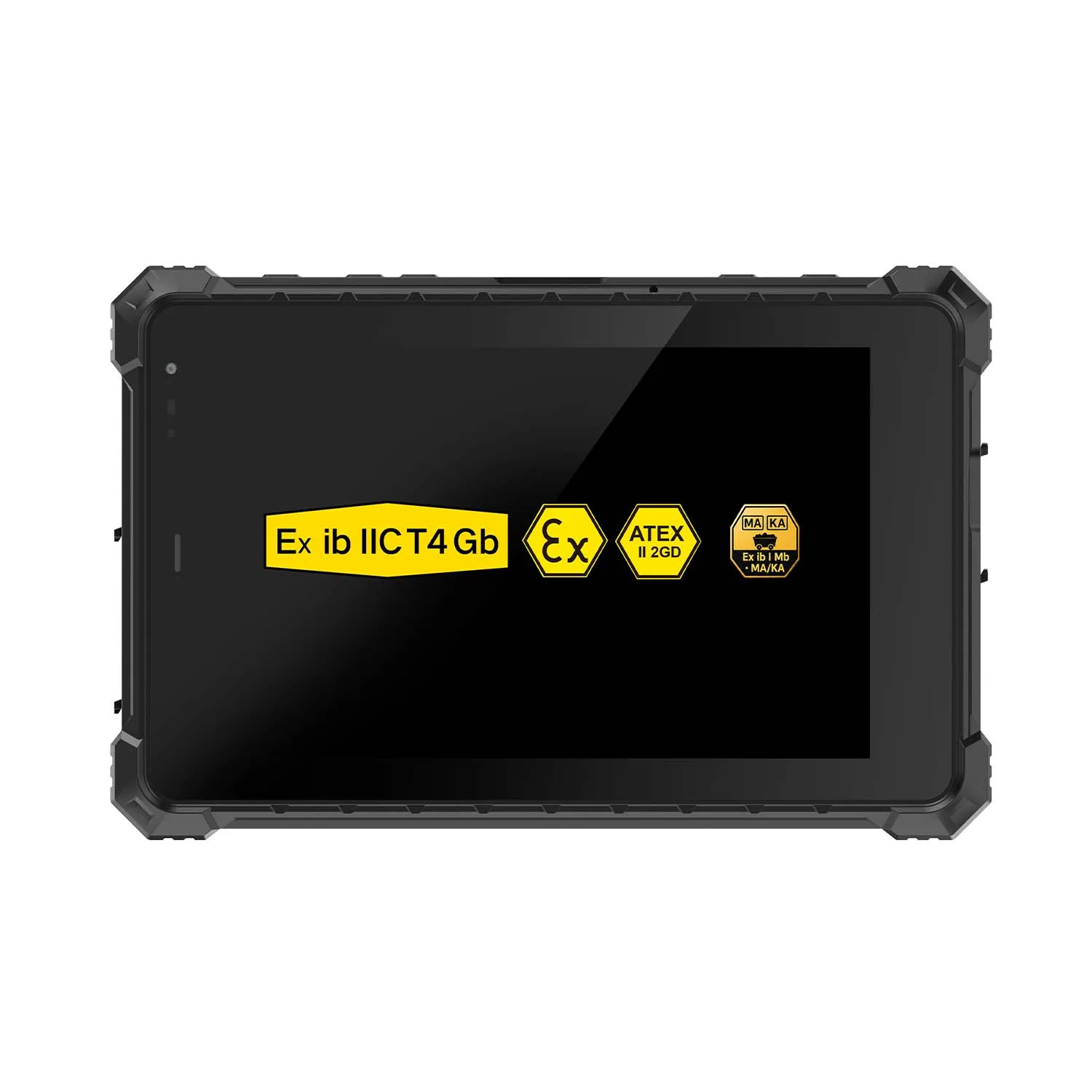
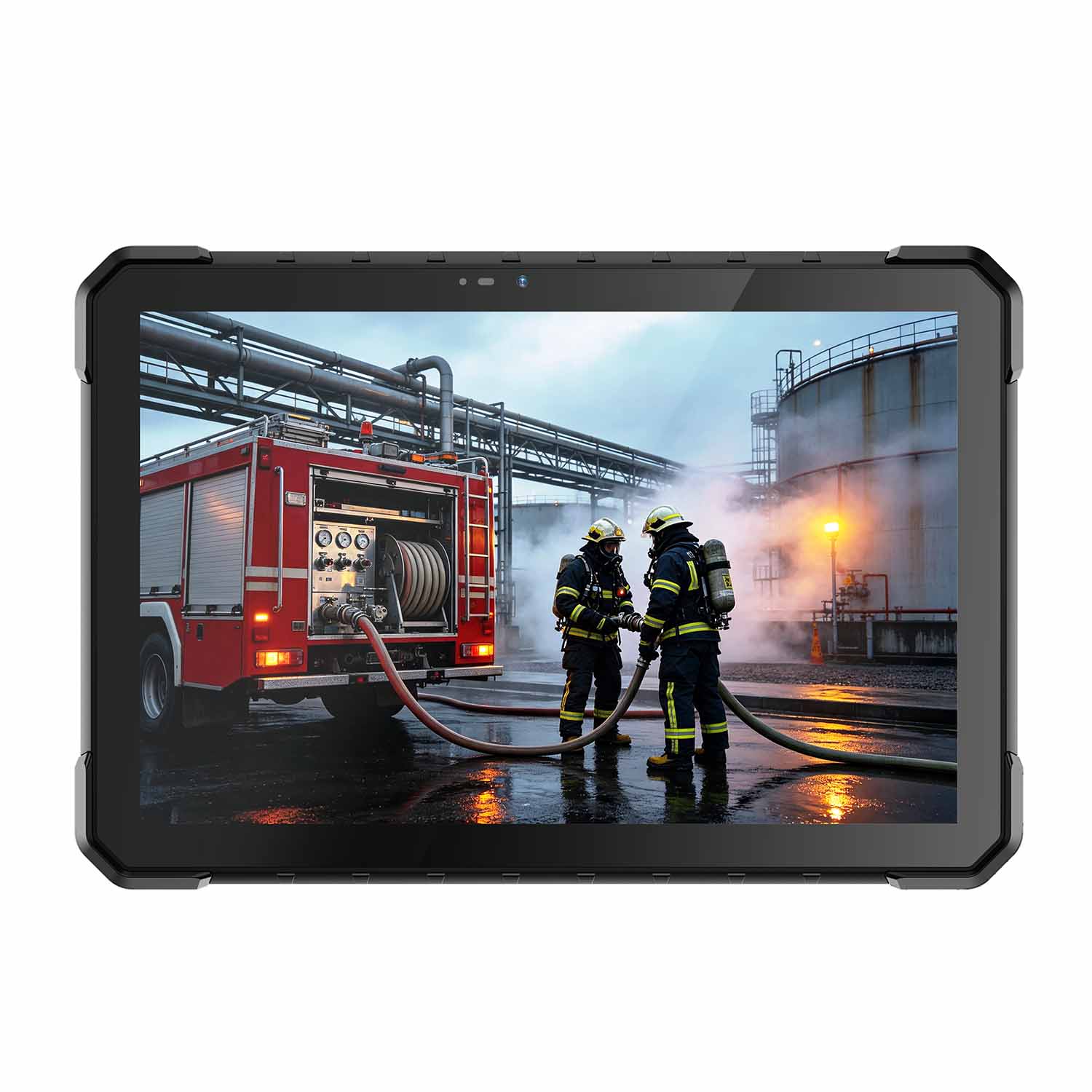
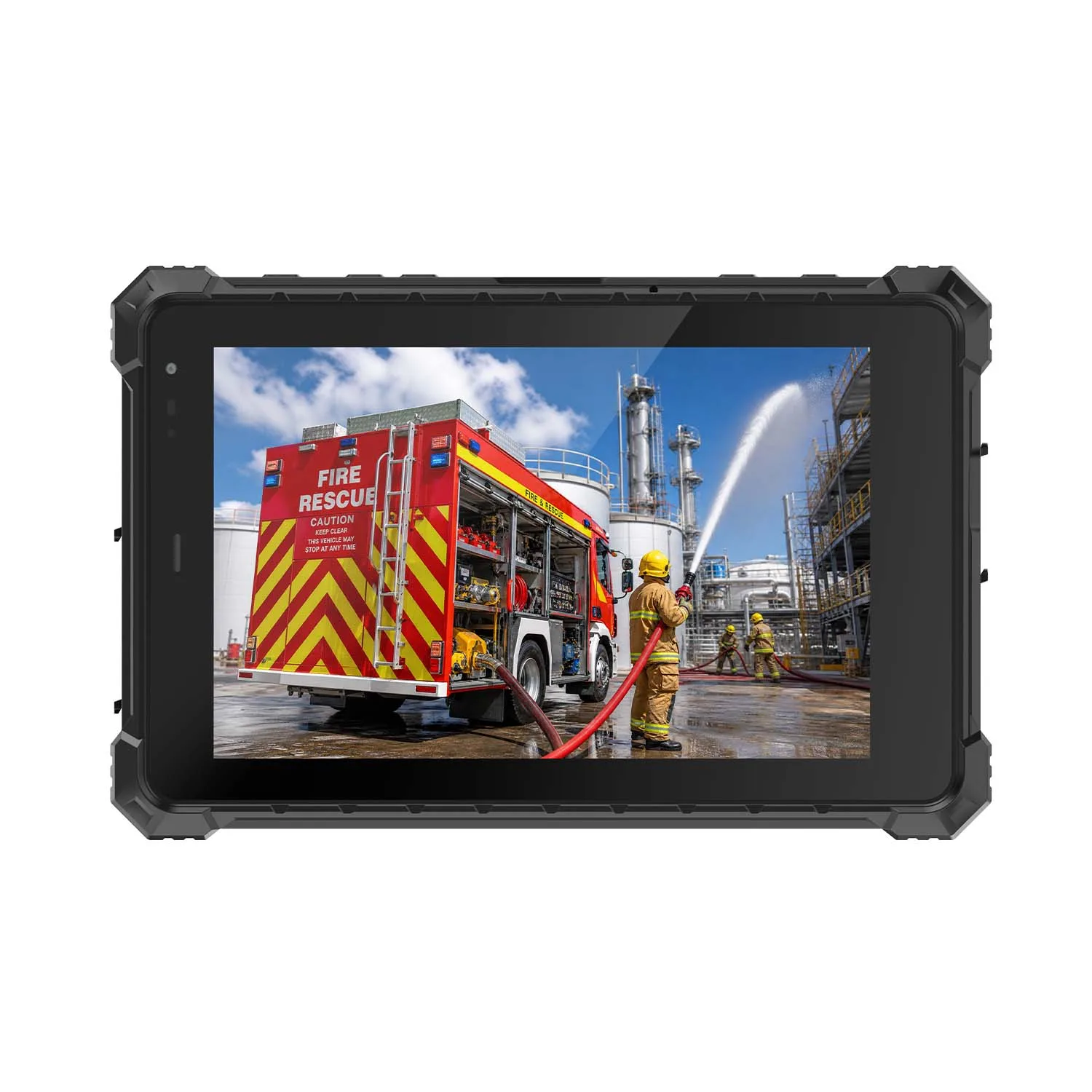
- Key Product: The A10ST-5G is a 10.1-inch Android tablet published with a 700 cd/m² display, IP68 protection, a 1.22 m MIL-STD-810H drop statement and a −20°C to +60°C operating range; project options include RTK positioning and a 2D imager.
- Technical Advantage: The same project configuration may use camera, code scanning or positioning for different controlled tasks. Freezing the chosen hardware and application package by configuration ID keeps the fallback method visible when a label is damaged or a correction feed is unavailable.
A hard rock mining tablet in this workflow may identify a haul truck, capture a structured defect and retain the local event until a permitted sync point. The site should decide whether the optional positioning module provides operational context or survey-grade evidence; those are different acceptance targets.
Use a stationary vehicle and two deliberately mismatched unit labels during the pilot. The application should reject the wrong hierarchy, allow a governed manual lookup and keep the original failed scan in a diagnostic log without attaching it to the inspection record.
2. Getac (Taiwan)
Core Strength: High-visibility Windows inspection work with mature vehicle and carrying accessories
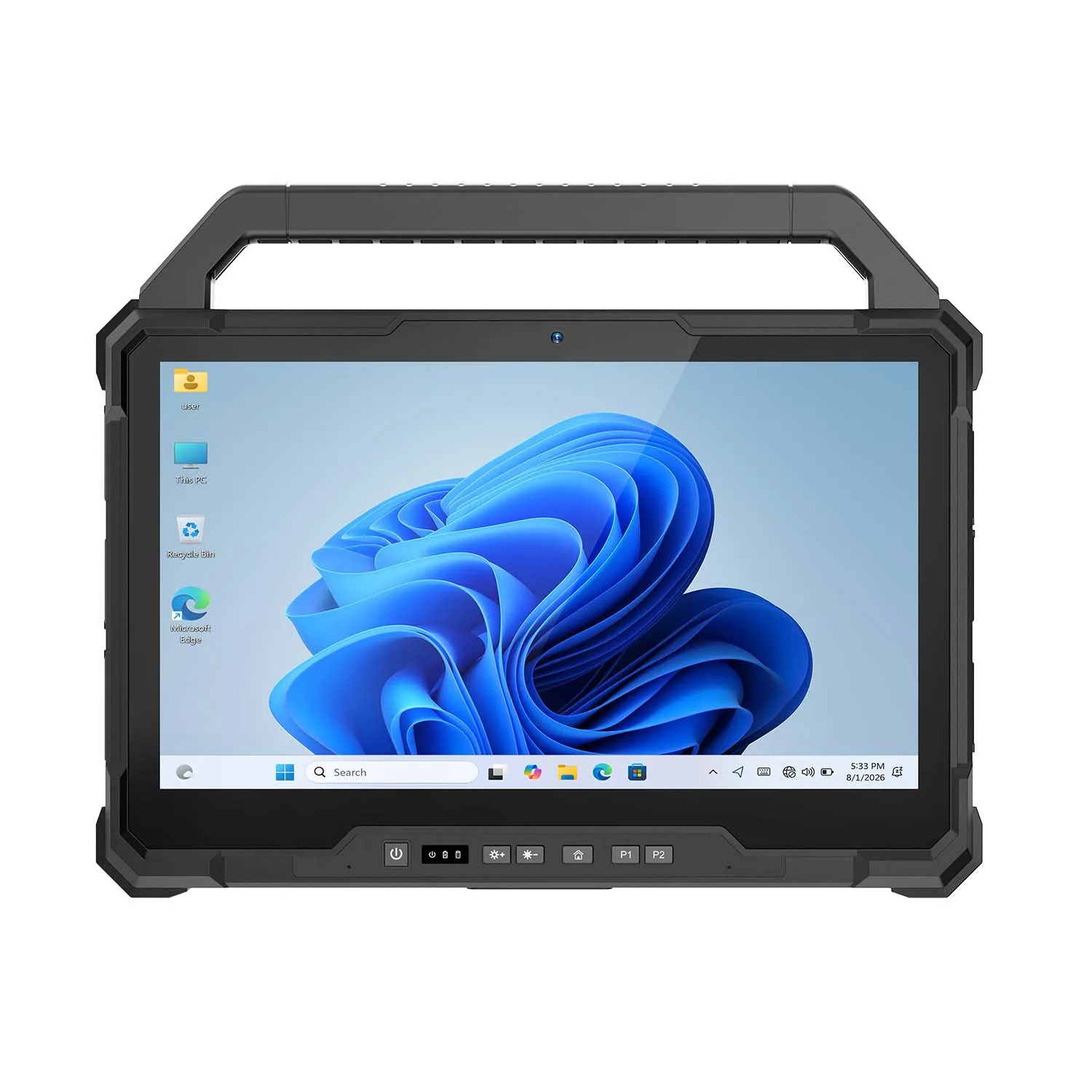
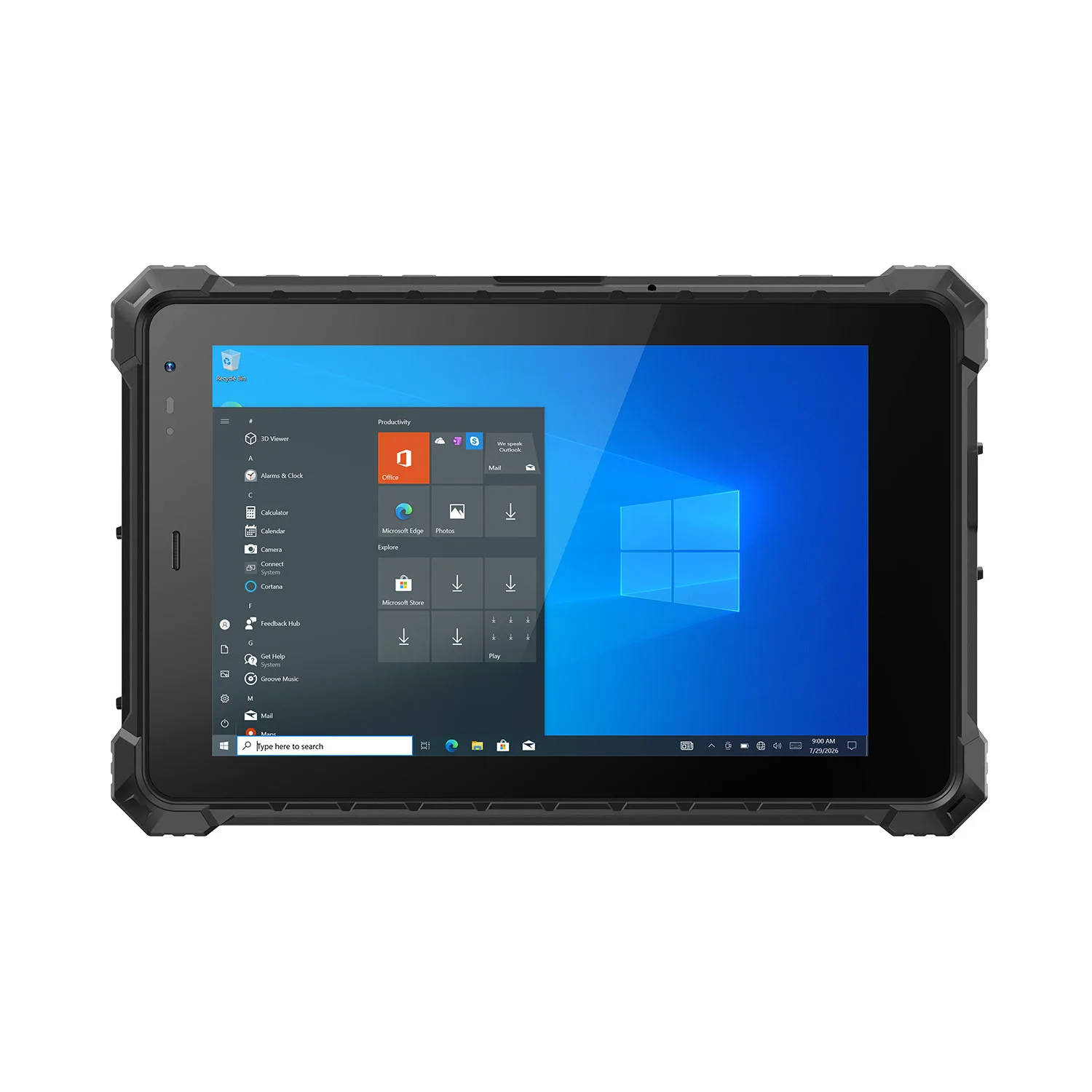
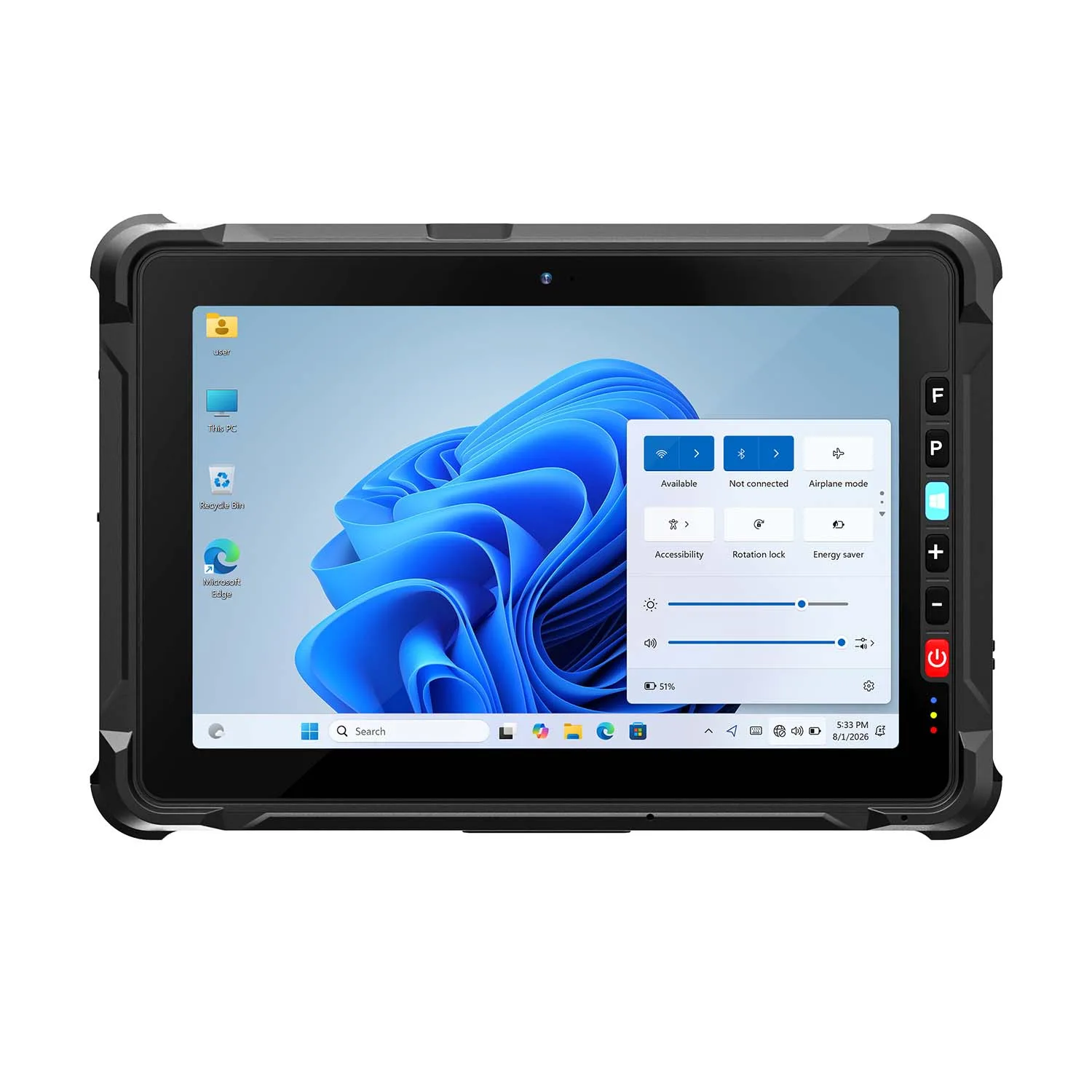
Getac focuses on rugged mobile computers for field service, utilities and natural resources. Its published mining material addresses fleet management and safety inspection, making the F110 a relevant Windows candidate where the mine already operates a desktop CMMS client or detailed diagnostic package.
3. Panasonic TOUGHBOOK (Japan)
Core Strength: Modular Windows platform for mixed walk-around, docked and workshop tasks
Panasonic TOUGHBOOK has a long history in vehicle, utility and public-service computing. The G2 suits mines that want one governed Windows platform to move between a hand strap, an office dock and selected vehicle installations while keeping module choices under asset control.
4. Zebra Technologies (United States)
Core Strength: Enterprise Android governance and long-range automatic identification
Zebra brings enterprise mobility and data-capture experience to field-service workflows. Its platform pay off where the mine wants serial-level device enrollment and stronger automatic identification at fuel bays, workshops or stores.
5. DURABOOK (Taiwan)
Core Strength: Fanless Windows operation for detailed maintenance and diagnostic records
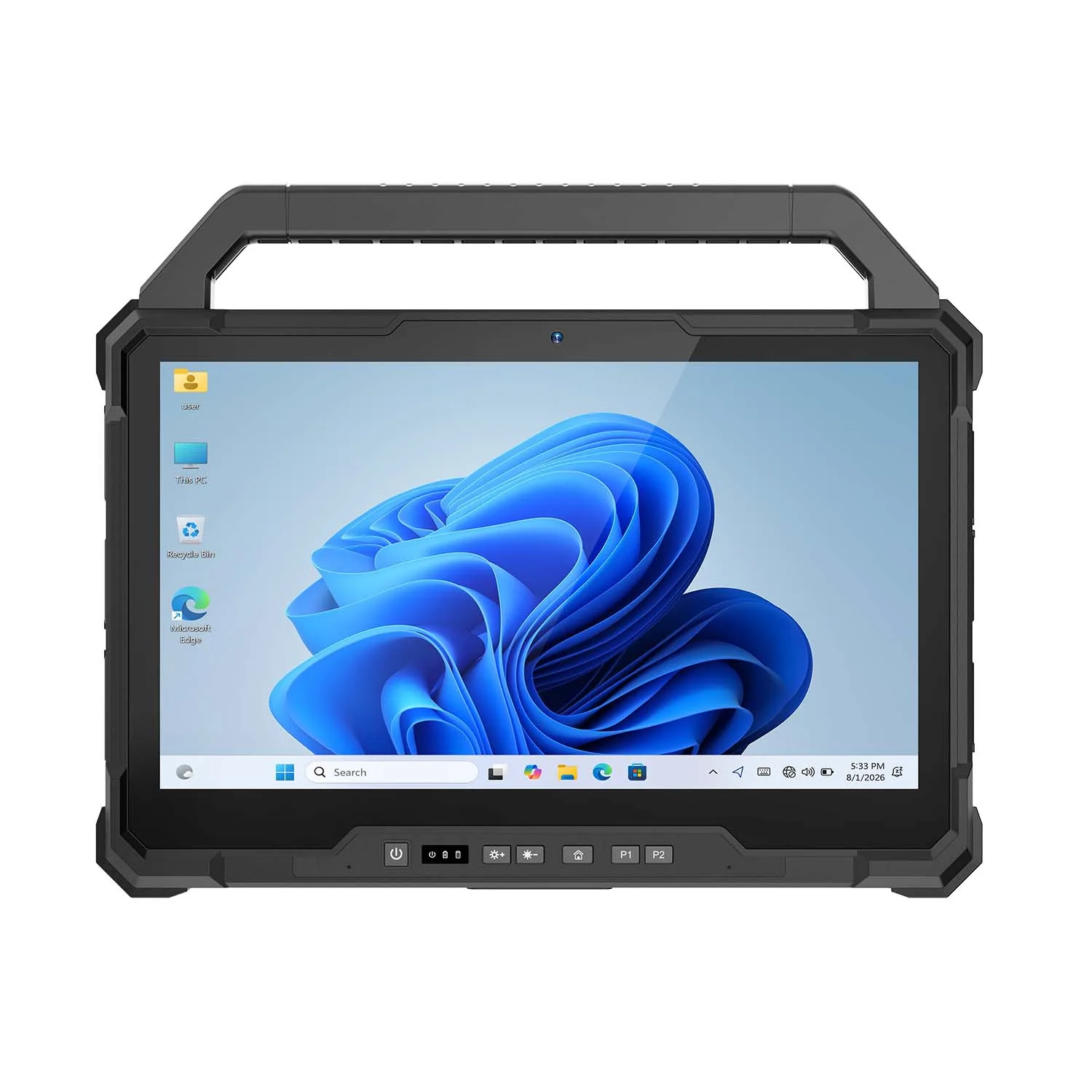
DURABOOK builds rugged Windows systems for field and industrial work. Its U11I offers a large display and fanless construction for teams that review diagnostic histories or drawings beside stationary equipment.
6. Dell Technologies (United States)
Core Strength: Windows manageability for workshop diagnostics and shift-spanning work
Dell serves enterprise fleets that already use Windows management, security and support processes. The Latitude rugged line can cut endpoint-governance friction when mine IT wants the inspection client and workshop diagnostic tools under the same administrative baseline.
7. Winmate (Taiwan)
Core Strength: Industrial Android form factor with configurable touch behavior
Winmate manufactures rugged tablets and industrial computers for field and vehicle use. The M101 family fits mines that a mine prefers Android forms but still needs a larger display and an industrial accessory ecosystem.
8. Trimble (United States)
Core Strength: Geospatial field collection linked to mine maps and survey ecosystems
Trimble develops surveying, positioning and field-data systems used across construction and natural resources. The T110 belongs in this comparison because fleet inspections often intersect with road condition, berm, dump and stockpile observations that require controlled spatial context.
9. Juniper Systems (United States)
Core Strength: Compact Windows field capture for long walk-around routes
Juniper Systems specializes in rugged data collectors for surveying and outdoor work. Its compact Mesa 4 trades the other way from 10- or 12-inch tablets: less drawing area, but easier one-hand carrying around tires, steps and service points.
10. Samsung Electronics (South Korea)
Core Strength: Managed Android lifecycle for supervisors and mixed frontline roles
Samsung provides enterprise Android devices with centralized policy and application management. The Galaxy Tab Active line may suit mines that want a lighter shared device for supervisor review, light-vehicle checks or maintenance coordination outside locations requiring specialized mine approval.
How to Choose the Right Manufacturer for Mine Fleet Inspections
Hardware becomes comparable only after the mine defines its inspection roles, defect decisions and record destinations. The following four steps preserve the reference article's selection logic while turning each choice into evidence that can be reviewed by operations, maintenance, safety and IT.
Define Your Operating Environment
Create one route-and-asset register. For each task, record the operating area, fleet class, unit identity, responsible role, shift timing, inspection authority, physical stop condition, approved tag or isolation method, work-order destination, required repair evidence and return-to-service authority. Keep the asset hierarchy separate from the map hierarchy because vehicles move while pit sectors change.
Split stationary walk-around use from cab-mounted use. A tablet held beside a parked loader experiences different risk from a fixed unit on a haul road. Mount sightlines, restraint, cable routing and power isolation belong in a stationary engineering review; no inspection workflow should require touch input while the vehicle is moving.
Map communications honestly. Mark dead zones, permitted sync points and locations where devices are not allowed. If a pit contains an explosive-atmosphere or specially classified area, route assignment must check the exact device approval instead of assuming that ordinary open-air mine hardware may enter.
Start with the 14-asset dry run, then move to a six-shift pilot on equipment and areas approved by the mine. Track wrong-asset attempts, stale templates, out-of-service action delay, rejected work orders, duplicate events, repair-release rework and unacknowledged server queues. Completion rate alone is not a useful quality measure.
Clarify Performance Requirements
Translate every environmental claim into a task with the issued equipment. The phrase drop proof tablet for open pit mines should be treated as a search brief, not a literal promise. Test the exact tablet, screen protector, hand strap, stylus and dock over the mine's expected surfaces and handling sequence; no published drop statement covers every angle, accessory or repeated impact.
Visibility testing needs an action threshold. Ask users to distinguish two similar unit numbers, locate a defect on a machine diagram and read a work-order rejection in noon sun. Record errors and task abandonment, not only whether the backlight reached its maximum setting.
The proposed 38-event exercise includes 12 normal examinations and six identity traps. Add eight seeded defects, four CMMS rejections, four disconnected submissions and four post-repair release attempts. One defect should require an immediate physical out-of-service response; the instructor must make clear that the exercise uses parked training assets and synthetic conditions.
Test interruption without encouraging unsafe behavior. When an instructor announces a simulated traffic movement or access restriction, the user should stow the device and step to the safe position defined by the mine. The record may resume later without fabricating a continuous examination time.
Consider Software & Integration
Define one event model across the tablet, integration service and maintenance system. At minimum, preserve the local event ID, asset ID, template version, user and role, shift, event time, location context, defect class, physical-action status, attachment references, CMMS response, repair link, release decision and server receipt. Fields that do not map cleanly need an owner not a merge into a generic note.
Expose two status tracks. The inspection may be assigned, started, locally complete, submitted, accepted or rejected. The equipment may be available, restricted, out of service, under repair or released. A green inspection status must never color the equipment state green by implication.
Offline GIS deserves its own version control. Esri's Field Maps documentation explains that downloaded map areas operate without connectivity and require synchronization before edits reach the online map. Its sync guidance also notes that edits remain on the device until sync and that conflict behavior depends on the data architecture. A mine should therefore test package expiry, edit conflict and server receipt instead of assuming a reconnect completes every record.
Run a 105-minute disconnected exercise across the full 38-event set. Restart one device, hand another between authorized roles and introduce one stale fleet-master package. Reconcile local events, attachments, CMMS orders, repair links and release decisions at the destination; accept the run only when rejected and duplicate events are explainable.
Analyze Total Cost of Ownership (TCO) vs. Initial Cost
Include tablets, issued carrying systems, vehicle docks, charging stations, spare batteries, screen films, device enrollment, application release, fleet-master administration, map packaging, CMMS integration, user training, physical inspections, cleaning, repair quarantine and reissue testing. A lower unit price may be offset by manual reconciliation or a mount that cannot remain stable on the actual vehicle.
Baseline effort before claiming savings. If 18 operators spend an average of six minutes per shift clarifying asset numbers and transferring defects, the current process consumes 108 staff-minutes per shift. Measure the pilot against that workload while also adding planner rejection handling and supervisor release review. The 108-minute figure is an example baseline, not a promised reduction.
Repair governance covers the tablet as well as the mining equipment. Quarantine a damaged device, resolve its unsynchronized events, inspect enclosure and port condition, restore only the current managed image and complete a short offline-to-CMMS test before reissue. A surviving display does not prove that sealing, the dock interface or the audit trail remained intact.
Contact CENAVA only when an exact project configuration needs review. Provide the destination country; mine type and whether the routes are ordinary open-air, classified or underground; fleet classes and unit count; inspection roles; shift and offline duration; temperature, dust, rain, vibration and sunlight conditions; required operating system and application; asset-label method; scanner, RTK or other module requirement; vehicle model and dock position; carrier and required bands only if cellular service is part of the design; NFC card or tag technology only if NFC is included; and the issued glove, strap and stylus combination. Do not send credentials, live production data, detailed mine maps, employee personal information or unredacted safety records.
The Future of Digital Mine Fleet Inspections: Trends to Watch
Asset identity moving from labels to governed digital twins
Fleet systems are connecting the physical unit, its current configuration and its inspection template more tightly. The useful digital twin will expose retired labels, component changes and effective dates instead of presenting a perfect model that outruns the workshop record.
Defect decisions separating from maintenance scheduling
Mobile applications are beginning to keep safety action, operational restriction and scheduled work as distinct decisions. This gives supervisors a clearer view of equipment state while allowing maintenance priority to change without rewriting the operator's original observation.
Offline queues gaining authoritative receipts
A local check mark will increasingly give way to a traceable destination acknowledgement. Integration services will preserve rejection reasons, duplicate detection and retry history so a shift can reconcile every event instead of trusting connectivity icons.
GIS context joining—but not replacing—fleet records
Road segments, dumps and stockpiles will provide richer context for recurring defects and exposure. Moving machines will still require stable asset identities, while map packages, coordinate quality and correction sources receive their own version controls.
Conclusion
A practical mine-fleet inspection program starts with exact asset and role identity, then separates the inspection record from the equipment's operational state. Safety-affecting defects need a physical response, while every digital handoff requires an acknowledged event rather than a local success icon.
The ten manufacturers offer different strengths across operator walk-arounds, vehicle installations, maintenance diagnostics and geospatial work. Their environmental evidence helps narrow the hardware shortlist, but the deciding test is whether the issued device, accessories and software preserve the mine's defect, repair and release authority under real light, dust, PPE and connectivity conditions.
Begin with 14 training assets, a 38-event offline exercise, one CMMS reconciliation and a six-shift pilot. Then have named operators and maintenance personnel replace the proposed numbers with attributable results, rejected-order examples and approved lessons. That is the credible route to digitizing mine fleet inspections without recycling a buying guide or turning an electronic checklist into proof that a machine is safe.
Need a Rugged Device for Your Project?
Tell us your operating environment and requirements — our engineers will recommend a configuration and quote within 24 hours.
Get a Free Quote Back to Blog